techXXX
Mercedes 725.0 9G-Tronic Automatic Transmission Deep Dive (NAG3 / W9A 700)
Mercedes 725.0 9G-Tronic, aka NAG3, is one of the most advanced automatic transmissions for passenger vehicles today. Let us analyze the advantages and trade-offs of the 9G-Tronic and delve into how its gear train works.
Published by Dr Jiulin Teng on 01 Jan 2026 · Updated on 03 Jan 2026
Keywords: mercedestransmission
Debuted in 2013, the Mercedes 725.0 9G-Tronic, aka NAG3, is one of the most advanced automatic transmissions for passenger vehicles today. It is closer to an evolution of the ZF 8HP than that of its predecessor, though it still inherits some Mercedes DNAs in its design. With an outstanding gear train, it is nonetheless held back by the pursuit of fuel efficiency and perfect NVH control. Today, let us analyze the advantages and trade-offs of the 9G-Tronic and delve into how its gear train works.
Advantages
1. Elegant Gear Train Design. Using four simple planetary gearsets and 6 friction elements, the 9G-Tronic gets 9 forward gears. More important, compared to the ZF 8HP it uses relatively simple paths to transmit torque and avoids large drums.
2. Mechanical Robustness Internally. Besides avoiding large, fragile drums, the 9G-Tronic has its friction elements placed close to where they act and uses roller bearings extensively.
3. Size and Weight. The 9G-Tronic is exceptionally small and lightweight, the latter thanks to its continued use of magnesium casing.
4. Wide and Even Gear Span. This transmission offers industry-leading gear ratio spread while avoiding awkward gear steps as found in the ZF 8HP.
Good or Bad?
1. Centrifugal Pendulum Vibration Absorber (CPVA) in Torque Converter. This is a design feature introduced by the 9G-Tronic and quickly picked up by the 2nd-generation ZF 8HP. These are weights on the torsional damper on the turbine side. They serve to smooth out shocks in engine power delivery, since Mercedes was moving to four- and three-cylinder engines. With this, the 9G-Tronic is able to lower the slip target of the TCC without sacrificing NVH. The added benefits are longer TCC (torque converter lock-up clutch) service life and better drivability. However, this adds another point of failure and introduces additional parasitic drag.
2. Continued “Micro-Slip”. The 9G-Tronic continues to slip its TCC to improve NVH. It has more slip than the ZF 8HP but significantly less than the 7G-Tronic. Combined with 3-circuit torque converter and CPVA, the 9G-Tronic suffers from TCC issues a lot less. Still, if only it had a more conventional TCC lock-up strategy and 6+ cylinders to work with, this issue would not exist.
Trade-Offs
1. Chain-Driven Oil Pump. Like the ZF 8HP, the 9G-Tronic uses a chain-driven oil pump off-axis to avoid lengthening the transmission compared to its predecessor. Mercedes even bragged that it was the world’s smallest oil pump. It was supplemented by an electric pump.
2. Ultra-Low Viscosity Fluid. In the pursuit of fuel efficiency, Mercedes uses a new, ultra-low viscosity fluid in the 9G-Tronic. This has accelerated wear internally, and tougher operating conditions are causing this fluid to deteriorate faster than that in the ZF 8HP.
3. Calibration. Even though Mercedes chiefly pairs this transmission to its own engines in its own cars, there continues to be issues in tuning, especially with low-cylinder-count and underpowered vehicles.
4. Torque Load Reversal. There is torque load reversal between some gears, which adds challenges to tuning and shift speed.
5. Parasitic Gear Rotation. As it is with the ZF 8HP, the 9G-Tronic has gears rotating without transmitting power.
Gear Train
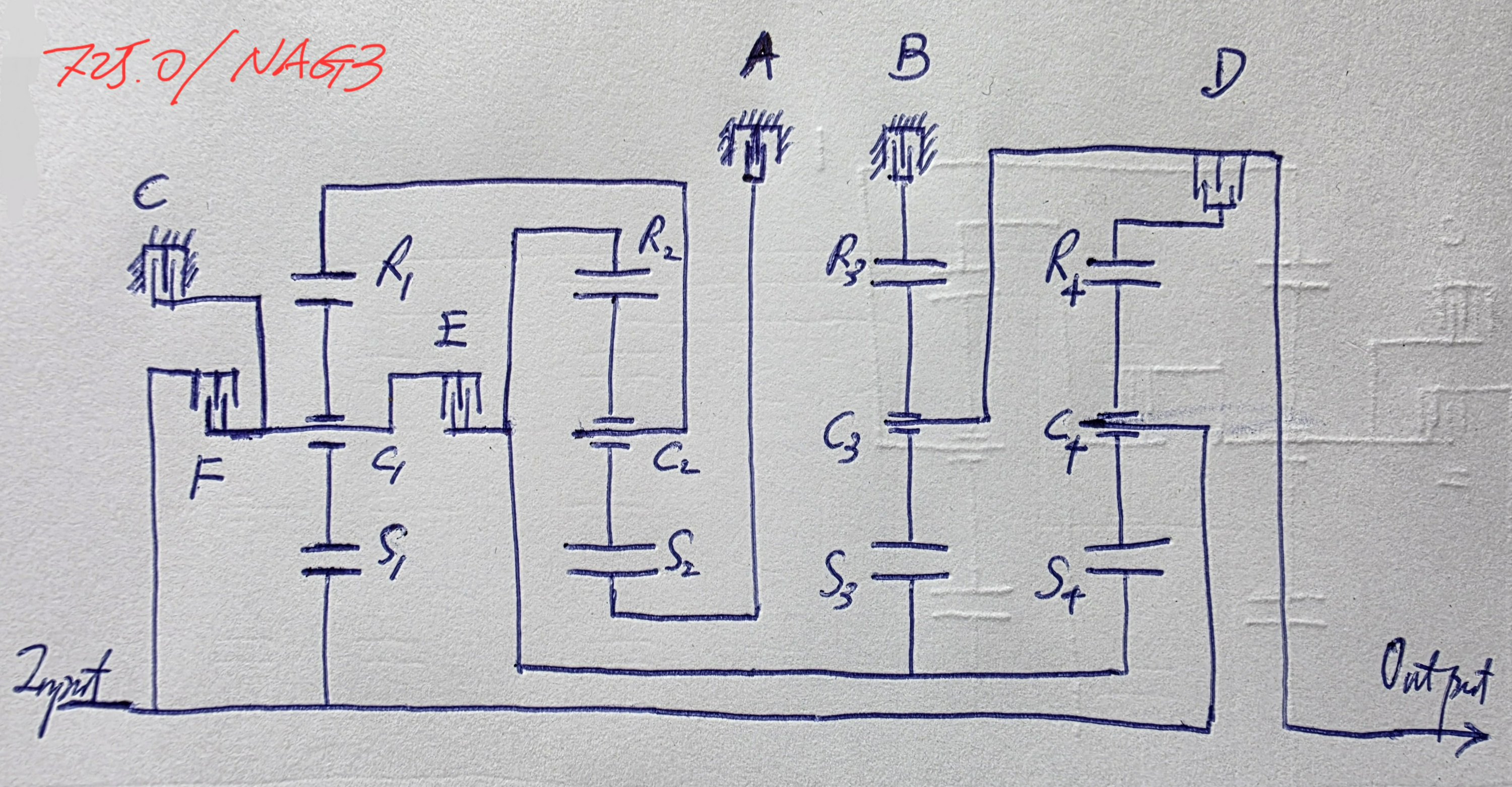
Now let us move onto the gear train schematic, which was drawn by me. Friction elements A, B, and C are the brakes, while D, E, and F the clutches. From front to rear, there are four simple planetary gearsets, each with its sun gear, carrier, and ring gear marked out.
Torque Paths
The torque paths in this transmission are much simpler than it is in the ZF 8HP.
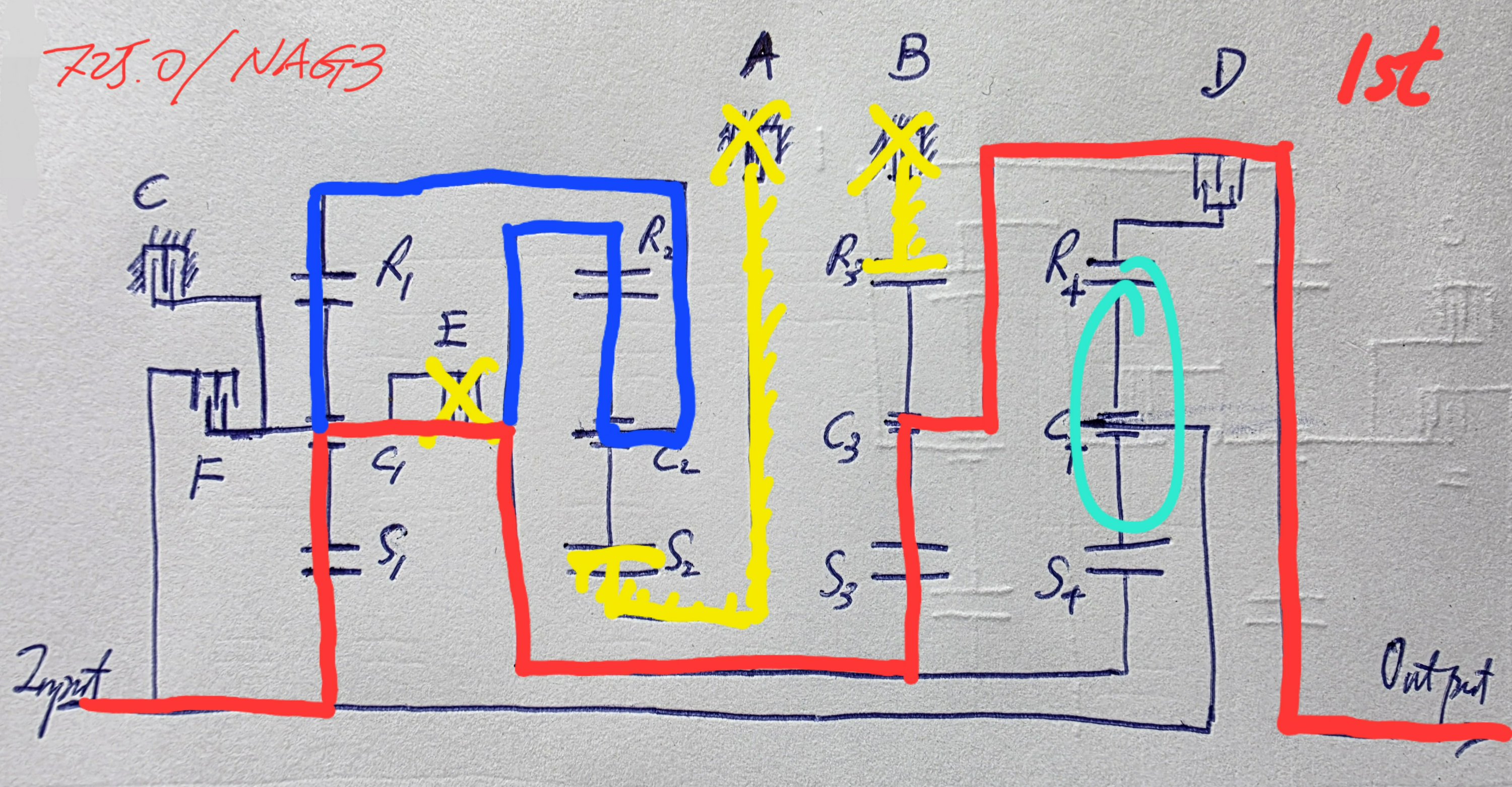
In 1st, torque goes through S1 > C1 > E > S3 > C3. Counter holding is R1 > R2 > C2. Reduction happens in Gearsets 1 and 3. Gearset 4 rotates parasitically.

In 2nd, torque goes through F > C1 > E > S3 > C3. Reduction happens in Gearset 3. Gearsets 2 and 4 rotate parasitically.
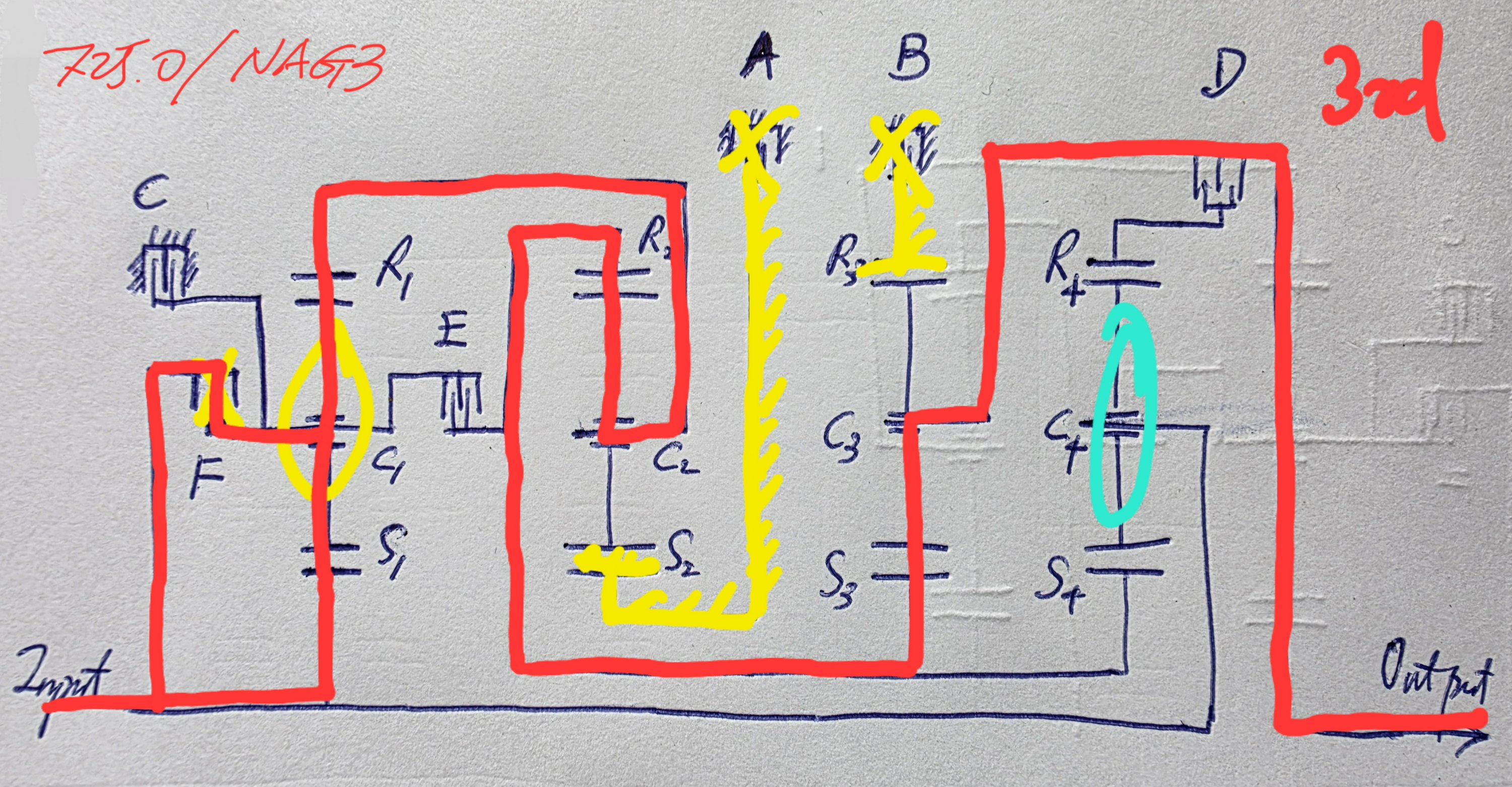
In 3rd, torque goes through S1 > C1 > R1 > C2 > R2 > S3 > C3 and through F directly into C1. This locks Gearset 1 as a unit. Speed increases in Gearset 2; reduction happens in Gearset 3. Gearset 4 rotates parasitically.
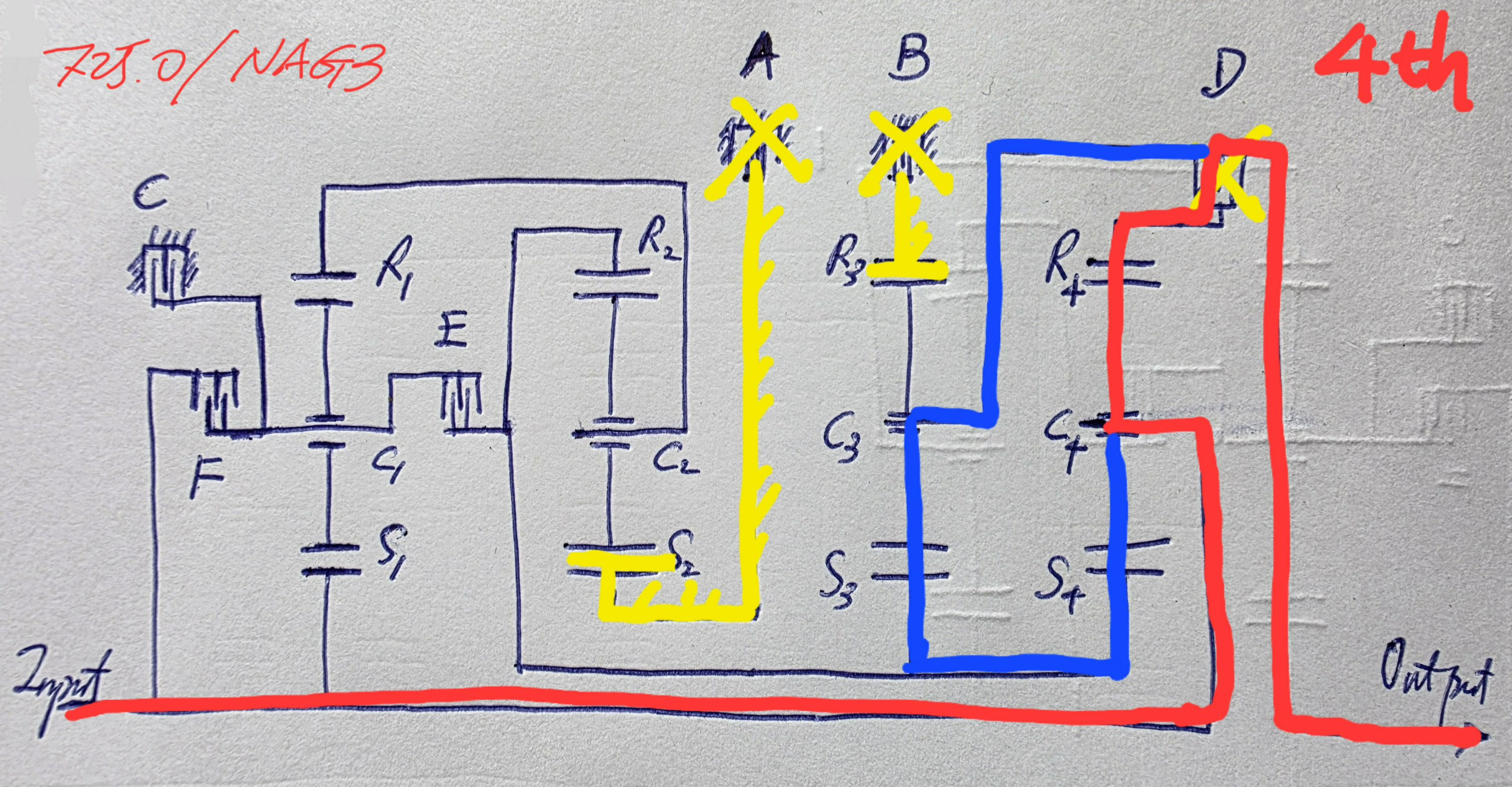
In 4th, torque goes through C4 > R4 > D. Counterholding is C4 > S4 > S3 > C3. Gearset 1 rotates parasitically. Like we found often in the ZF 8HP, the two rear gearsets are balanced dynamically.

In 5th, torque goes through S1 > C1 > R1 > C2 > R2 > S4 > C4 > R4 > D and through F directly into C1. This locks Gearset 1 as a unit. Counter-holding is input > C4. Speed increases in Gearset 2; reduction happens in Gearset 4. Gearset 3 rotates parasitically.

In 6th, torque goes through F > C1 > E > S4 > C4 > R4 > D and from the input directly into C4. This locks Gearset 4, making it direct drive. Gearsets 2 and 3 rotate parasitically.
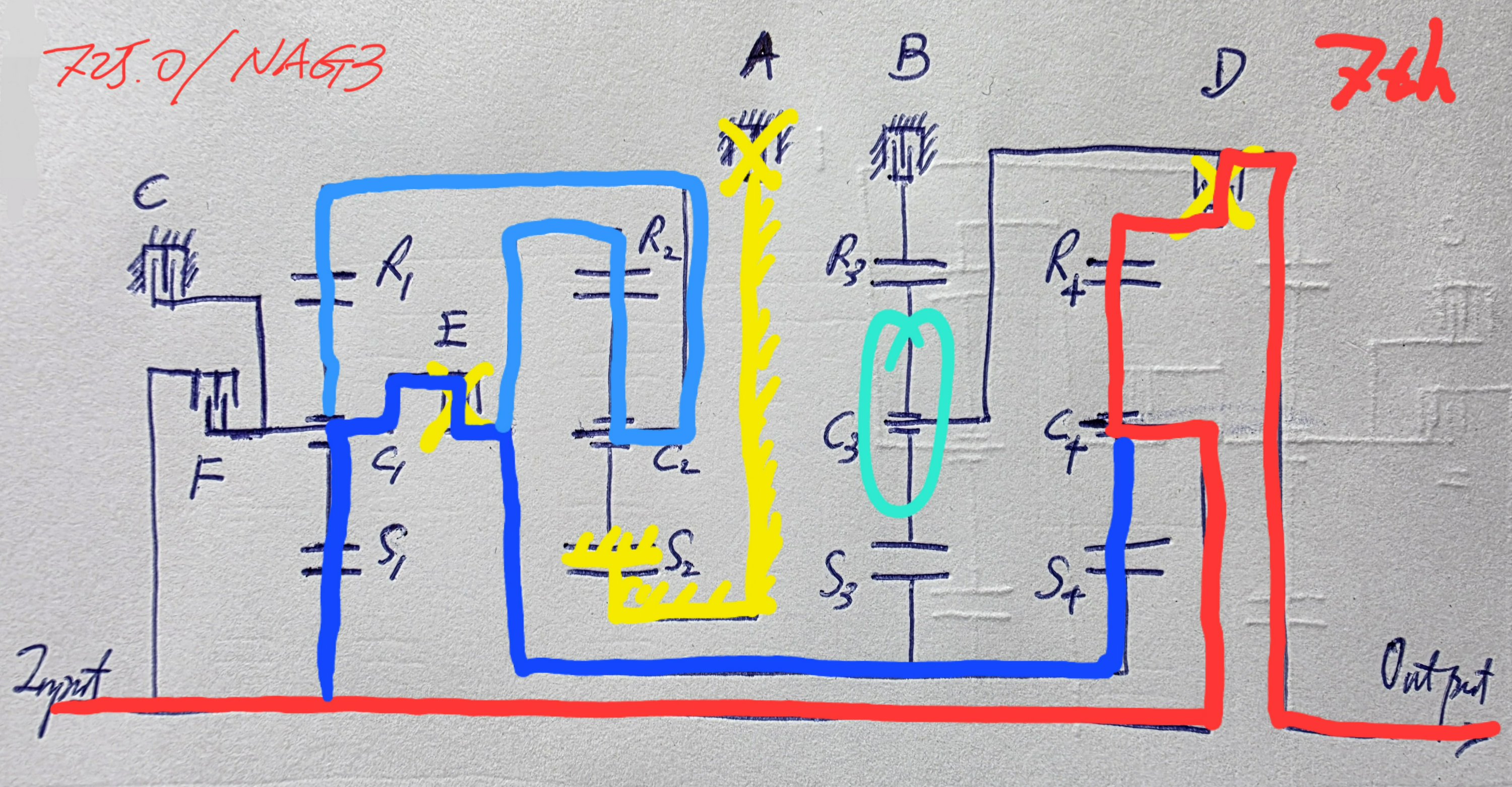
In 7th, torque goes through C4 > R4 > D. Counter-holding is S1 > C1 > E > S4 > C4, which is itself counter-held by R1 > C2 > R2. Speed increases in Gearset 4. Gearset 3 rotates parasitically.
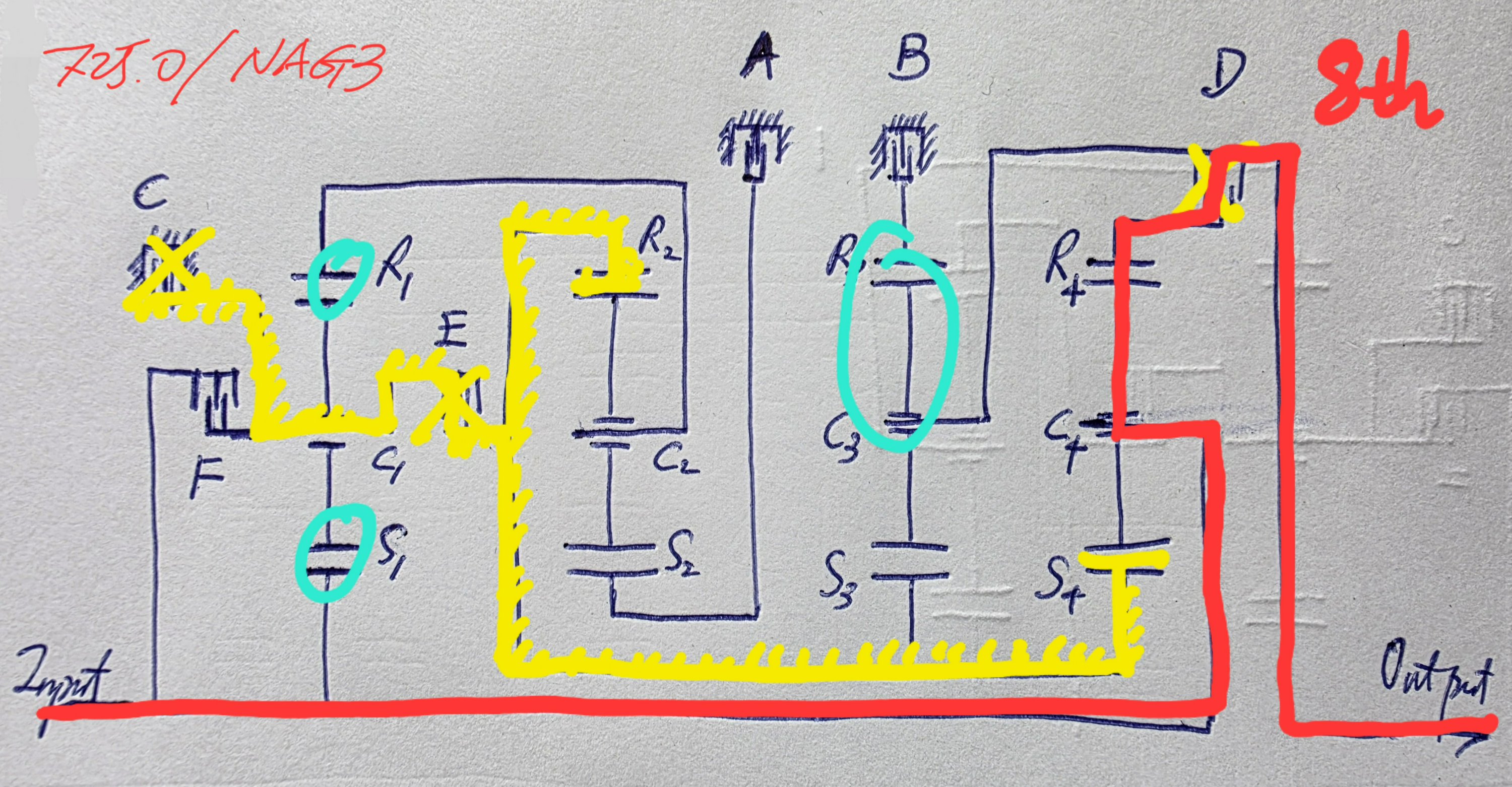
In 8th, torque goes through C4 > R4 > D. Speed increases in Gearset 4. Gearset 3 rotates parasitically.
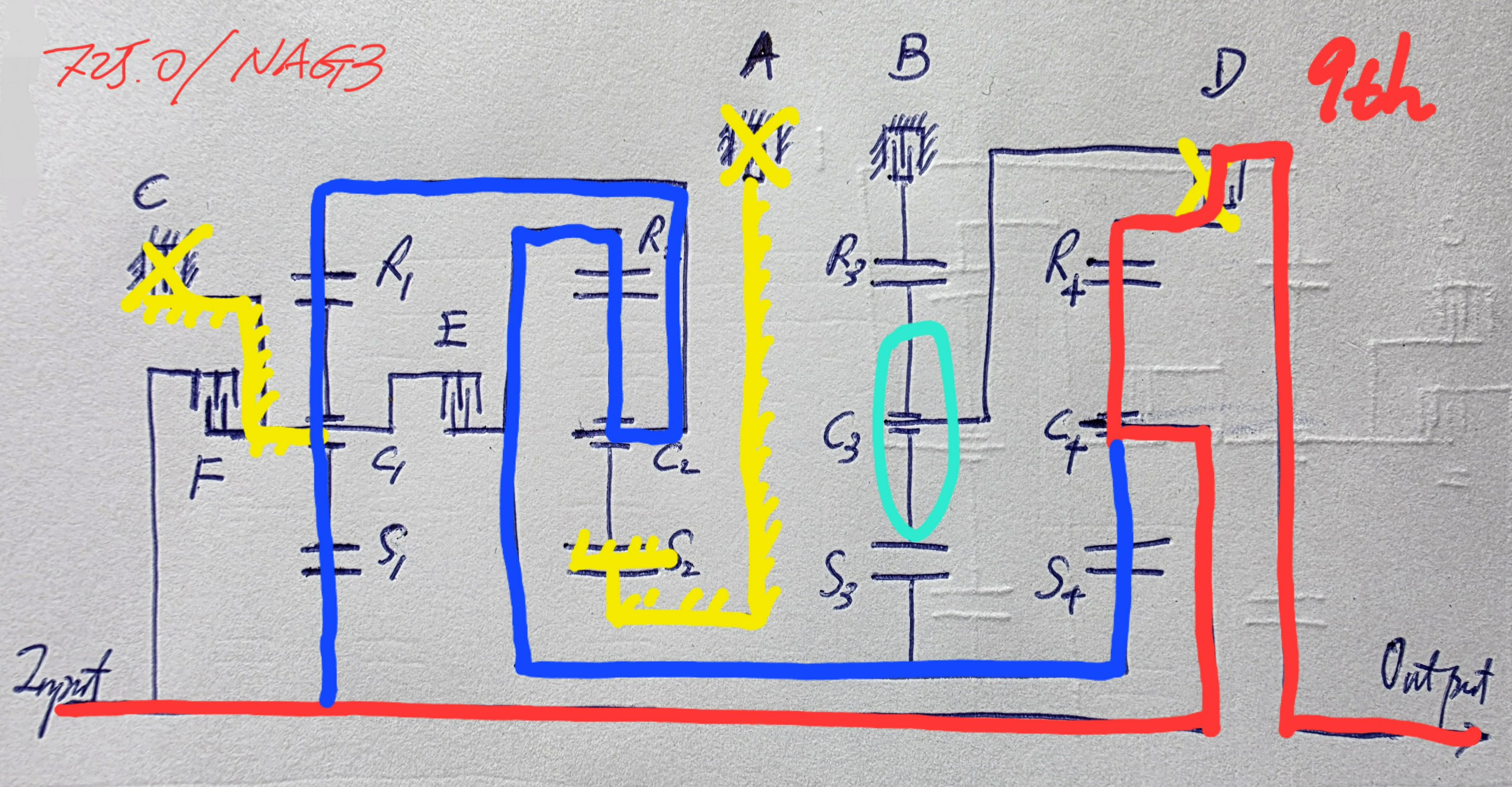
In 9th, torque goes through C4 > R4 > D. Counter-holding is S1 > C1 > R1 > C2 > R2 > S4 > C4. Speed increases in Gearset 4. Gearset 3 rotates parasitically.
Final Words
The gear train of the 9G-Tronic could have made for an exceptional, long-lasting transmission. It is held back by the obsession with fuel economy and NVH control and let down by Mercedes’ current crop of engines, arguably with the M178 being the exception. In the end, the 9G-Tronic is on par with the ZF 8HP.