techMCC
Intake, Exhaust, and Emissions of the 6L 45° V16 Engine—MCC 18
Today, let us round out the design of our PG601 45° V16 engine with top-end elements, accessories, and emission control. I believe that in the next decade, we will see more V16 engines, some achingly similar to PG601.
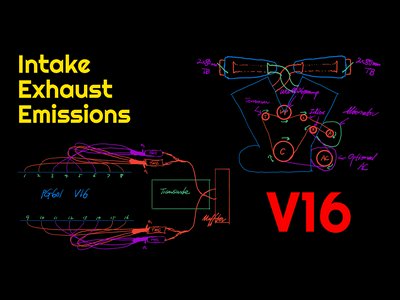
Today, let us round out the design of our PG601 45° V16 engine with top-end elements, accessories, and emission control. I would also note that V16 is the ultimate layout for passenger cars. V24 is just two V12s but weaker. A three-bank W18 has a tricky crank design inappropriate for high-rpm duty. V16 has the most cylinders that one can realistically put in a car and benefit from the effort. I believe that in the next decade, we will see more V16 engines, some achingly similar to PG601. Without further ado, let us delve in.
Final specs
- Intake valve: ⌀36mm, ~226° @ 1mm, titanium
- Exhaust valve: ⌀30mm, ~236° @ 1mm, titanium
- Lifter: Roller followers
- Throttle body: 3x 90mm (alt 4x 80mm)
- Intake manifold: Single manifold with CVIR (alt Dual manifolds)
- Intake runners: ~36mm diameter
- Exhaust runner: ~39mm diameter, equal-length, 8–2–1 (1,2,7,8 / 3,4,5,6 / 9,10,15,16 / 11,12,13,14)
- Fuel delivery: PFI
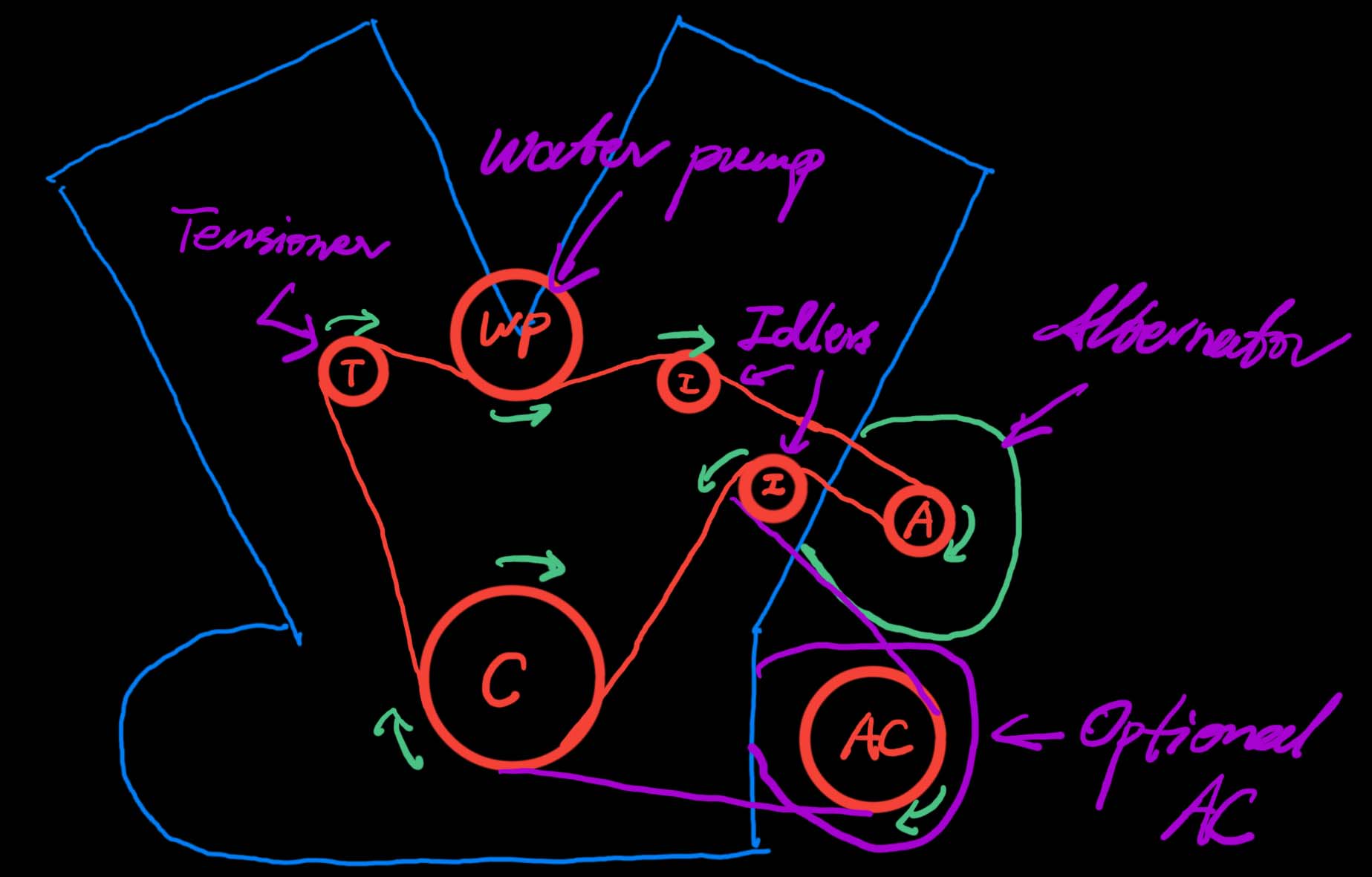
- Belt-driven accessories: Water pump, alternator, AC compressor (optional)
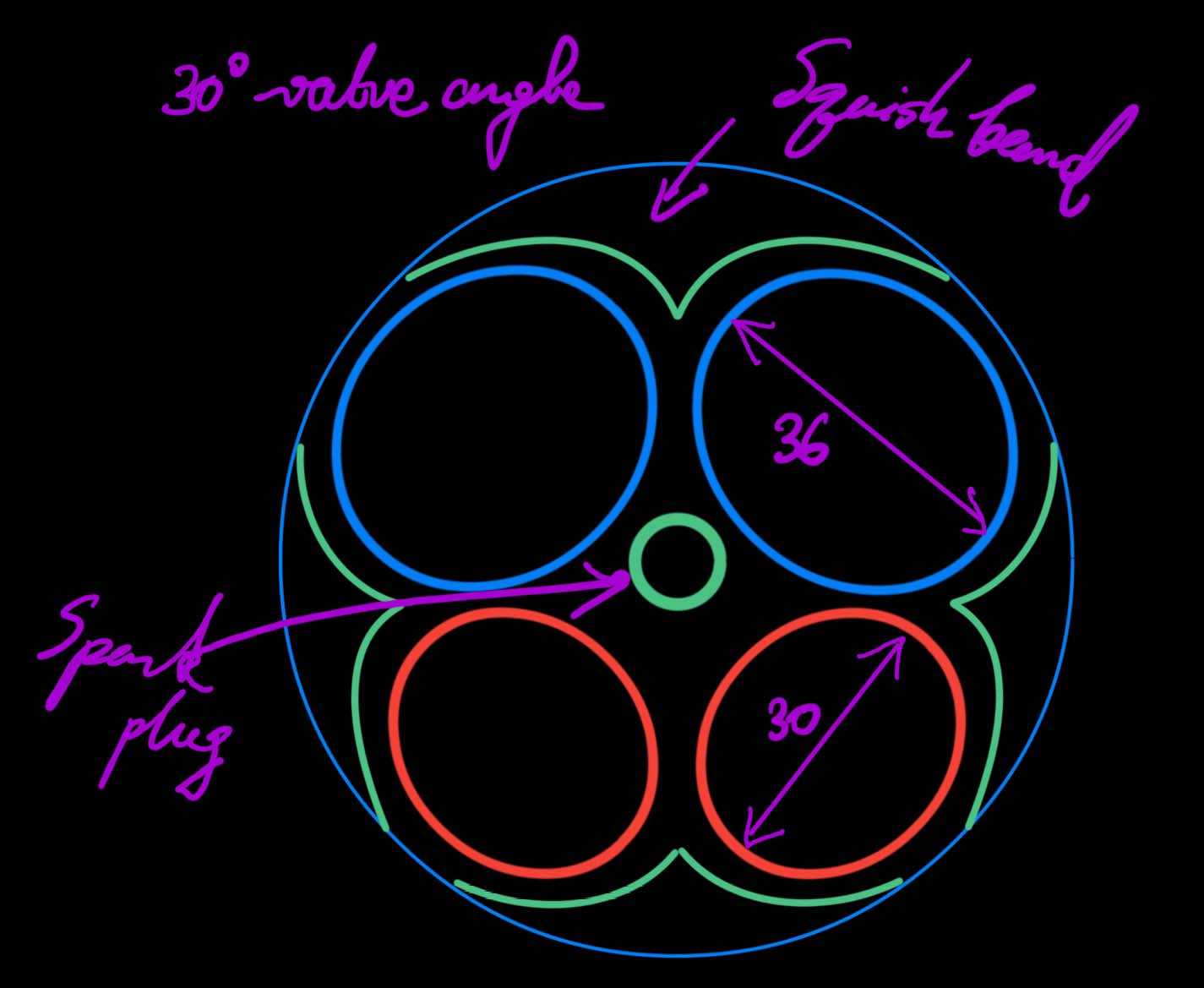
Intake and exhaust valves
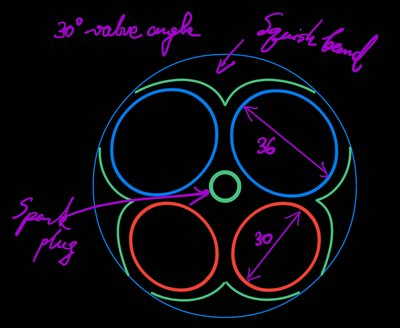
For our 8500rpm redline and moderate bore-to-stroke ratio, we are looking for a solid balance between velocity and flow. Tentatively, we specify intake valve diameter of 36mm with 226 degrees of duration and exhaust valve diameter of 30mm with 236 degrees of duration. This asymmetry is meant to optimize scavenging. It gives us an intake valve area just under 39% of the bore.
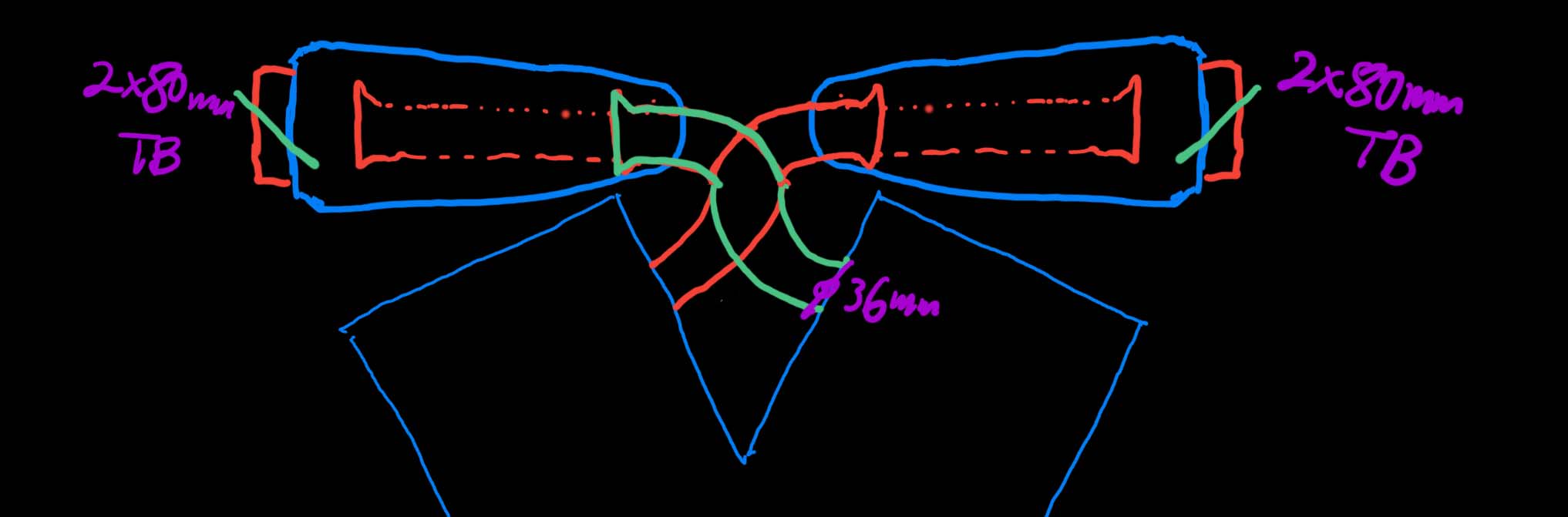
Intake and exhaust runners
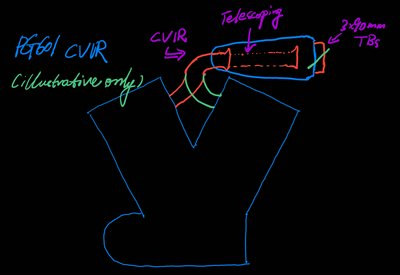
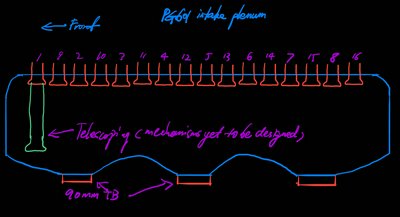
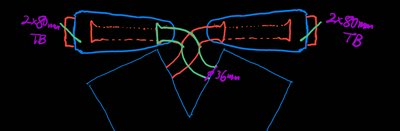
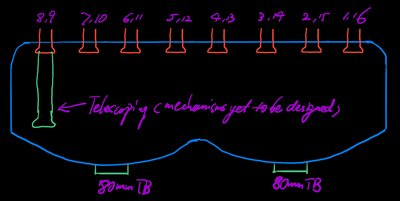
As discussed previously, PG601 uses the continuously-variable intake runner (CVIR) design, either with a single manifold or two symmetric ones. In the former case, we will use three 90mm throttle bodies. In the latter, each side will have two 80mm throttle bodies. In both cases, the intake runners will leave the manifold as individual pipes that go directly into the cylinder head. This section should be as short as possible.
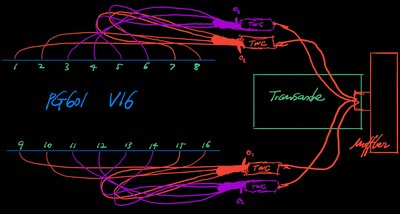
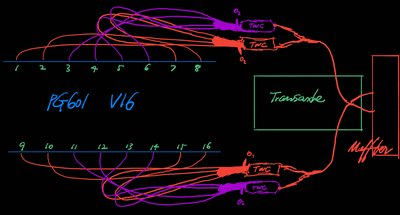
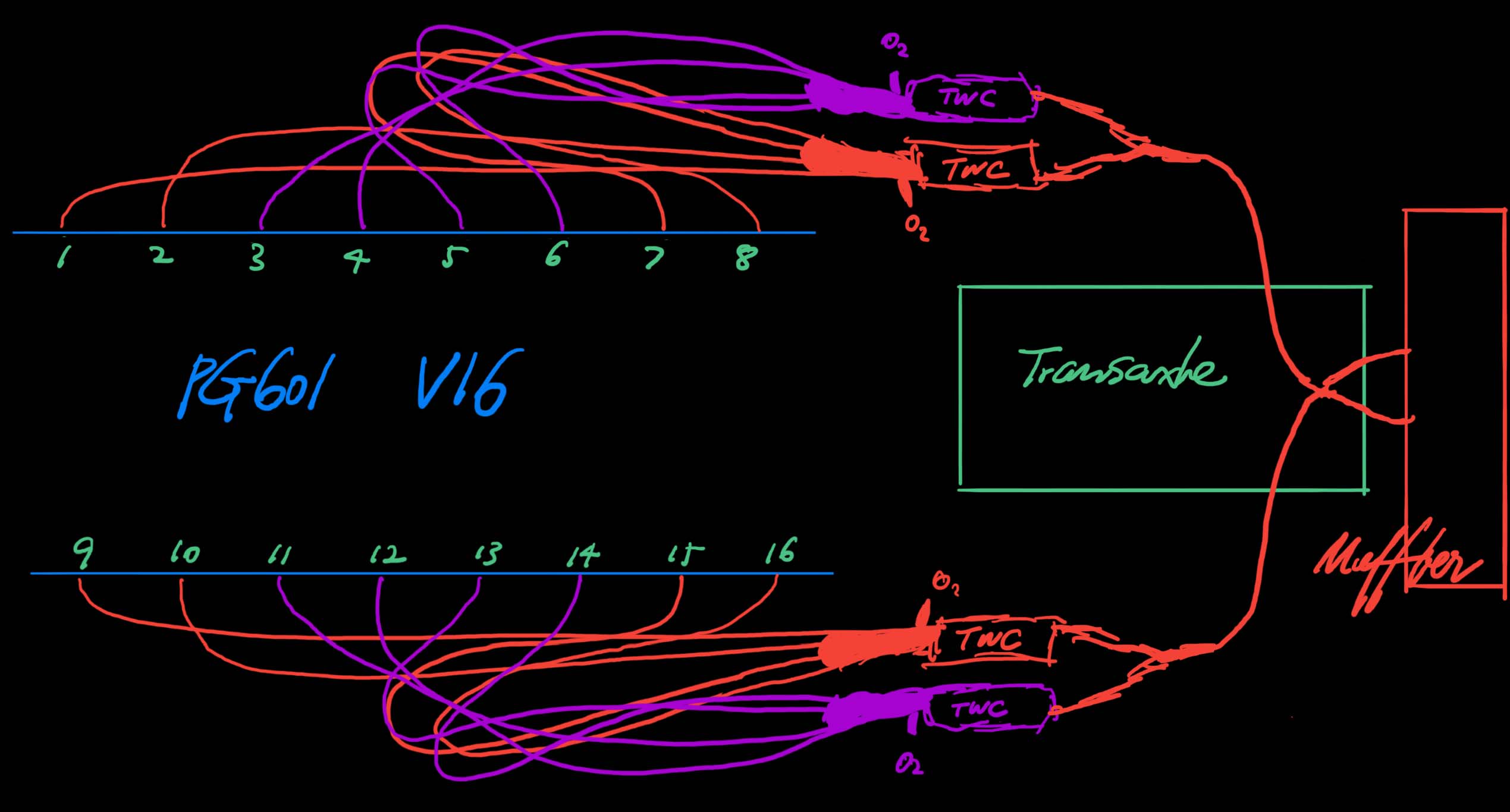
On the exhaust side, we will use equal-length exhaust headers in an 8–2–1 setup. For Bank 1, this means cylinders 1, 2, 7, and 8 merge first before joining cylinders 3, 4, 5, and 6. For Bank 2, the split is between 9, 10, 15, 16 and 11, 12, 13, 14. This is to allow exhaust pulses from the primaries to have an even 180-degree interval. After the initial merge, there should be a lambda sensor followed by a catalytic converter. After the second merge, the collectors then merge at a single X pipe before reaching the muffler.
An aftermarket setup that is worth exploring would be a 16–4–1 setup, where the four secondary pipes merge directly into one collector. This probably is worse for power but may provide a unique exhaust note.
Tentatively, we specify 36mm intake runner diameter and 39mm exhaust runner diameter.
Accessories
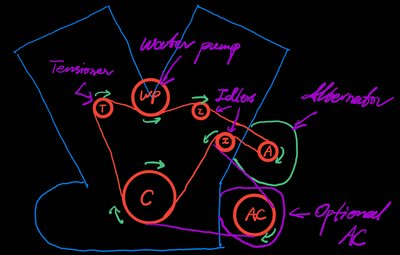
Since we are after mechanical purity, PG601 should have simple accessories just like PC301. By default, this includes just a mechanical water pump and an alternator. AC compressor is optional. Their layout is similar to that of our V12.
Emission control
As a naturally-aspirated, port-injected engine, PG601 has an easy time meeting emissions standards today. Indeed, Euro 7 is not that different from Euro 5 for an NA PFI engine. All the crying and whining by automakers is because they have invested all their R&D into cheating with direct-injection and turbocharging. Now they try to cheat with electric motors, but in my opinion electric motors make the most sense without a combustion engine.
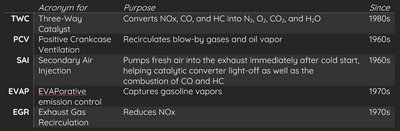
Anyway, PG601 only needs the following: TWC, PCV, SAI, EVAP, EGR, and a cold start strategy that includes retarded ignition timing and elevated idle. I have summed up these commonplace systems in a table.
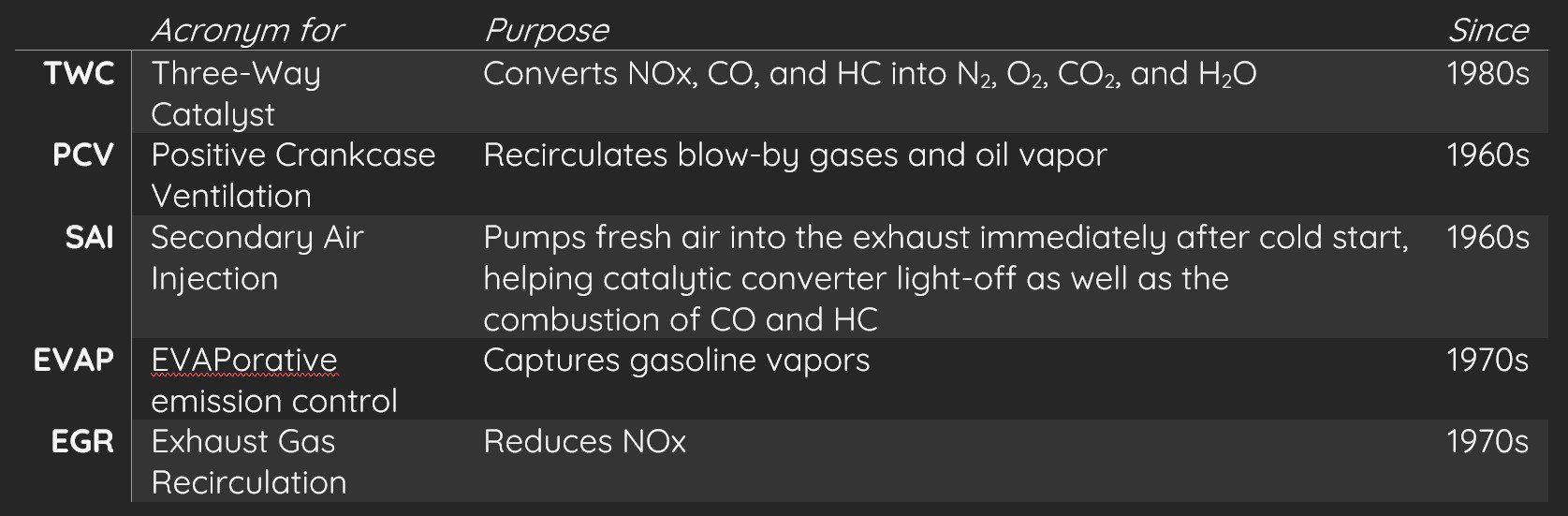
In fact, this list has not changed since the 1990s, with the exception being that modern VVT-equipped engines do not need an external EGR. With better sensors and much improved computational power, it is easy for an NA PFI engine to meet emissions requirements. Thanks to the latest regulatory updates, we do not need to worry about fuel consumption in North America, either.
Gallery: PG601 V16 intake exhaust emissions
MCC