techMCC
The 6L 45° V16 Engine Short Block—MCC 17
Today, let us delve into the short block of the 6L 45-degree V16 engine that I introduced previously and go over the reasoning behind its design choices, particularly with the philosophy of PG601 in mind.
Published by Dr Jiulin Teng on 03 Mar 2026
Keywords: my-car-cov16-engine
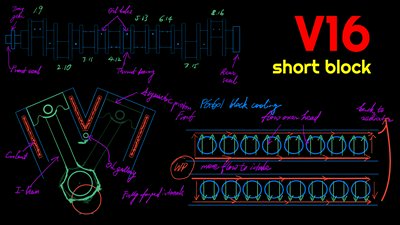
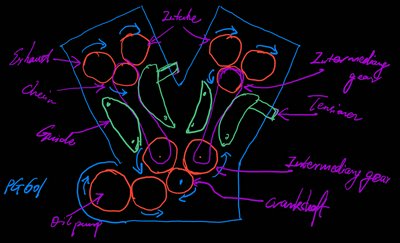
Today, let us delve into the short block of the 6L 45-degree V16 engine that I introduced previously and go over the reasoning behind its design choices, particularly with the philosophy of PG601 in mind. I have also updated the script for the Engine Simulator game with more details. As a side note, this game unrealistically favors tiny intake and exhaust dimensions, which may be fun if you want to tinker with the file.
Bottom-end specs
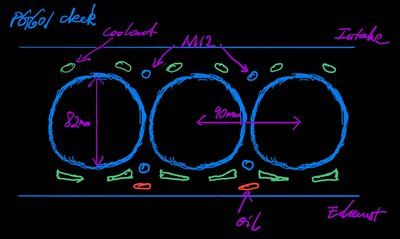
- Bore x stroke: 82mm x 71mm (1.15:1, 5999cc displacement)
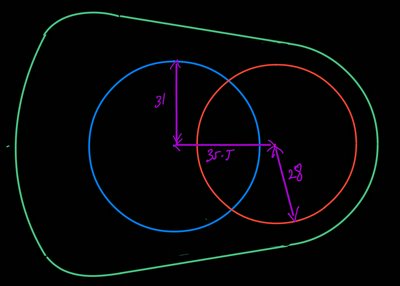
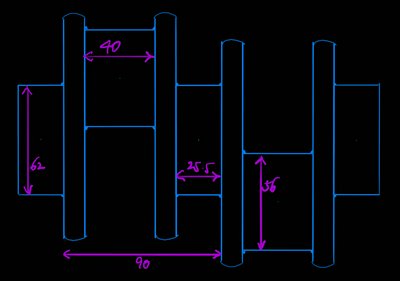
- Cylinder spacing: 90mm
- Rod length: 160mm (2.25:1 rod ratio)
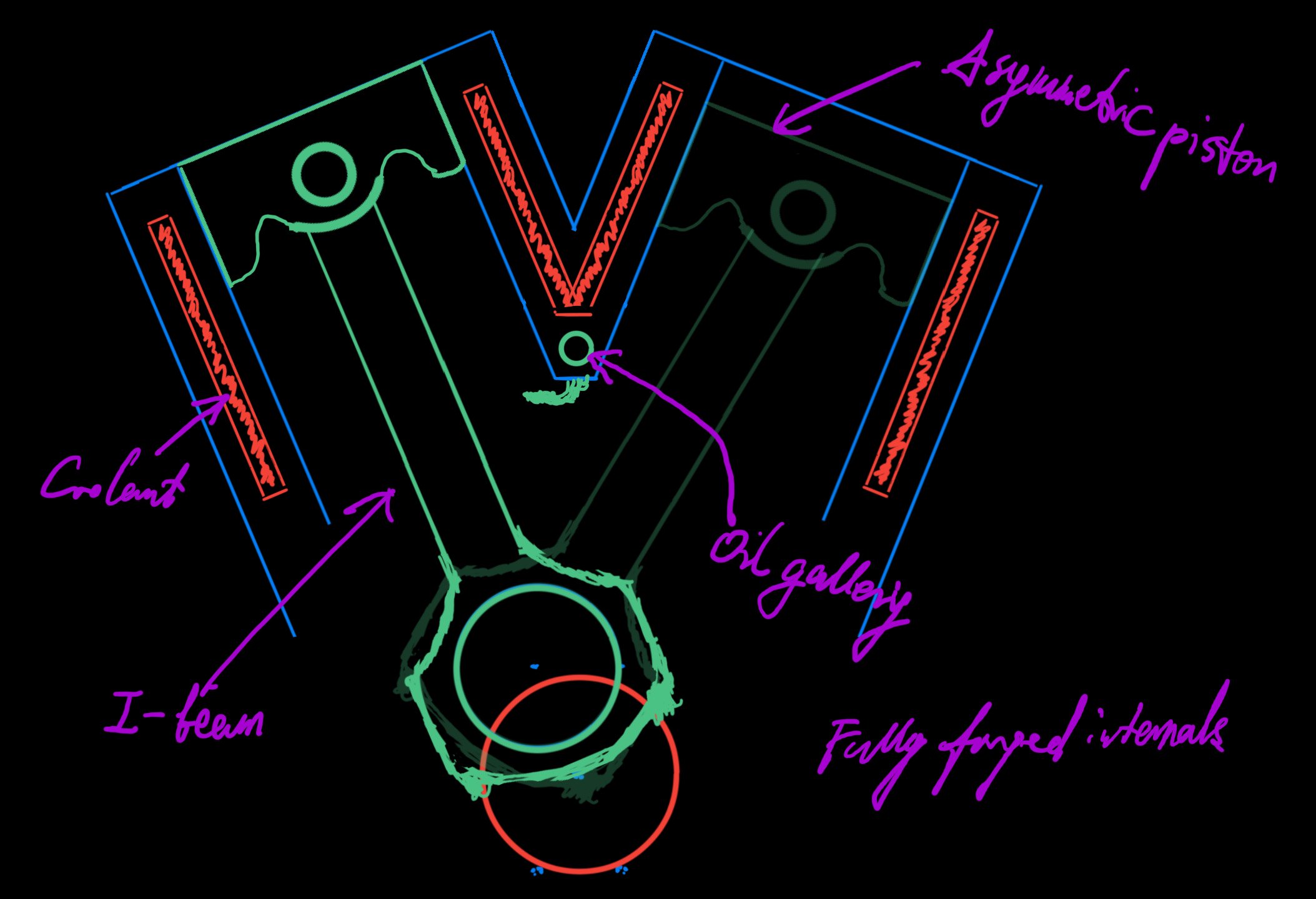
- Block: Hypereutectic aluminum, Nikasil coating, bedplate, waisted studs
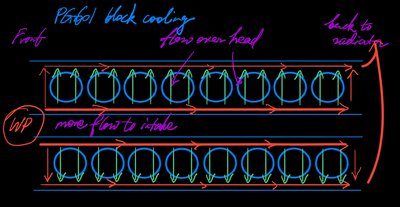
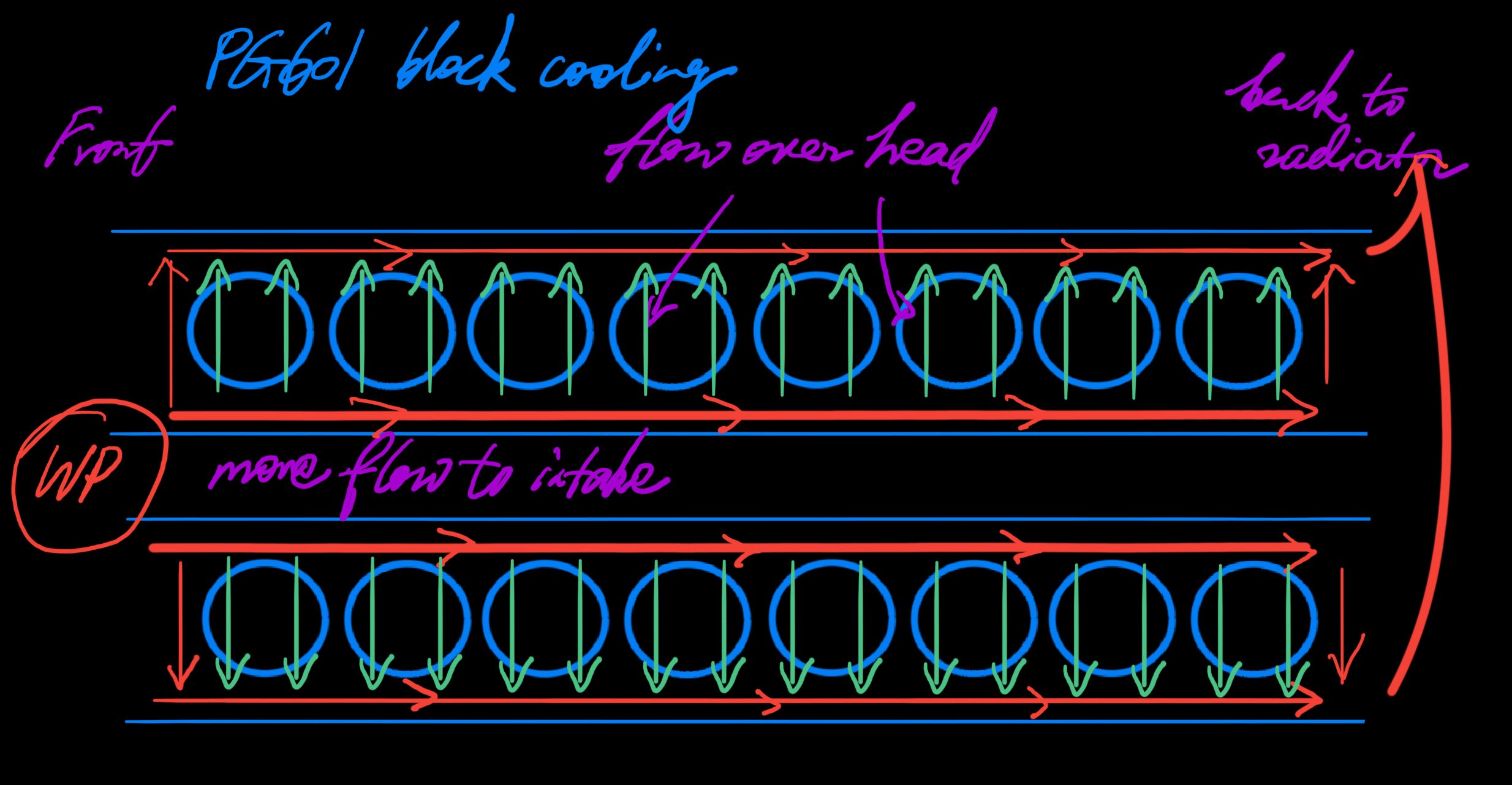
- Water jacket: Closed deck, Siamesed cylinders, parallel flow
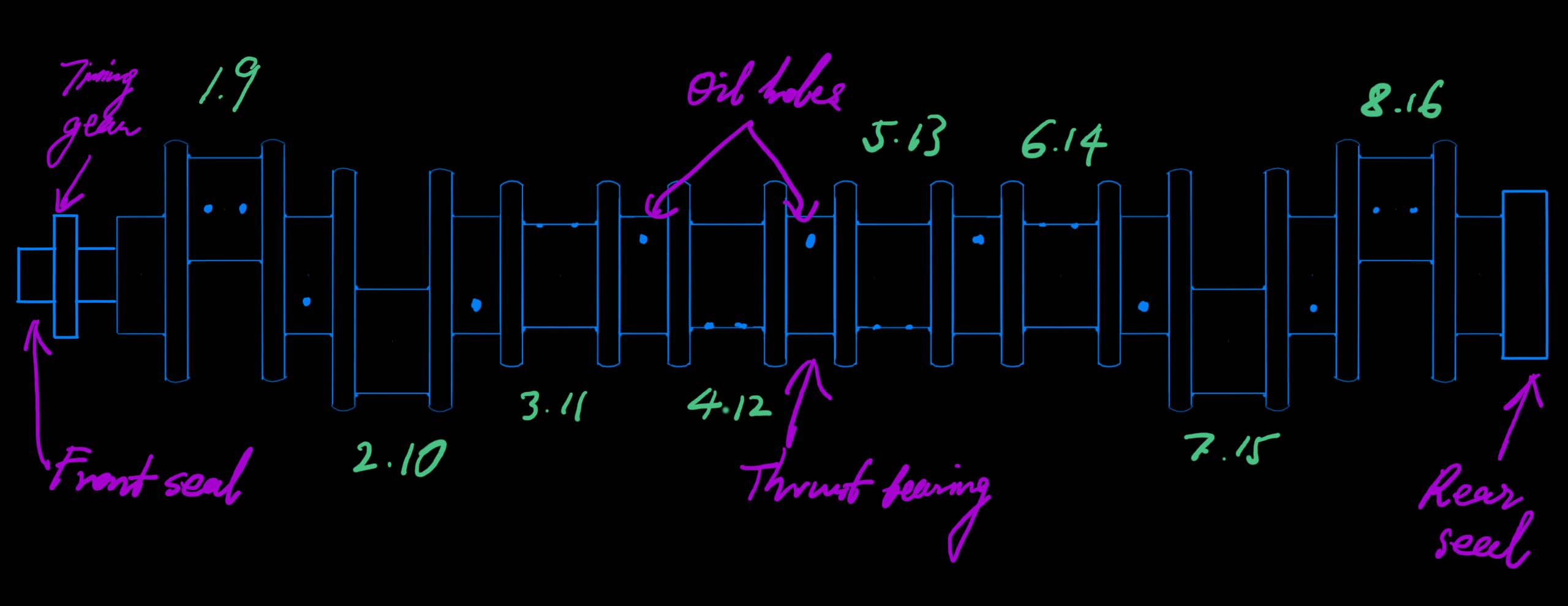
- Crankshaft: 9 main bearings, 4340 forged steel
- Piston: Forged 4032 aluminum, asymmetric
- Piston compression height: 25mm
- Conrod: 4340 forged steel
- Deck height: 220.5mm
- Main journal: ⌀62mm x 25.5mm (bearing ~ 23mm wide, 0.08mm clearance)
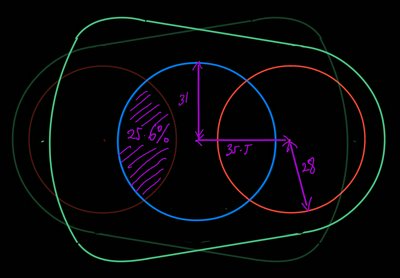
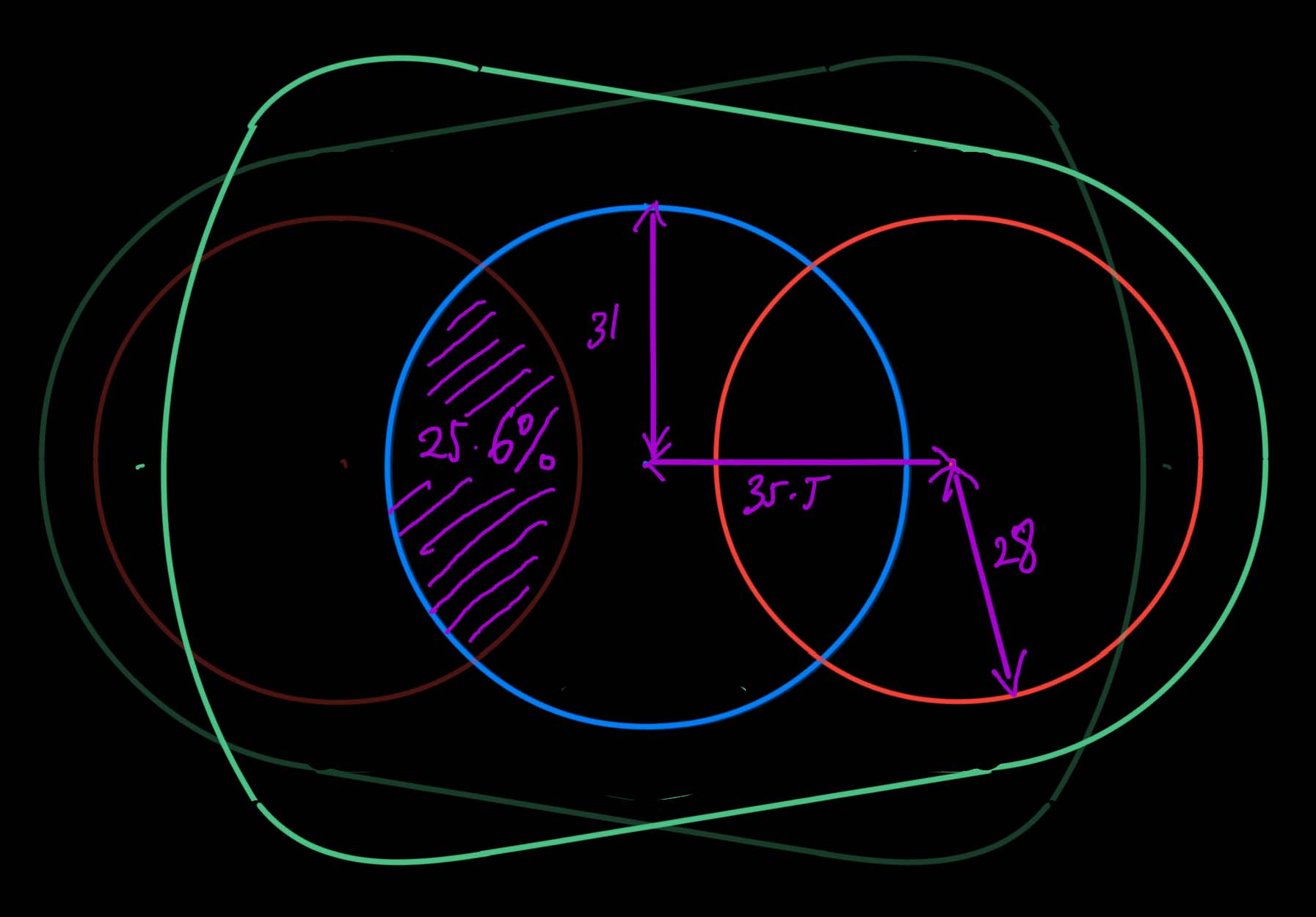
- Rod journal: ⌀56mm x 40mm (bearing ~ 18mm wide, 0.06mm clearance), 772mm2 overlap (25.6%)
- Bearings: tri-metal
- Engine oil: 5W30 or 5W40, 10W50 for track use
Bore, stroke, and rod length
Perhaps the three most crucial dimensions that affect an engine’s character are bore, stroke, and rod length. PG601 must faithfully preserve the unique characters of a V16. The chasses in which it will be installed are designed around it, and fuel economy is not at all a concern. Meanwhile, we are limiting our V16 to 8500rpm redline for longevity, so it does not need extreme bore-to-stroke ratio, either. We also need to keep the size of the engine block in check.
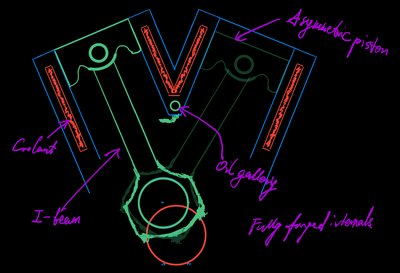
One aspect that I overlooked previously was the tight 45-degree bank angle, which necessitates long connecting rods to prevent the piston skirt from protruding from the cylinder bore at BDC. Hence, I added 30mm to the original specification.
All these considerations led to a moderately oversquare 1.15:1 bore-to-stroke ratio and 2.25:1 rod ratio.
Cylinder spacing, water jacket, and block material
With an 82mm bore, PG601 has a bore spacing of 90mm, leaving 8mm at the narrowest point between adjacent cylinders. This is the Siamesed design that has become commonplace today. With a closed-deck block and no coolant passage between the cylinders, the 8mm distance is generous enough for the durability of the cylinder bores and the head gaskets. The challenge is in cylinder cooling.
This is why we stick with an aluminum block combined with Nikasil coating, as in PC301 V12 and P4201T V4 engines. This combination has one of the best thermal conductivities for petrol engines today. Additionally, we emphasize the use of hypereutectic aluminum, for it brings a higher level of rigidity that is beneficial in a V16.
Crankshaft and bearing journals
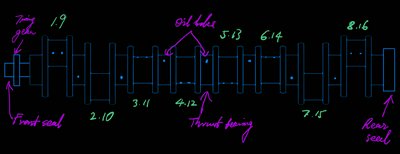
I have previously discussed the layout of the crankshaft in our 45-degree even-firing V16. It has 9 main bearings with 8 rod journals like it is in an inline-8. Since we have a main bearing between each of the two adjacent crank pins, this layout does not affect our decisions for sizing the bearing journals.
Nevertheless, we want a high overlap between the main and rod journals so as to increase the rigidity of the crankshaft. Since our engine will be rev-limited, it is preferable to have larger bearing diameters to achieve that. With a good overlap, we can reduce the width of the crank webs, resulting in a lighter crankshaft, too. We tentatively choose a main journal diameter of 62mm and rod journal diameter of 56mm with conservative but not overly generous widths. This results in just over 25% of overlap.
Exactly how much counterweight this engine needs must be engineered. The inline-8 layout is well balanced, yet heavy counterweights were traditionally used in classic engines. However, those engines often had only 3 or 5 main bearings, were much longer, and used weaker materials than available today. It is possible that a modern V16 can do with considerably less.
Bearing clearance and engine oil
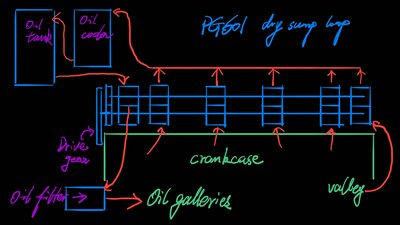
Lastly, when it comes to lubrication, we already work with a strong dry sump setup that is capable of delivering high oil flow and consistent oil pressure. Since we must contend with crankshaft flexes, we should use slightly looser bearing clearances with a moderately more viscous engine oil. We target 0.08mm clearance for the main bearing and 0.06mm for the rod bearing. Both 5W30 and 5W40 engine oils are advisable. For track use, 10W50 should also be compatible, but it is inadvisable for daily duty.
Gallery: PG601 V16 short block
MCC