techXXX
Interior and Features of a V12 GT—My Car Company 11
Previously, I have covered the engine, the drivetrain, the chassis, and the exterior of the mid-size grand tourer that I would build, Type 1. Today, let us move onto the interior.
Published by Dr Jiulin Teng on 01 Feb 2026
Keywords: my-car-co
Previously, I have covered the engine, the drivetrain, the chassis, and the exterior of the mid-size grand tourer that I would build, Type 1. Today, let us move onto the interior.
Seats
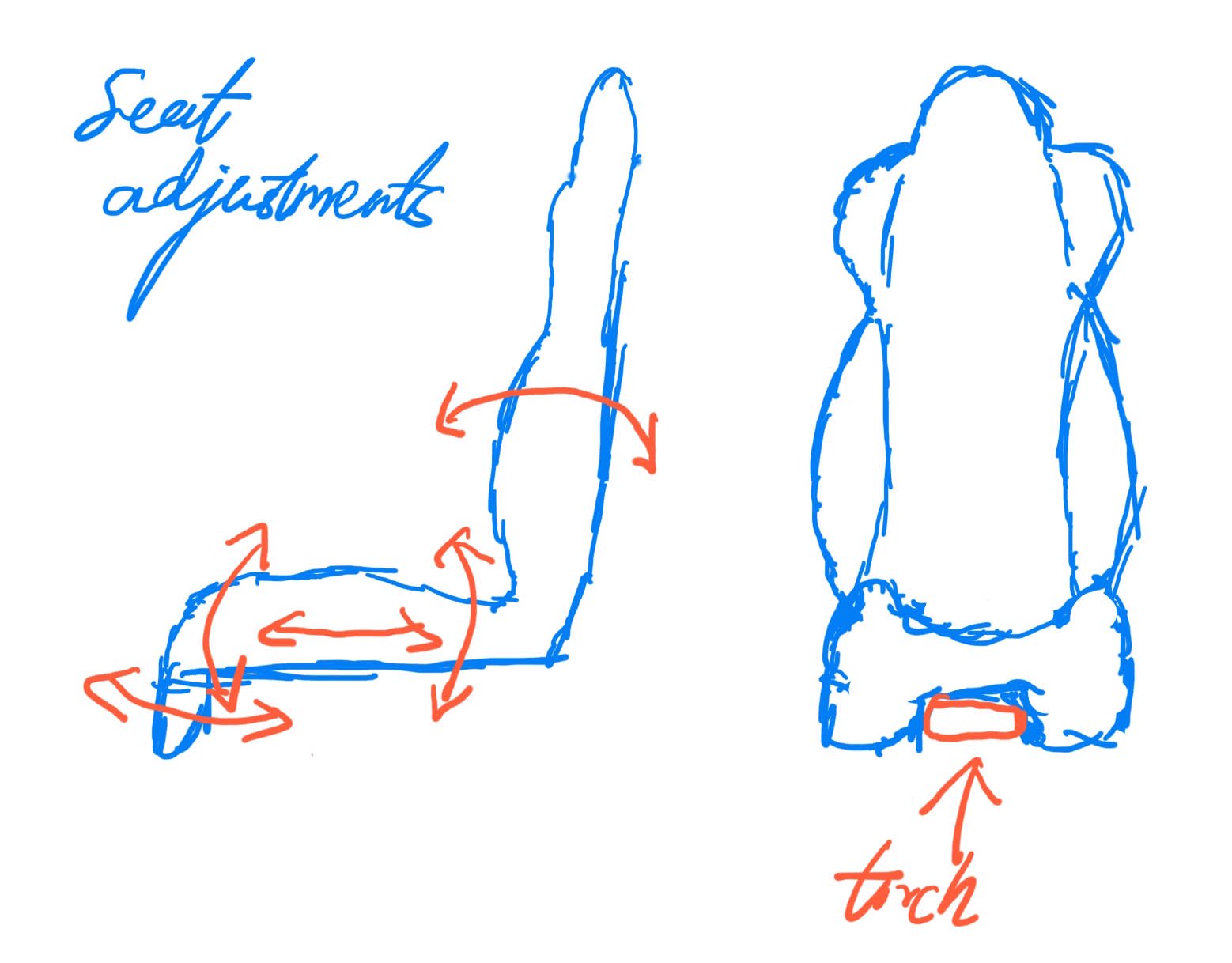
No driver adjusts the seating position every day. It makes sense to trade powered seats for a lower weight. Type 1’s seats will have standard manual adjustments, including extendable thigh support. To make sure more people can enjoy Type 1, we will offer the front seats in two sizes, S and L. The seats will be covered by durable fabrics woven from natural fibers, possibly hemp, or recycled polyester in a range of plaid patterns. They keep the cost down and offer the best interior air quality.
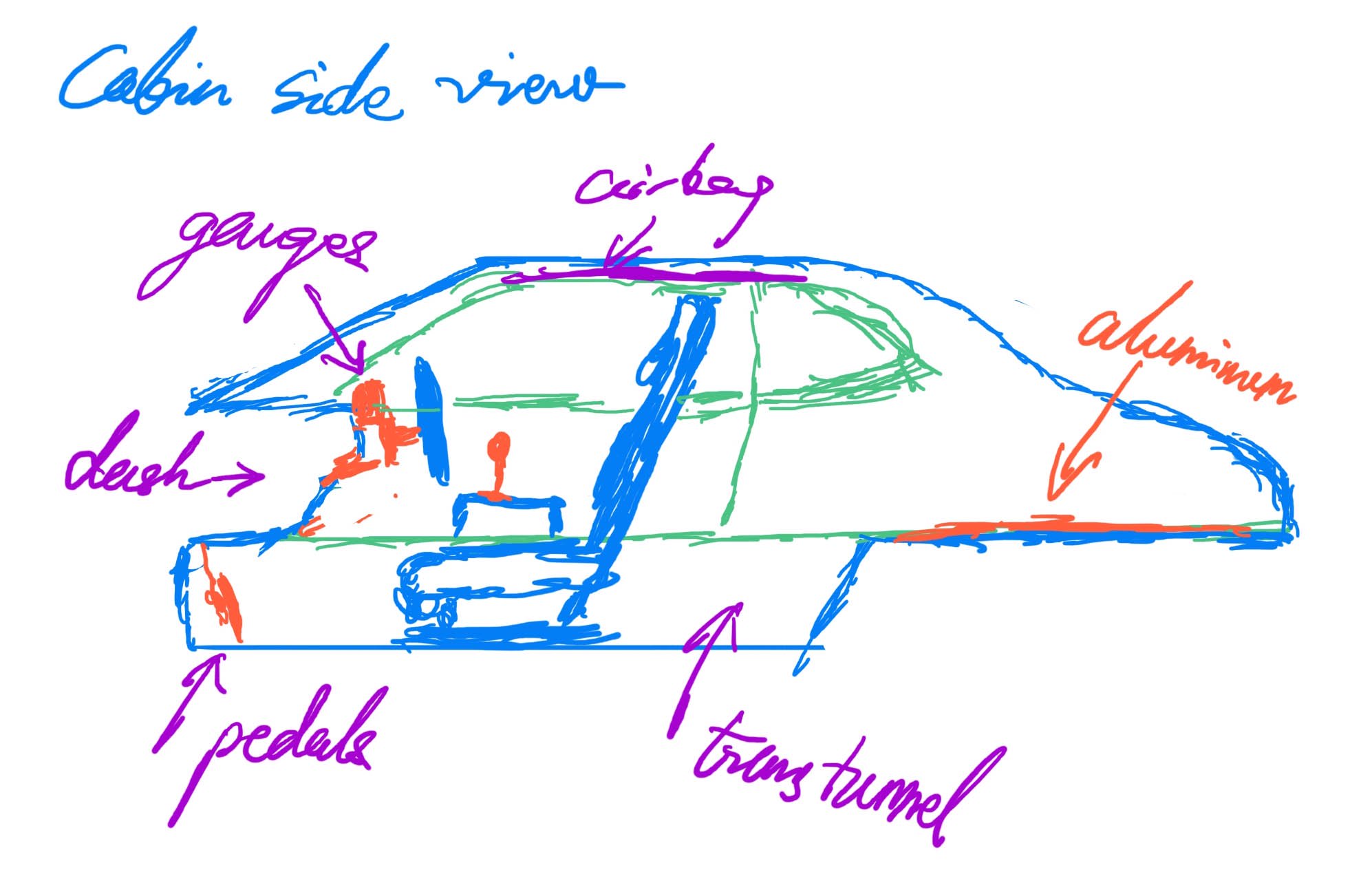
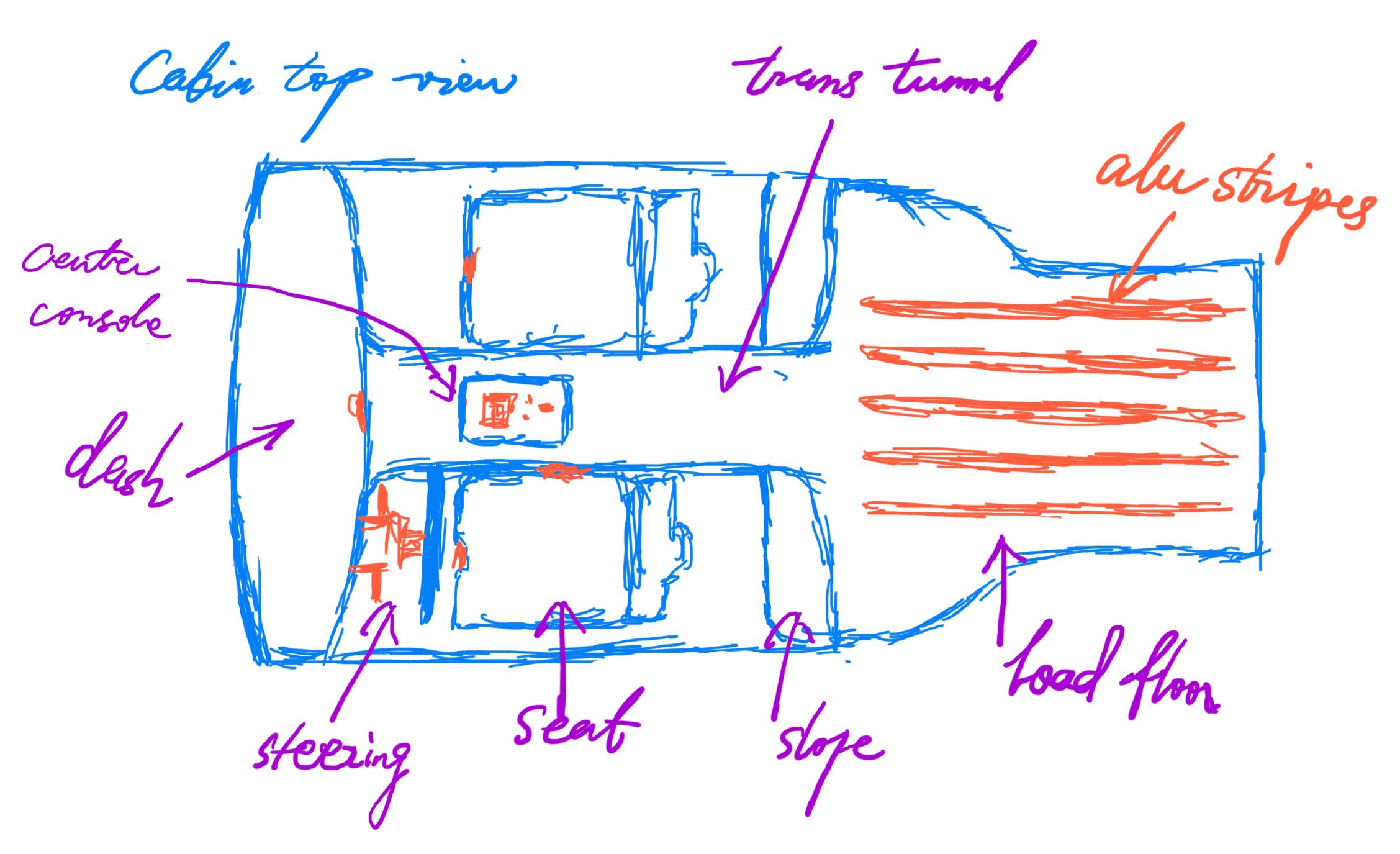
From factory, we will offer two seating arrangements: 2+2 or 2+parcel shelf. In the latter, the rear seats are replaced by a flat loading floor connected to the trunk area. The parcel shelf will have solid polished aluminum stripes that help owners slide their luggage in and out. We will also sell parts that will allow owners to convert themselves between these options.
Type 1 will not have needless interior lighting. Instead, each seat will have a holder for a torch in polished aluminum.
Doors
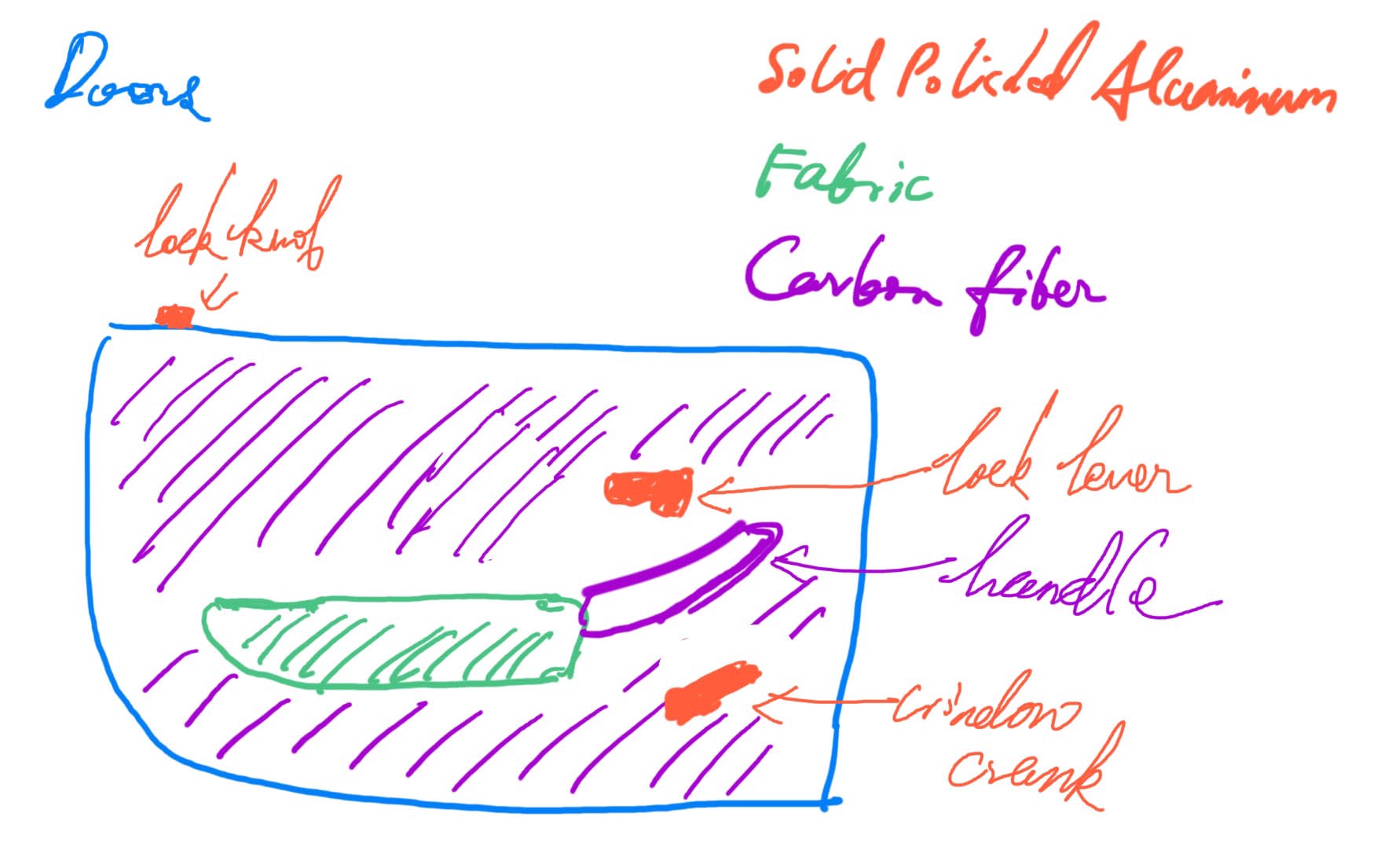
In terms of material, we want to keep the cost down without looking chintzy. Fortunately, automakers already have a good solution: “carbon fiber trims”. This is where most enthusiasts are clueless. They think their thousand-dollar carbon fiber trim package costs a lot to make, but these are in most cases pure plastic with carbon fiber veneer that costs a tiny fraction of the price to make. We will use carbon fiber trim to cover all the hard surfaces and the same fabric from the seats to cover the armrests. As highlights, we will use polished solid aluminum door lock levers and knobs.
As mentioned previously, we will use hand crank windows and locks without remote control. The crank will also be in polished aluminum. Nevertheless, Type 1 will have central locking. Needless to say, the doors must also be fitted with airbags.
Floor and Ceiling
The floor and ceiling will be wrapped in the same kind of fabric as the seats but without the plaid patterns. The floor will also be carpeted. Type 1 is a superlight GT, not an all-out sports car. We achieve light weight by eliminating BS electronics and features, not by reducing refinement. Hence, we will apply eco-friendly sound deadening strategically to reduce road noise.
Along the edges of the ceiling, we will install curtain airbags, too.
Instrument Cluster
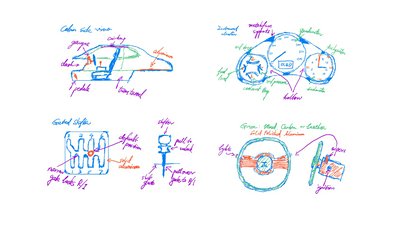
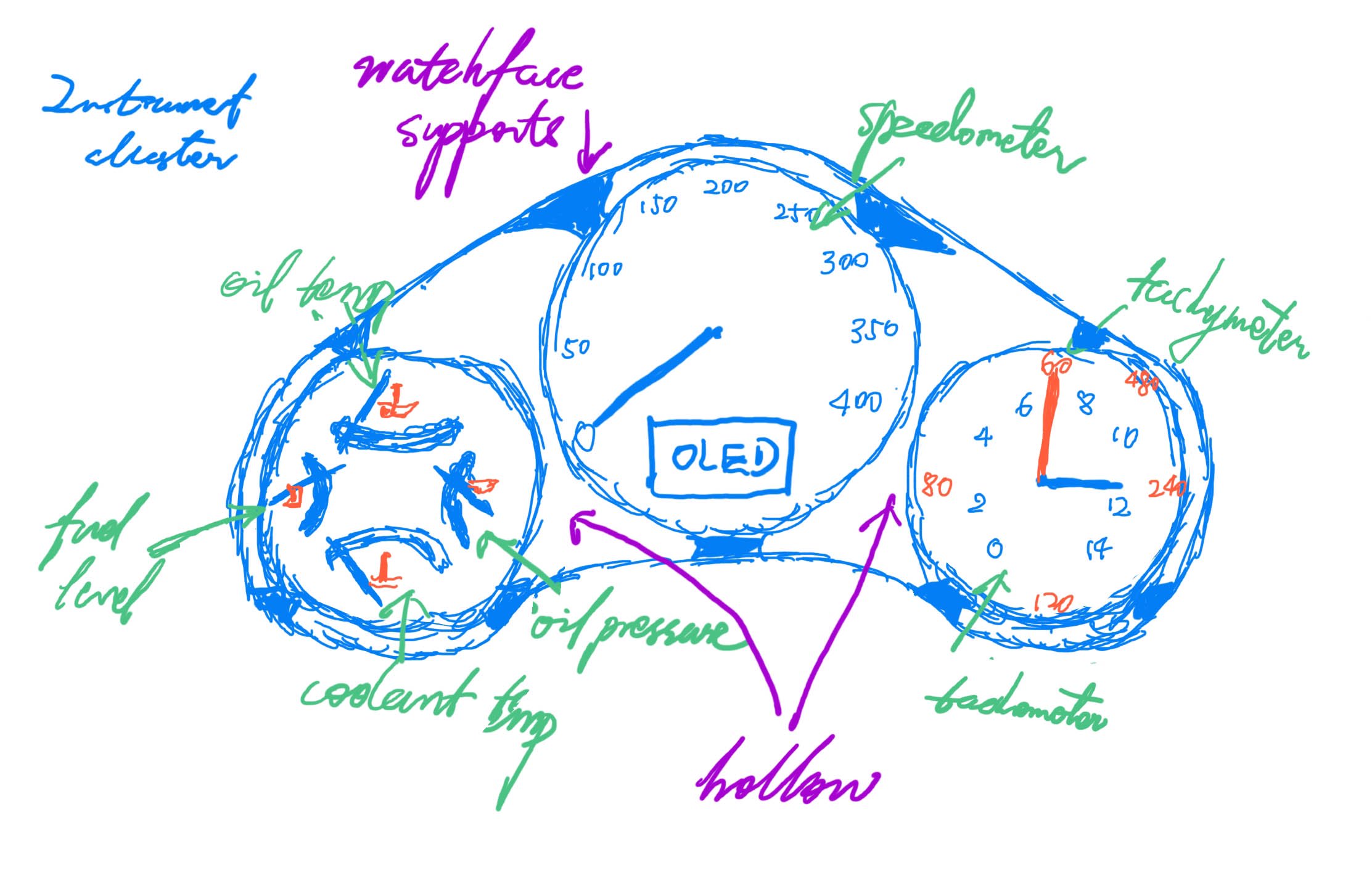
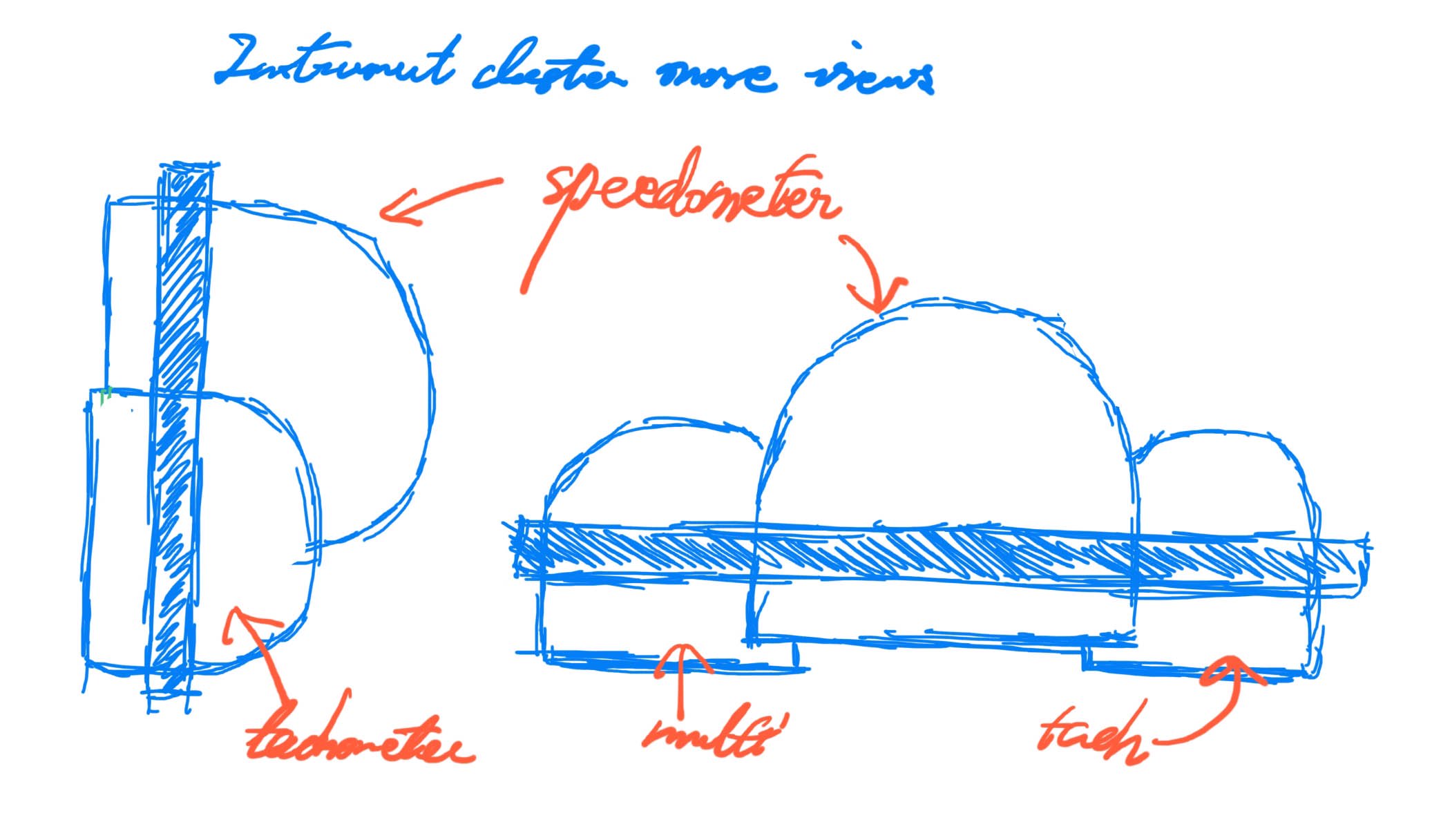
Type 1 will use a retro instrument cluster much like the Spyker C8, De Tomaso P72, and Bugatti Tourbillon. There will be three separate “watch faces” surrounded by an aluminum wire frame. Each is suspended separately and only connected to the frame at three points. Electric wiring would be hidden inside the frame. The frame is then attached to the steering column.
In the middle, we will have the speedometer with a small display. This display has three roles: It is the trip computer, it can display error messages, and in countries where a reverse camera is legally required it can work for that in reverse. We will not be putting another display in the car. To the right of the speedometer, a smaller tachometer will reside. On the outer casing of the tachometer, we will have a tachymeter. This can be reset and triggered by a button next to the shifter on the center console.
To the left of the speedometer, we will have the oil pressure, oil temperature, water temperature, and fuel level laid out like complications in a watch.
Obviously, unlike the exotics that inspired Type 1, we will not be using watch-like movements. Still, these analogue gauges encased in polished aluminum will provide an authentic GT experience without chintzy electronics.
Dashboard
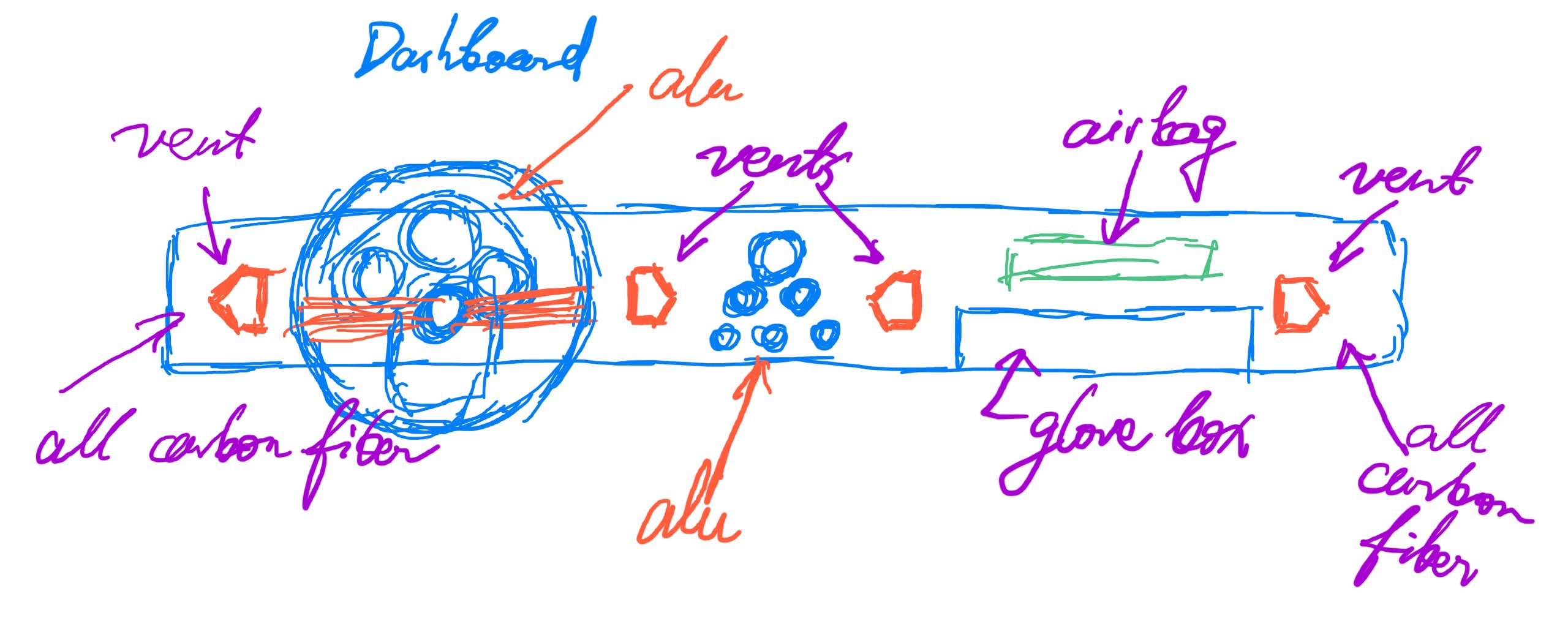
The dashboard can be trimmed in carbon fiber (i.e. not real carbon fiber) or fabric. There are four air vents, each half of a hexagon. This echoes the exhaust tips and again represents the V12. They are also polished aluminum.
In the center of the dashboard, we will have another set of watch-like analogue gauges. On top, we have the clock, which is bigger. On bottom, we have a compass and the outside temperature. All are polished aluminum pieces that protrude from the dashboard.
Below the gauges, we have the controls for a single-zone AC. There are three simple knobs, one for air speed, one for air direction, and one for temperature. Each has a black-and-white LED display in the middle. They are also made of polished aluminum for a consistent look and feel in the cabin. Their sides will be knurled.
Note that if the AC compressor is not installed, the vents will only be able to blow at or above ambient temperature.
Steering Wheel
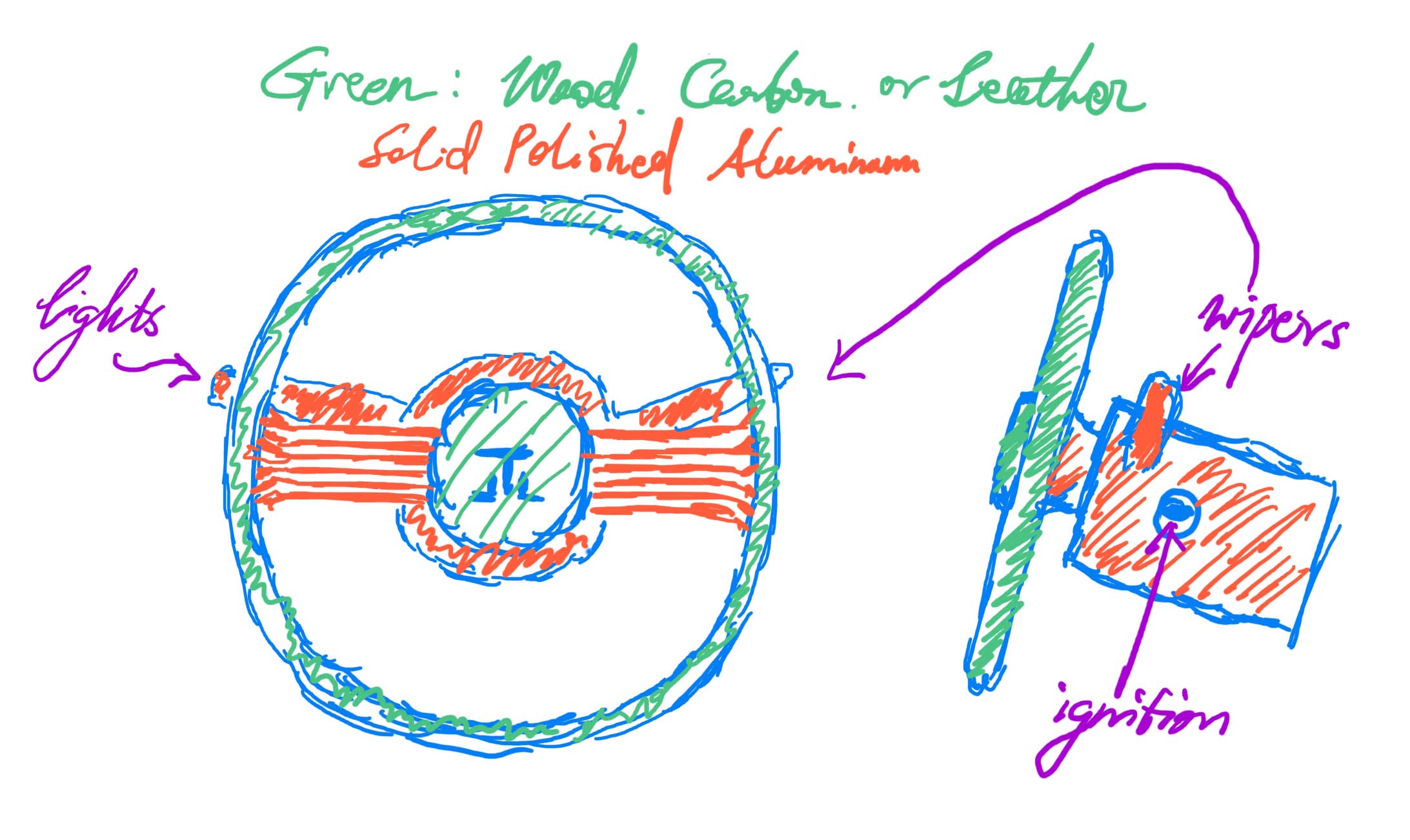
We will offer three steering wheel options: leather, wood, and carbon fiber. Obviously, and like it is with most manufacturers, they are all plastic, with trims in either leather or veneer. Still, we will use high quality, durable finishes that look the part. There will be an airbag in the center, covered by the same trim as the rim. The two spokes will have the same polished aluminum design. Each of these spokes will have 6 thin bars to represent the 12 cylinders under the hood.
On the steering column, there will be a traditional lock ignition with integrated steering lock. When the key is turned to the “On” position, an auxiliary pump will pressurize the engine oil system. Behind the steering wheel, we have two aluminum stalks for lights and wipers. Their tips will also be knurled. Needless to say, the steering column has manual adjustments for tilt and telescope.
Pedals
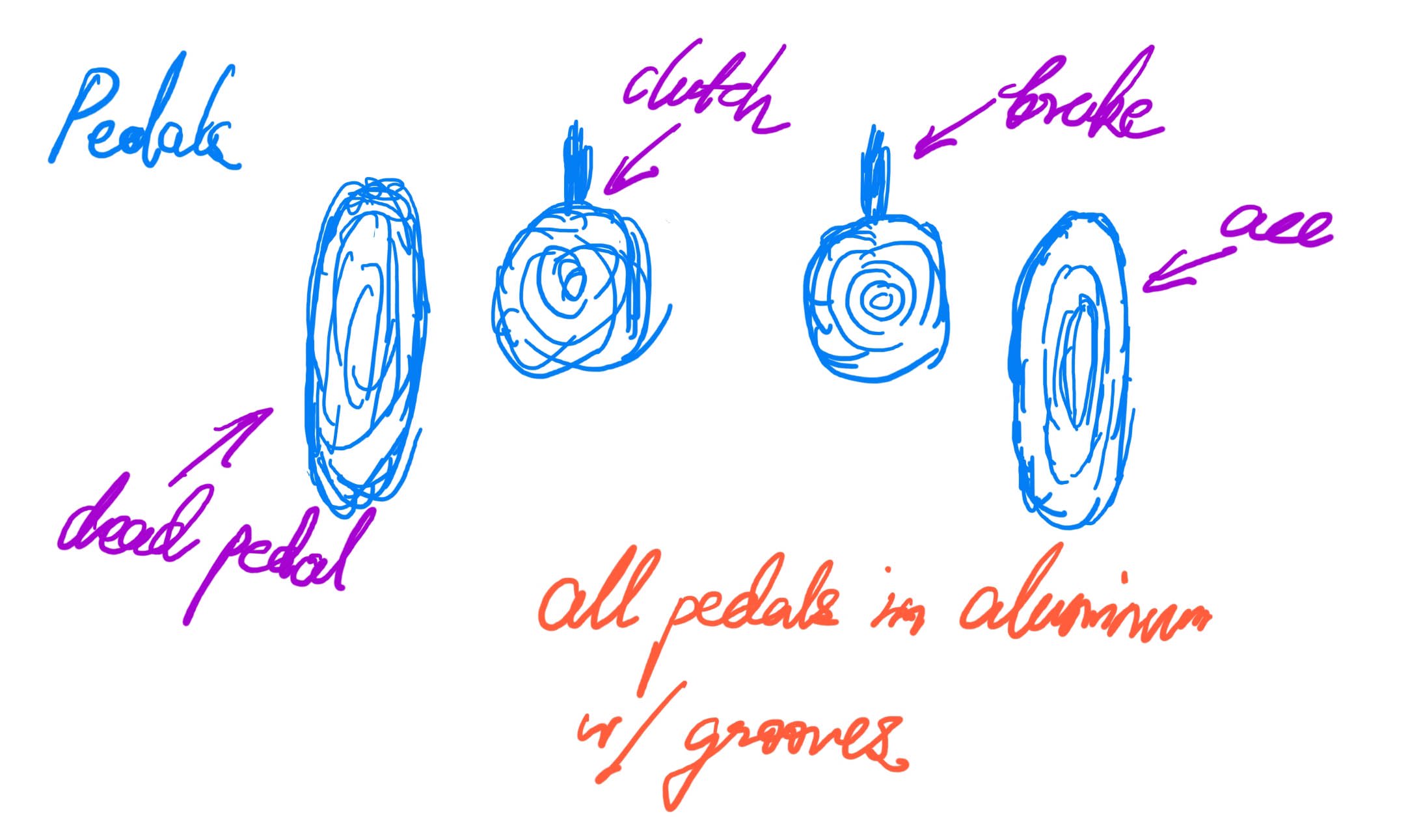
All pedals are again polished aluminum with grooves for additional friction. They will have similar designs to the Pagani Utopia. However, the brake and clutch pedals will be top-hinged, which offer better ergonomics for daily driving. There will also be a wider gap between the brake and clutch pedals than it is between the brake and the accelerator. A dead pedal will be on the left, in the same material and finish.
Center Console and Shifter
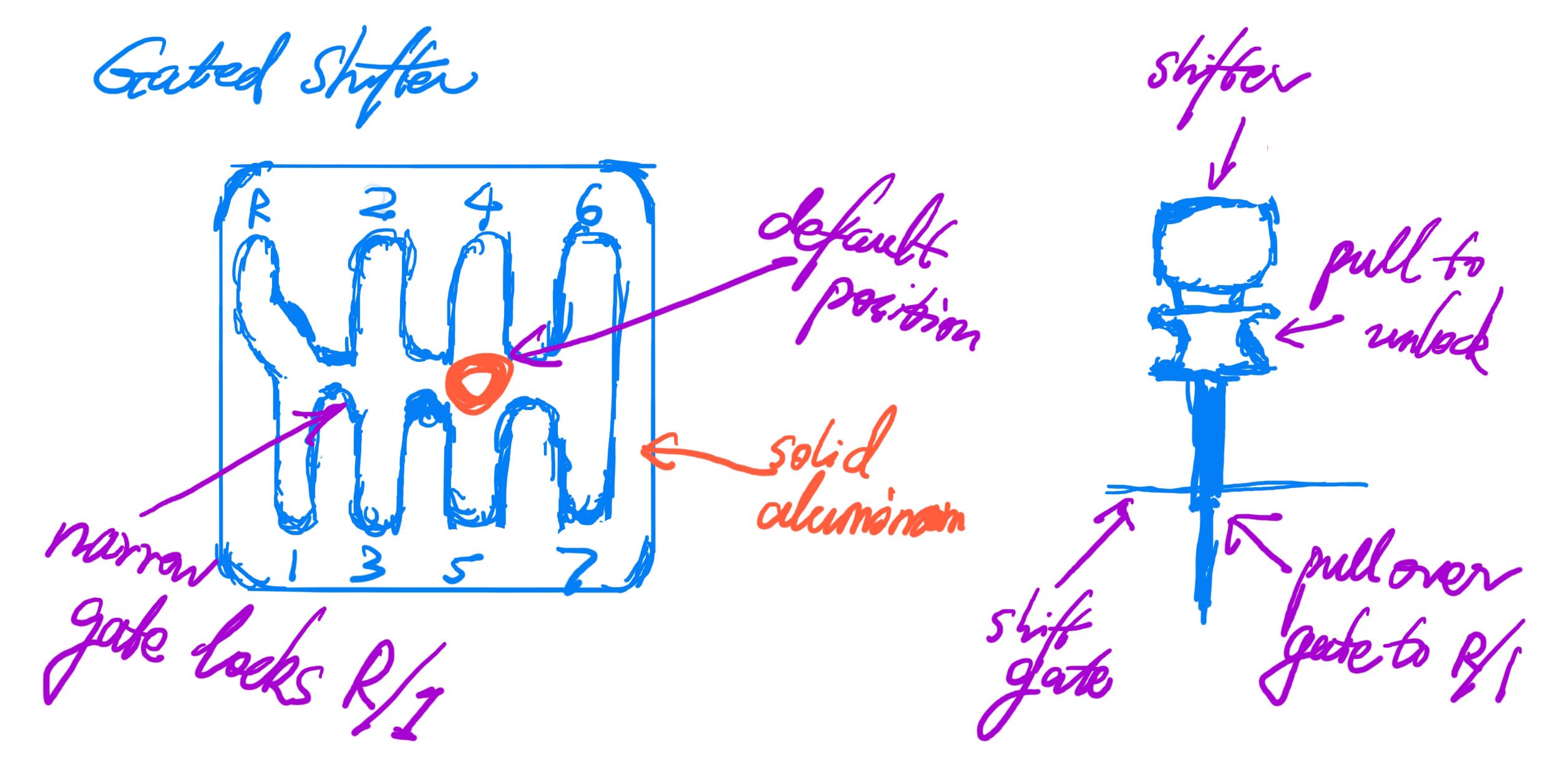
On the transmission tunnel, the center console is dominated by the gated shifter. The shift knob can be optioned with the same trim as the steering wheel but with an aluminum core. The shift gate is the same polished aluminum. Because we have a 7-speed manual, the default position of the shifter is between 4 and 5 like it is on the Pagani Utopia. Unlike most cars, both 1st and Reverse will be behind a pull lock. This way, it is virtually impossible to do a “money shift” into 1st.
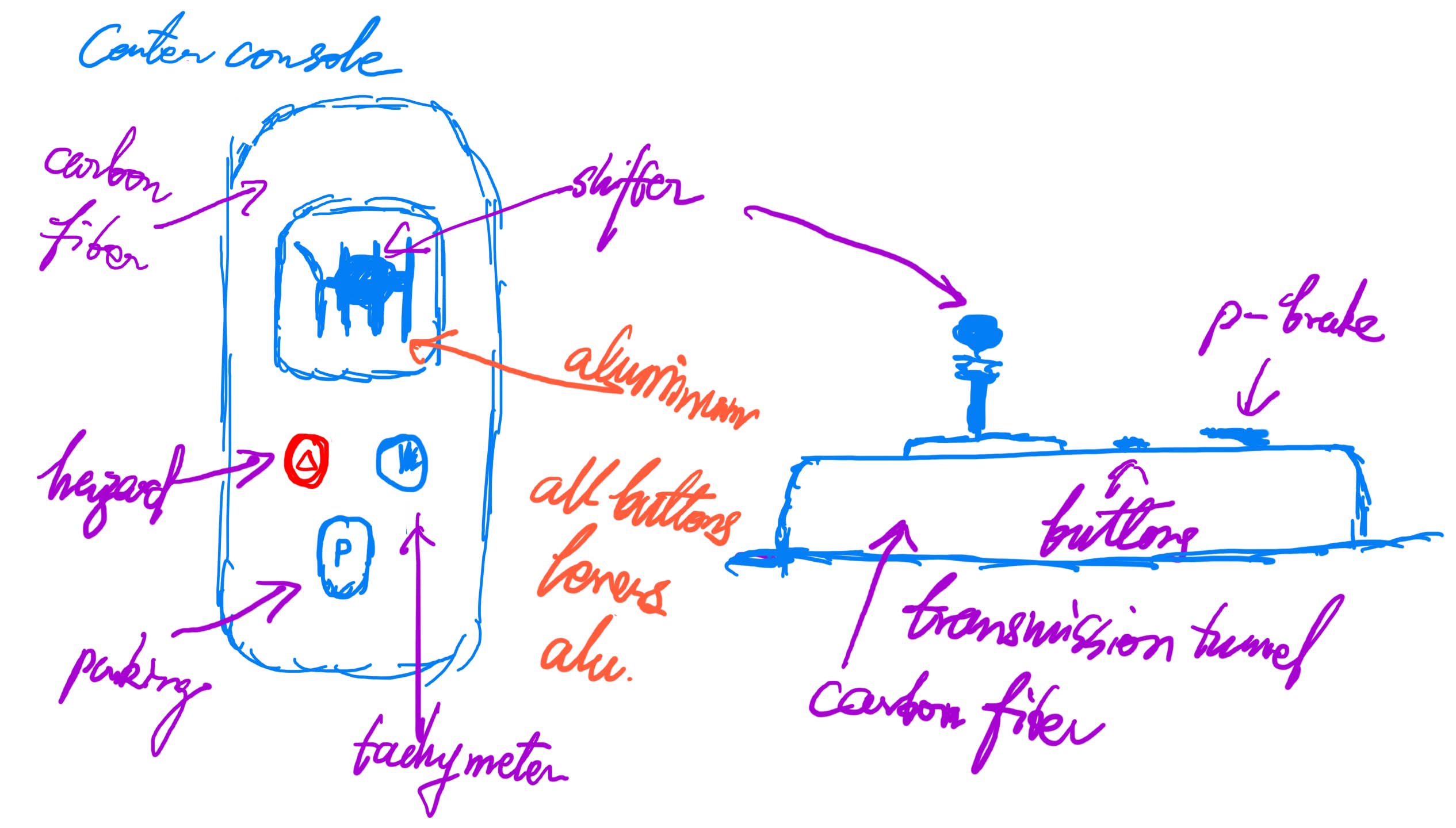
Behind the shifter, there will be two buttons and one lever. One button in red is for the hazard light. The other button is for the aforementioned tachymeter. The lever is for the electric parking brake, which will be automatically engaged when the engine is shut off. All these will also be in solid aluminum on top of a panel trimmed in carbon fiber.
Final Words on Type 1
At some point, it may be interesting to offer additional trim options, such as real carbon fiber, leather, and metalware in bronze.
This is the final post on Type 1. However, I will write more about at least two other cars that I have in mind. One is a super mini powered by a hot-V4 turbo in FWD with double-wishbone suspensions. The other is an all-out, large-displacement V12 mid-engine sports car in RWD.