techXXX
Understanding the Mercedes 722.6 5G-Tronic Automatic Transmission (NAG1)
The 722.6 5G-Tronic was arguably the most commercially successful automatic transmission ever produced by Mercedes. Today, let us see how its gear train works and analyze its design.
Published by Dr Jiulin Teng on 27 Aug 2026
Keywords: mercedestransmission
The 722.6 5G-Tronic was arguably the most commercially successful automatic transmission ever produced by Mercedes. It has proven to be one of the strongest and most durable passenger vehicle transmissions ever, too. Today, let us see how its gear train works and analyze its design.
Gear Train
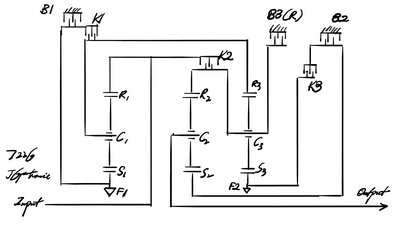
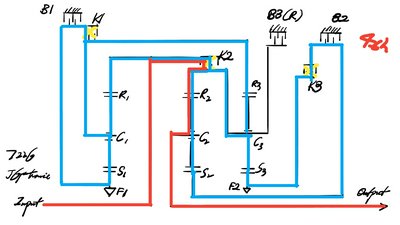
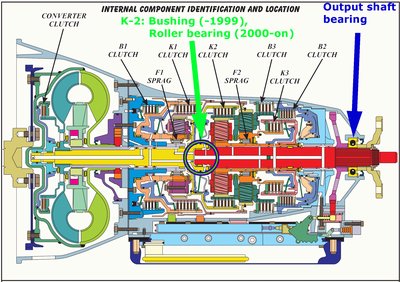
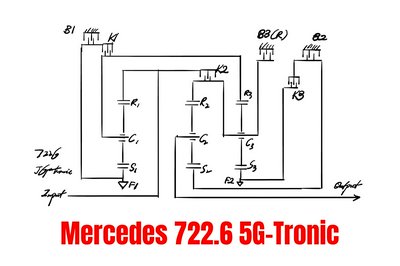
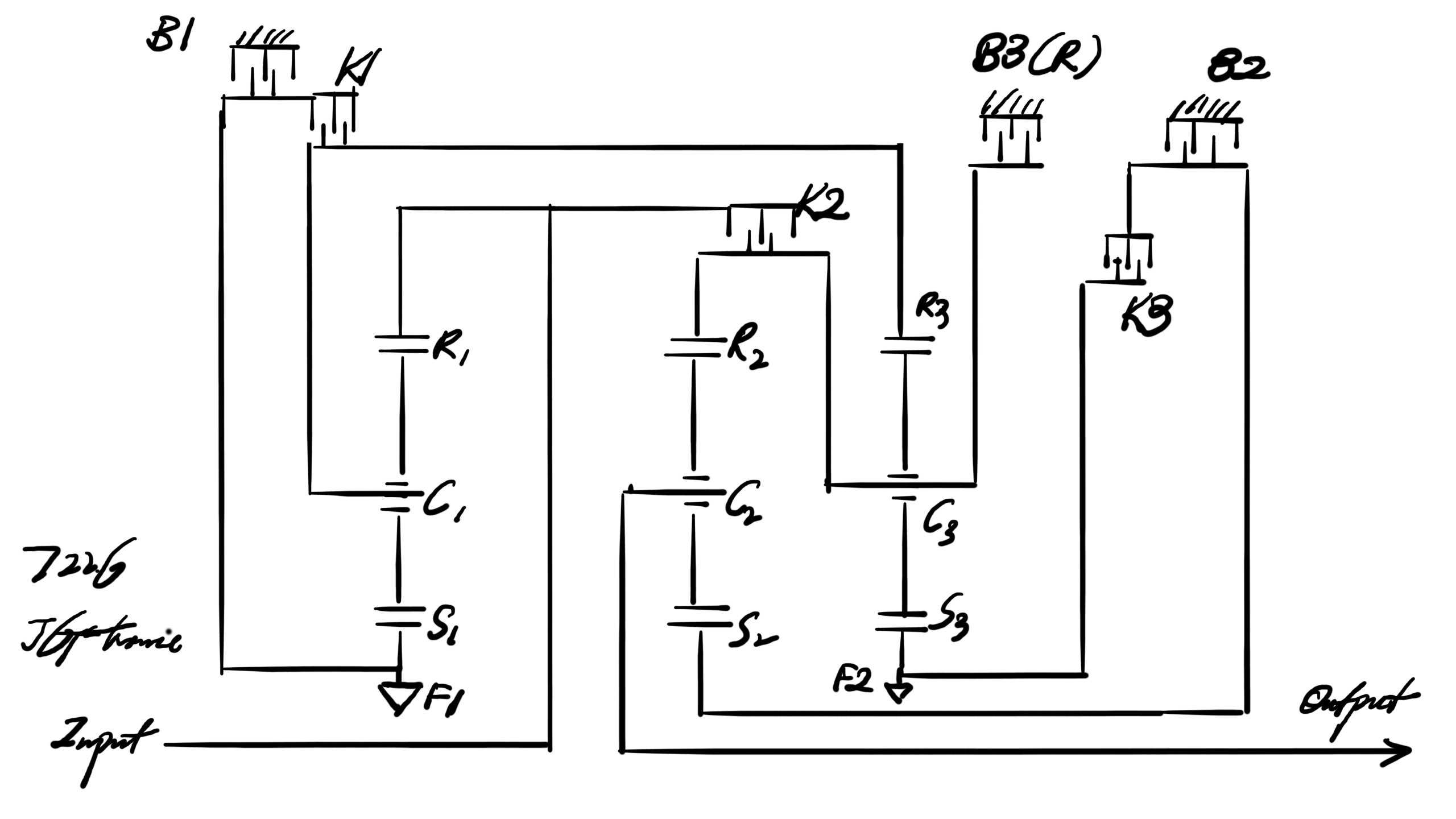
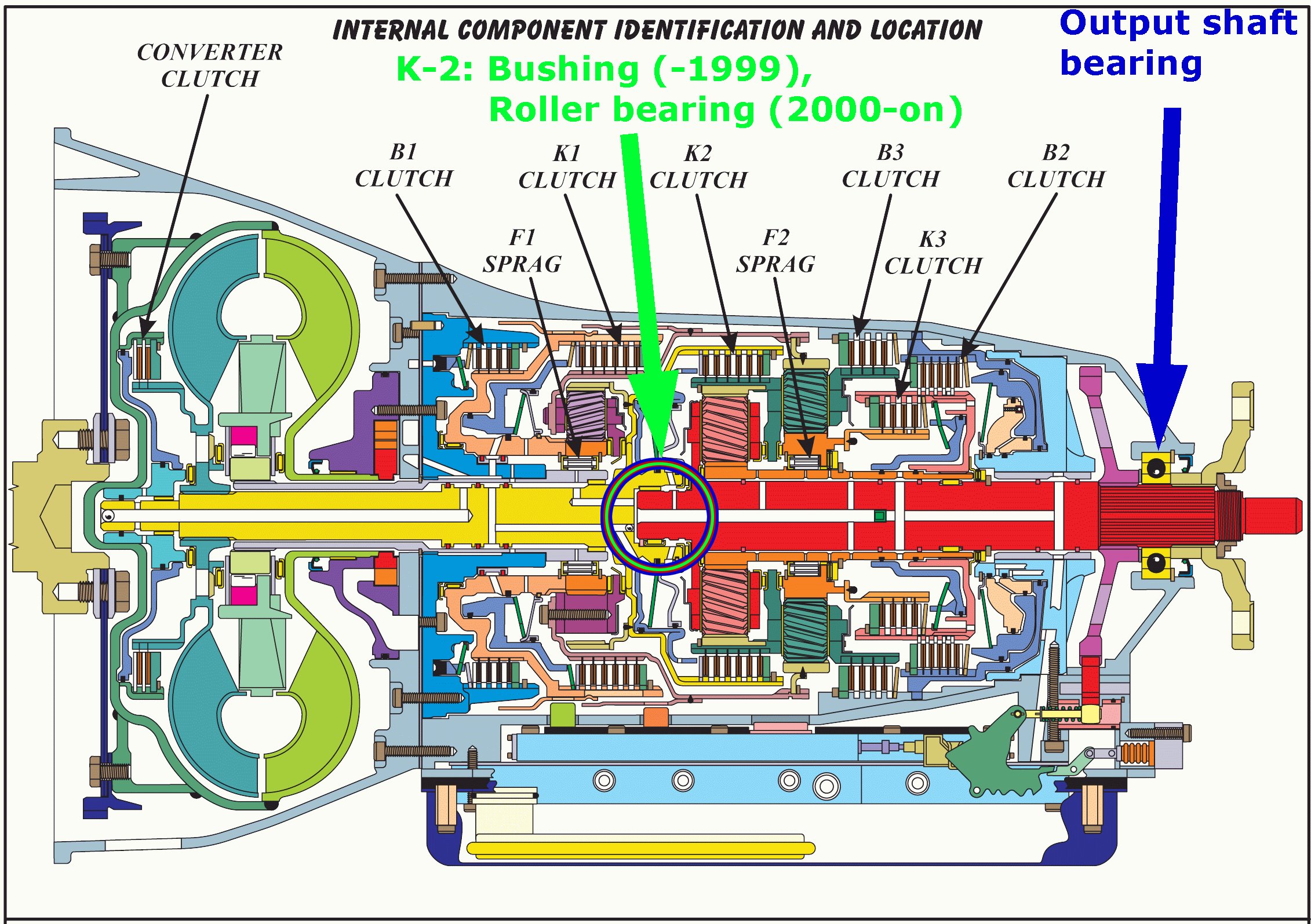
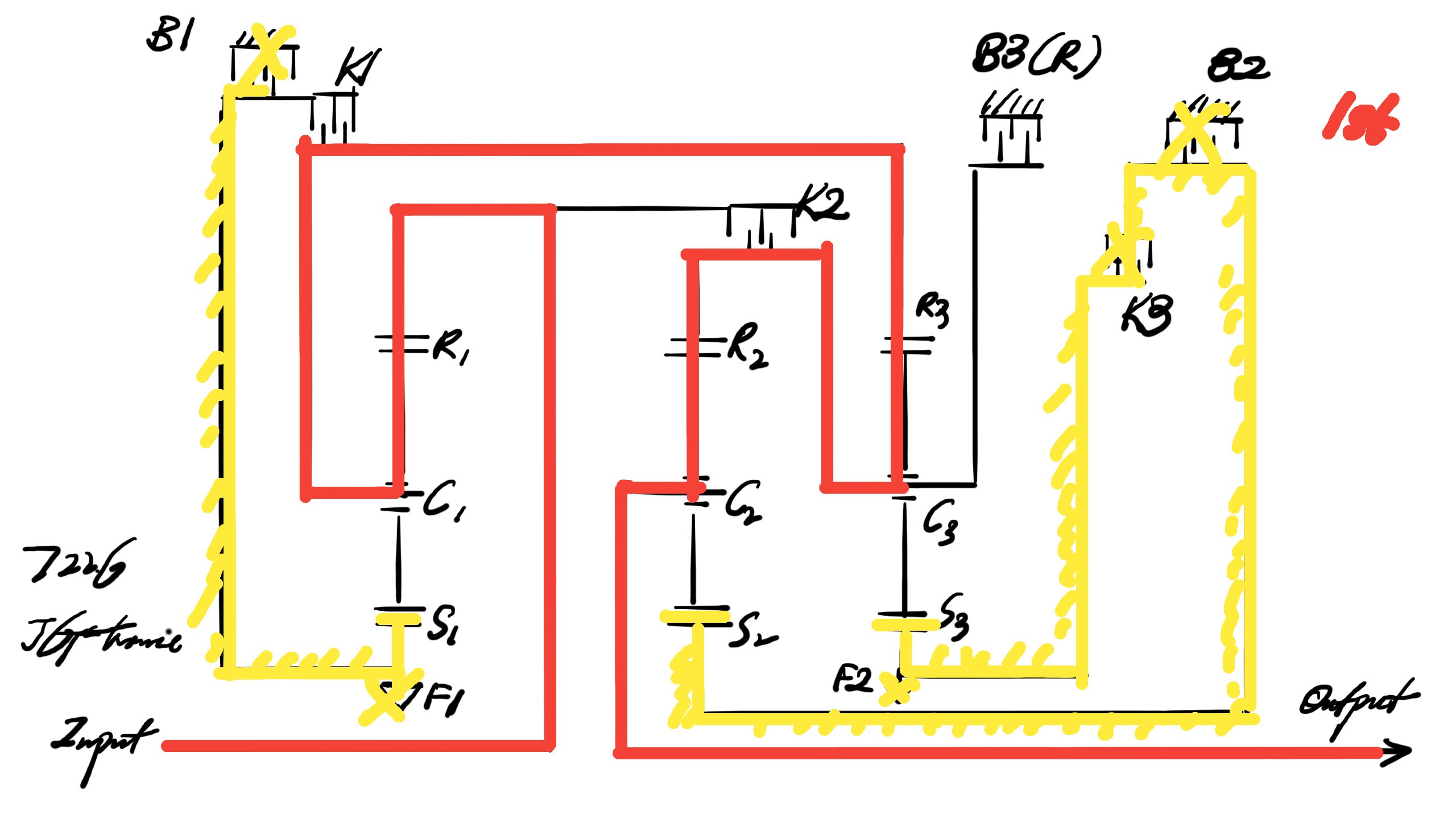
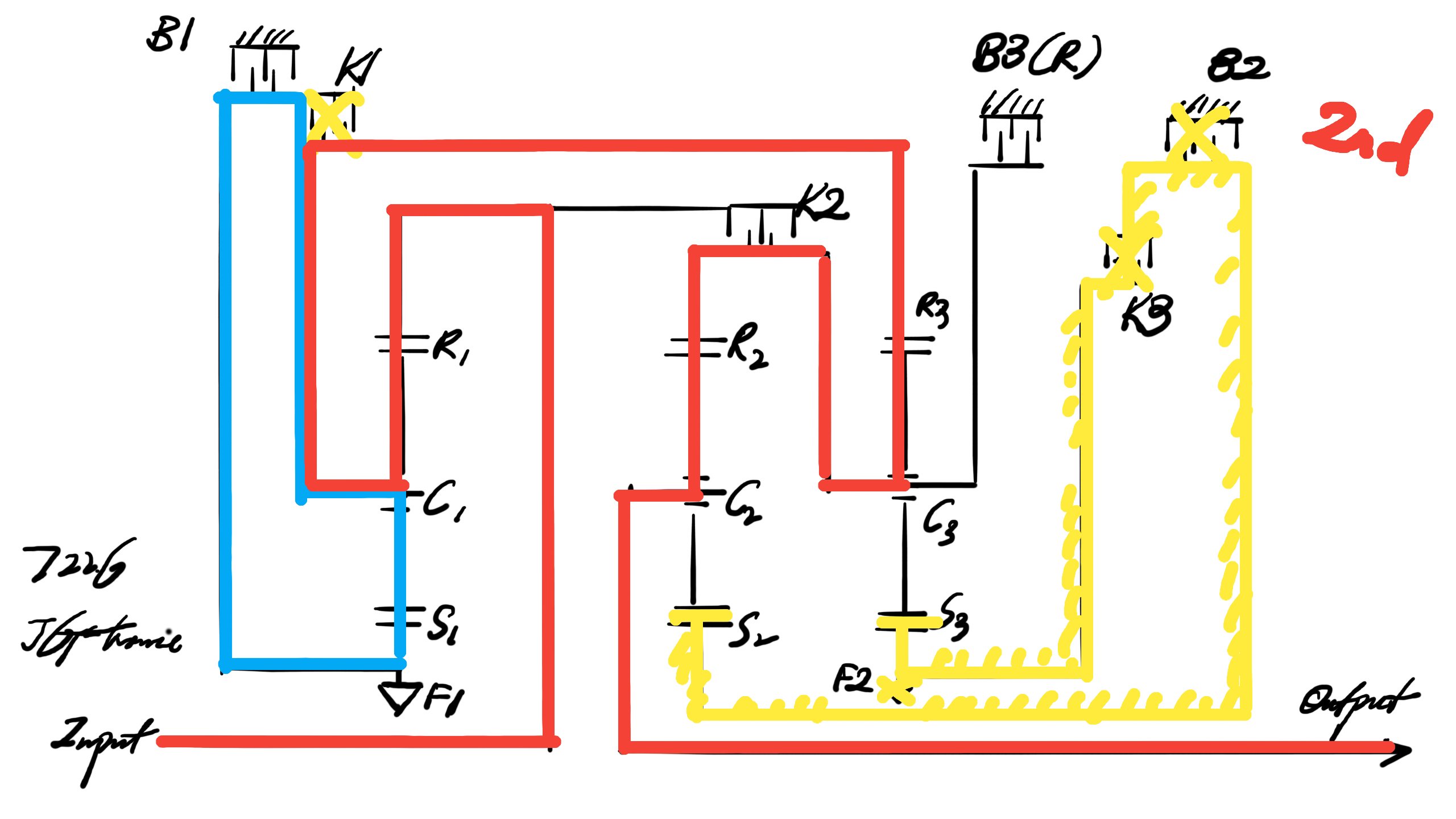
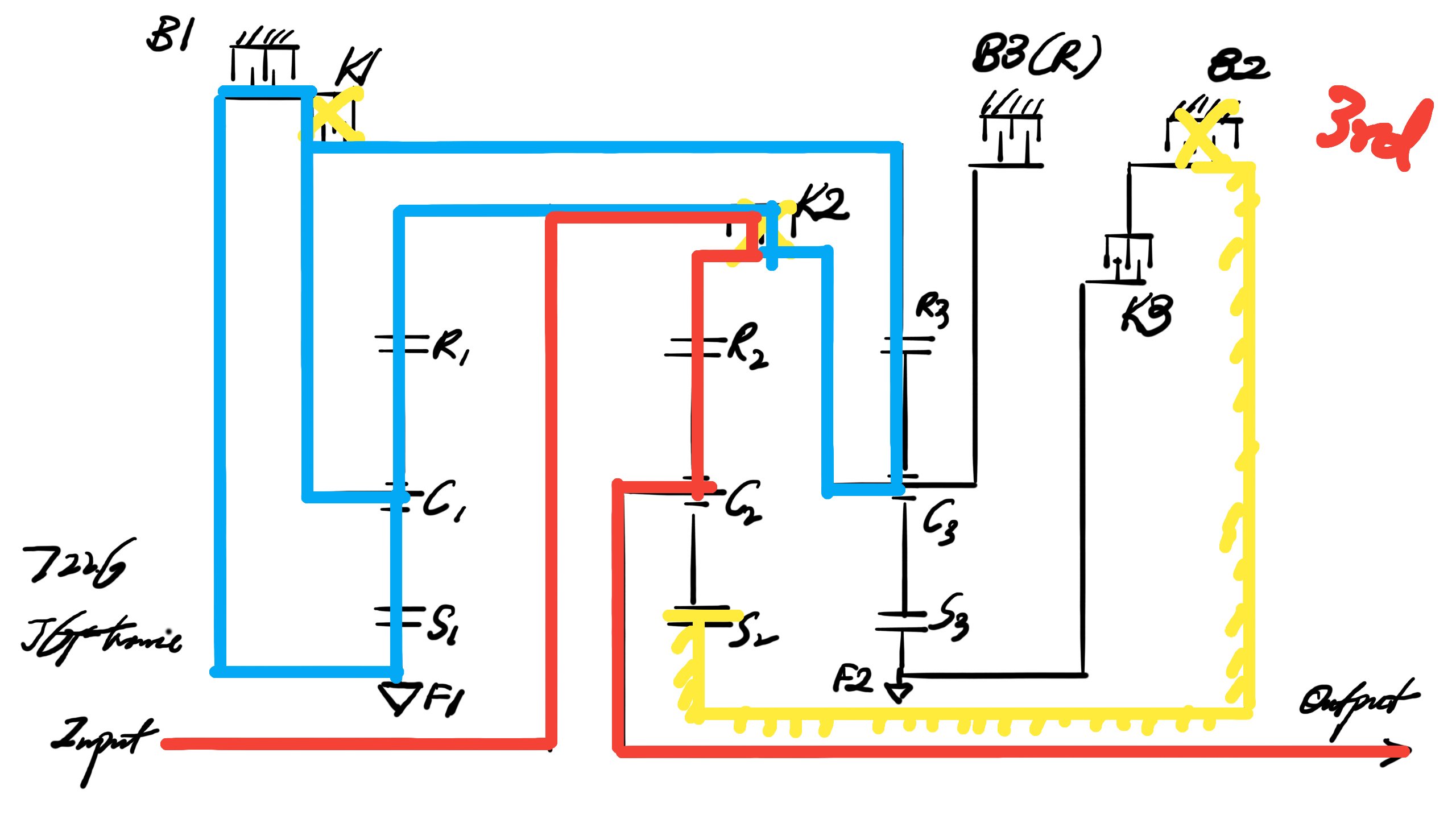
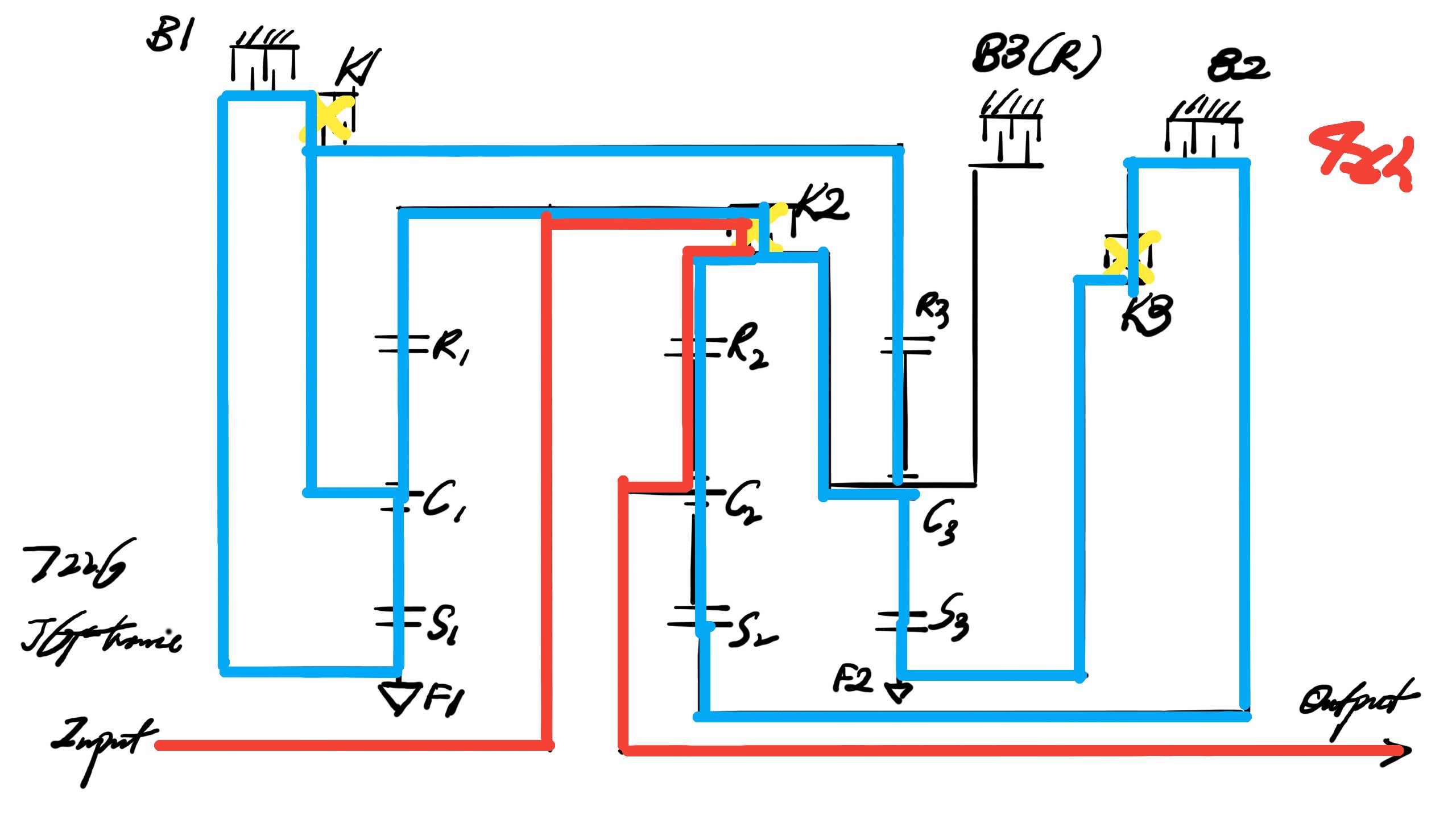
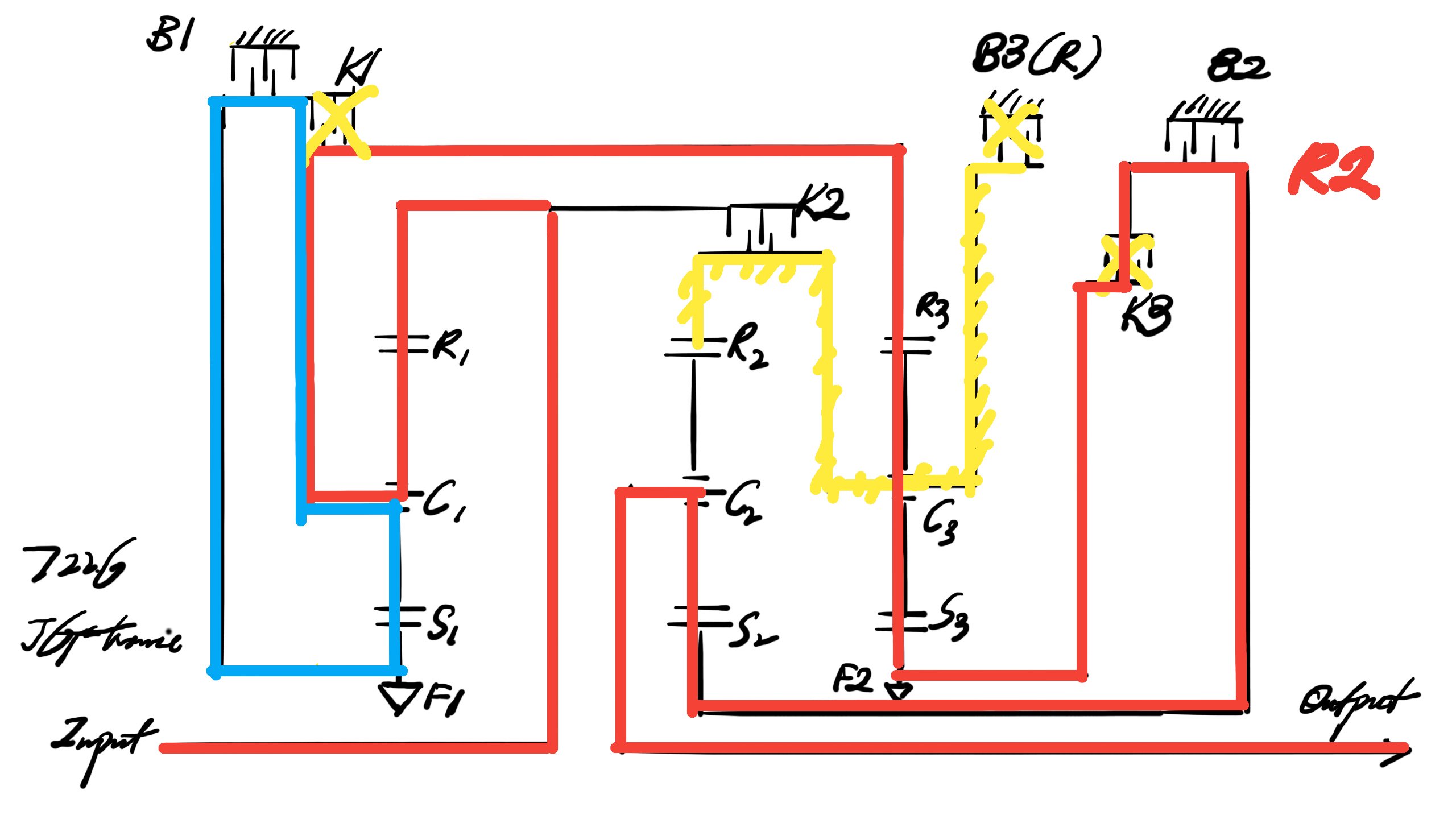
As shown in the stick diagram drawn by myself, the 722.6 has three clutches shown as K1, K2, and K3 from front to back; three brakes shown as B1, BR, and B2; two one-way clutches shown as F1 and F2; and three planetary gearsets with sun gears, carriers, and ring gears marked out as S, C, and R. If you compare this to the 722.9 7G-Tronic, you will find that the rear half of the transmission is identical, while the front is almost the same, with the 7G having an additional ring gear and a brake to control it. I believe this is why Mercedes called this extra brake B3 in the 7G-Tronic. Several other points are noteworthy as we look at the cutaway illustration:
- Input is tied to the K2 drum as well as the R1 ring gear, while the C2 carrier is permanently connected to the output shaft.
- The S2 sun gear is directly on a hollow shaft over the output shaft, while S1 and S3 sun gears have one-way clutches, which by the way are also roller bearings.
- The greyish-blue parts are the pistons, while the green slanted parts are the return springs.
- K3 connects S2 and S3, making the rear half essentially a Simpson gearset.
- K1 neutralizes the first planetary gearset. Together with K2, it also neutralizes the third planetary gearset.
Gears
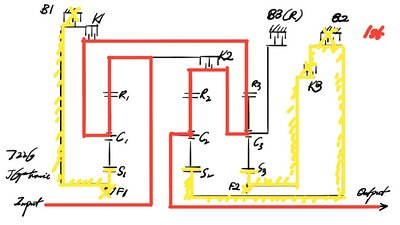
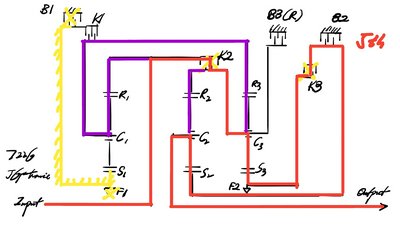
In 1st, B1, B2, and K3 lock all three sun gears stationary. All three gearsets are in a ‘ring gear-in, carrier-out’ situation, meaning that we have reduction in all three planetary gearsets. Note that even though Mercedes specifies that the one-way clutches are holding, the transmission would work without one-way clutches. In the 7G-Tronic, they are gone. I think having them improves shift quality and endurance, but with better electronic control they can be omitted. This is essentially the 2nd gear in the 7G-Tronic.
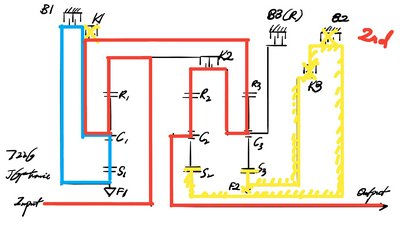
In 2nd, we unlock B1 and lock K1, which ties S1 and C1 together. This makes the first planetary gearset rotate as a single unit. We therefore only have gear reduction in the other two gearsets. This is essentially the 3rd gear in the 7G-Tronic.
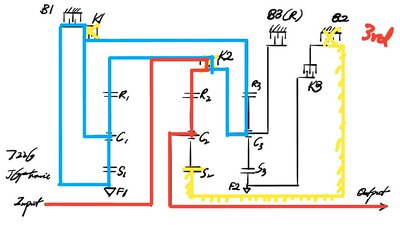
In 3rd, we unlock K3 and lock K2. Unlocking K3 allows R3 to rotate at the input speed, while locking K2 makes C3 rotate at the input speed. Thus, the third planetary gearset rotates as a single unit. Gear reduction only happens in the second gearset, giving even less reduction. This is essentially the 4th gear in the 7G-Tronic.
In 4th, we lock K3 again and unlock B2. This further makes S2 and S3 rotate at the same speed as the input. Thus, everything rotates at the input speed, and this is direct drive. It is essentially the 5th gear in the 7G-Tronic.
In 5th, we unlock K1 and lock B1. This makes S1 stationary, which means that the first gearset is reductionary, and R3 is slower than C3, which rotates at the input speed. This makes S3 faster than the input speed. Thus, S2 is faster than R2, which also rotates at the input speed. This makes C2 rotate faster than the input speed but slower than S2/S3. This is essentially the 6th gear in the 7G-Tronic.
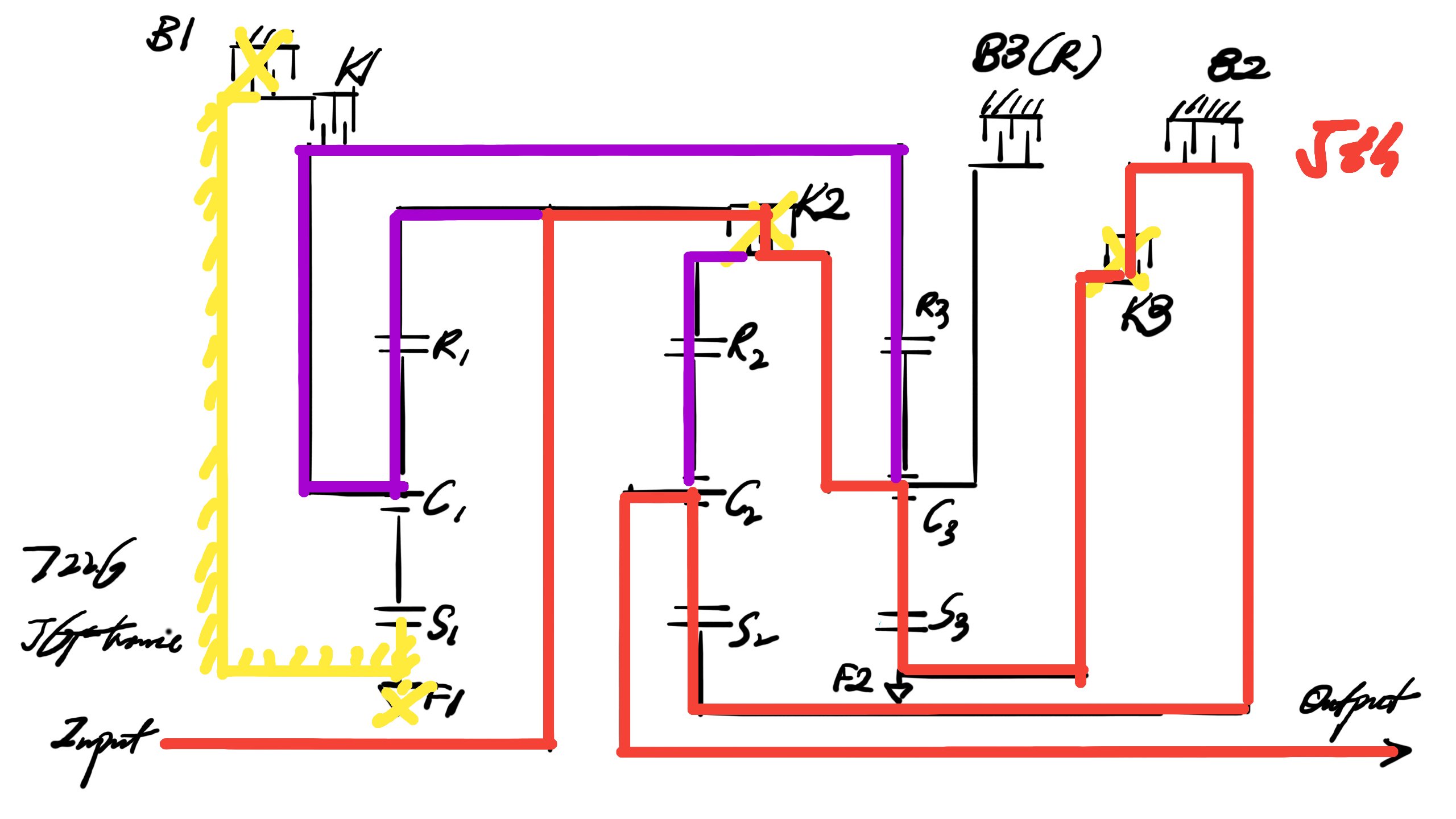
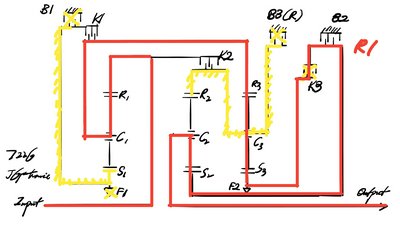
In the first reverse gear, we lock B1, B3, and K3. This keeps S1, C3, and R2 stationary. We have reduction in the first gearset, acceleration in the third gearset but in opposite direction, and reduction again in the second gearset.
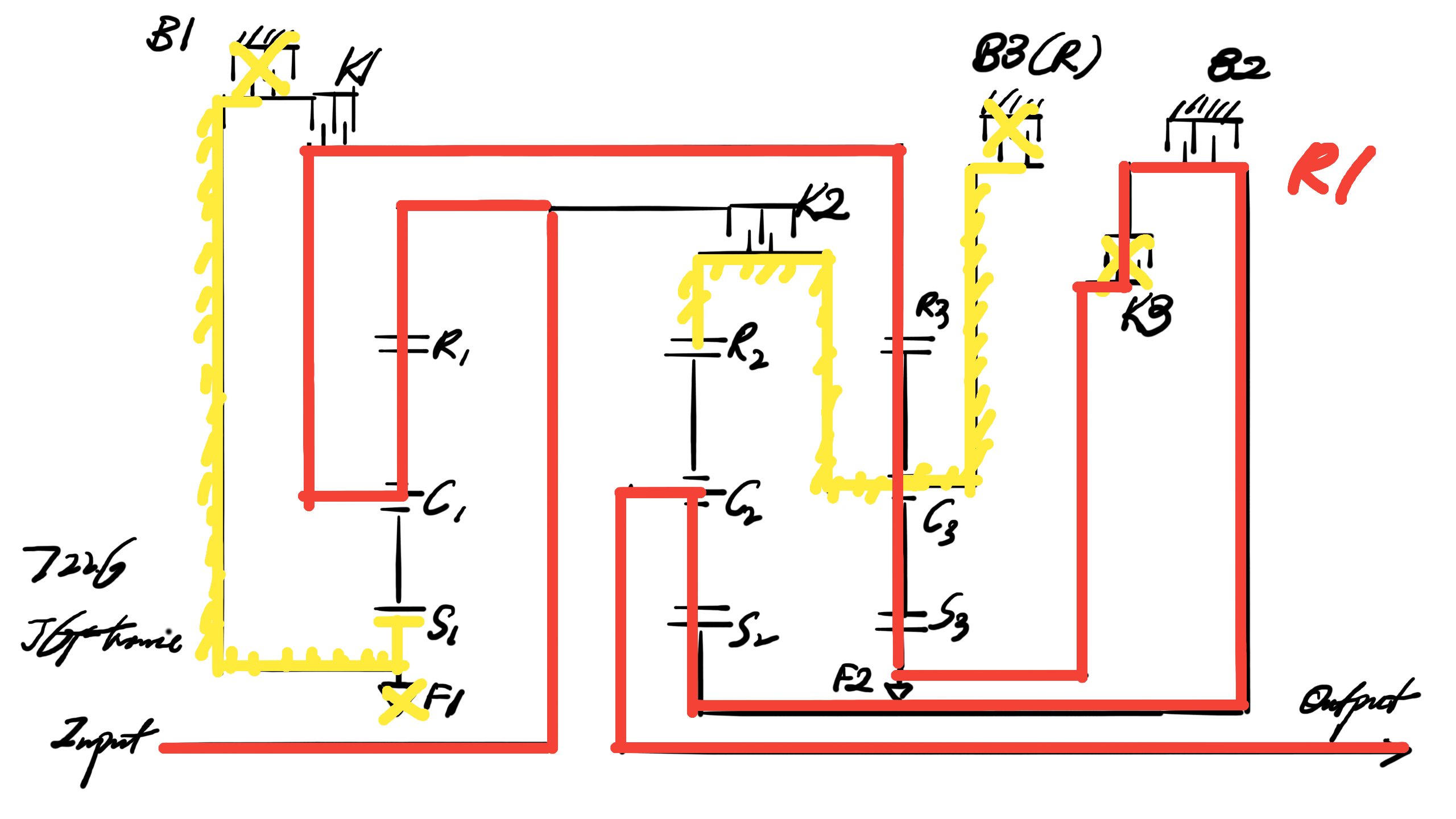
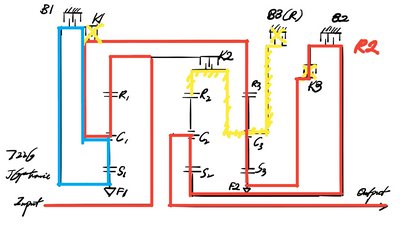
In the second reverse gear, we unlock B1 and lock K1. Its effect is like in the 2nd forward gear.
Strengths and Weaknesses
1. Mechanical Robustness. The 5G-Tronic is arguably the most robust 5-speed automatic transmission ever produced for a passenger vehicle. It uses numerous roller bearings where lesser transmissions save money. It is even stronger than the 7G-Tronic.
2. Different Design Era. Unlike earlier transmissions like the 4G, the 5G is electronically controlled. However, unlike later designs, it is also largely hydraulic.
3. Torque Converter Clutch. It is one of the last automatic transmissions that do not constantly slip the TCC, even though it was also one of the first transmissions to have one.
Gallery: 722.6 transmission
XXX