Page 2 of Posts with Keyword “engine”
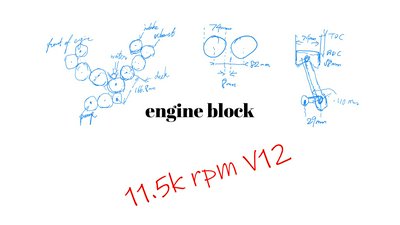
Previously, I laid out the specifications of the PC301, 3L naturally-aspirated V12 engine that I would build if I had a car company. Today, let us delve into the details of the engine block.

As promised previously, today I lay out the specifications of the 3.0L NA V12 engine that I would build if I had a car company for the working enthusiasts.

Today, I go over the three stages of the naturally-aspirated version of the VW-Audi W12 engine; they correspond with three generations of Audi A8s in which a W12 was fitted. I will highlight the unique design elements of the W12 in detail, too.

BMW is thought by many to have stronger diesel than petrol engines. This is in fact a new phenomenon. Today, I go over the evolution of 5 BMW inline-6 diesels and rank them into three tiers.

Today, I go over the construction, performance, reliability, and applications of six Mercedes 6-cylinder diesel engines. I also rank them into three tiers.

Today, I go over the evolution of six Toyota / Lexus V8s over two generations in terms of construction, performance, reliability, and applications. In the end, I rank them into three tiers.

BMW has always made some performant and characterful, if fragile, V8s. Today, I go over the evolution of seven BMW V8s over four generations in terms of construction, performance, reliability, and applications. In the end, I rank them into three tiers.

In this blog, I go over the evolution of eight Mercedes V8s over seven generations in terms of their construction, performance, reliability, and applications. In the end, I will rank them into three tiers.

Today, I delve into the mechanical evolutions of the BMW N63 hot-V8 biturbo engine by highlighting the most consequential changes in 6 areas from the original 2008 N63 to its three subsequent updates in 2012, 2016, and 2018.

Today, I compare the design of two German V12 biturbo engines, the Mercedes M279 and the BMW N74, along 7 aspects.

BMW’s N74 is the most technologically advanced V12 engine in a road car. BMW has kept it in production with exactly one technical update, the N74TU. Today, I briefly examine the changes made in the N74TU in five areas.
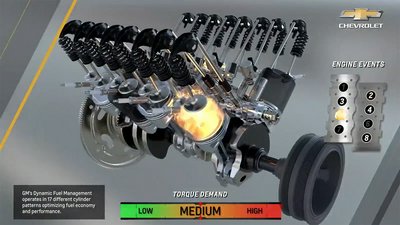
Today, I briefly cover how GM’s Dynamic Fuel Management (DFM) system works. It should then be obvious why it is superior to conventional cylinder deactivation technologies.