techXXX
Toyota / Aisin AWR10L65 10-Speed Automatic Transmission Deep Dive (AGA0 /AJA0)
The Toyota–Aisin 10-speed automatic transmission combines lessons from the Aisin 8-speed and ZF 8HP into one of the more compelling, elegant designs. Today, let us analyze its advantages and trade-offs and delve into how its gear train works.
Published by Dr Jiulin Teng on 04 Jan 2026 · Updated on 05 Jan 2026
Debuted in 2017 in the Lexus LC500, the Toyota–Aisin 10-speed automatic transmission combines lessons from the Aisin 8-speed and the ZF 8HP into one of the more compelling, elegant designs. Today, let us analyze its advantages and trade-offs and delve into how its gear train works.
Advantages
1. Even Gear Steps (until 10th). In the 9 lower speeds, the AWR10L65 has small, even, and decreasing gear steps. This is part of what enables that which Toyota calls “rhythmical and sharp shifting”. Shift time has also improved over its predecessor.
2. Elegant Gear Train. This transmission has very simple torque paths with minimal gear acceleration and deceleration during shifts. Unlike the Aisin 8-speed, there is no sharp torque load reversal, thanks to less aggressive use of the Ravigneaux gearset. There is also much less parasitic gear rotation compared to the ZF 8HP and the Mercedes 9G-Tronic.
3. Optimized for V6 / V8. Toyota only uses the 10-speed in its V8- and V6-biturbo vehicles. This helps them avoid unnecessary features intended to smooth out power pulses of 4-cylinder engines.
4. Gear Efficiency. This gear train is probably designed purely by humans. With Clutch 4 engaged, it turns into a Ravigneaux + Simpson combo with rather smart but still simple and elegant connections. At first glance, the gearsets may resemble the Mercedes 7G-Tronic, though Toyota prioritized gear count, while Mercedes prioritized robustness (which was let down by elements outside the gear train).
5. Wide Gear Ratio Spread. The AWR10L65 has a very wide gear ratio spread, though less so than the Mercedes 9G-Tronic. Since Toyota uses V8 and V6-biturbo engines with this transmission, it is puzzling why it needs to have 10 speeds. The real-world efficiency benefit probably does not outweigh impacts on cost, complexity, and durability. This transmission is possibly more motivated by marketing needs. That said, improving the old Aisin 8-speed was impossible (torque load reversal), and they might as well add some speeds if an extra gearset is unavoidable.
Trade-Offs
1. Chain-Driven Oil Pump. Like many high gear-count transmissions, the AWR10L65 uses a chain-driven oil pump to keep axil length in check.
2. Controlled TCC Slip Instead of On/Off Cycling. One lesson that Aisin picked up from the ZF 8HP is aggressive TCC (torque converter clutch) lockup. Once the vehicle starts moving, this transmission modulates the amount of slip instead of fully disengaging the TCC when necessary. The torque converter of the AWR10L65 has a larger, more robust TCC pack, but this still creates more heat and is not great for longevity.
3. Thermal Capacity. This transmission has a small oil capacity, but it slips its friction elements more during shifts compared to the ZF 8HP for smoothness. It also has three open friction elements in all forward gears. This adds to viscous drag. The sum of these choices with more TCC slip results in a hotter-running transmission, exacerbated by towing and aggressive drives.
Gear Train
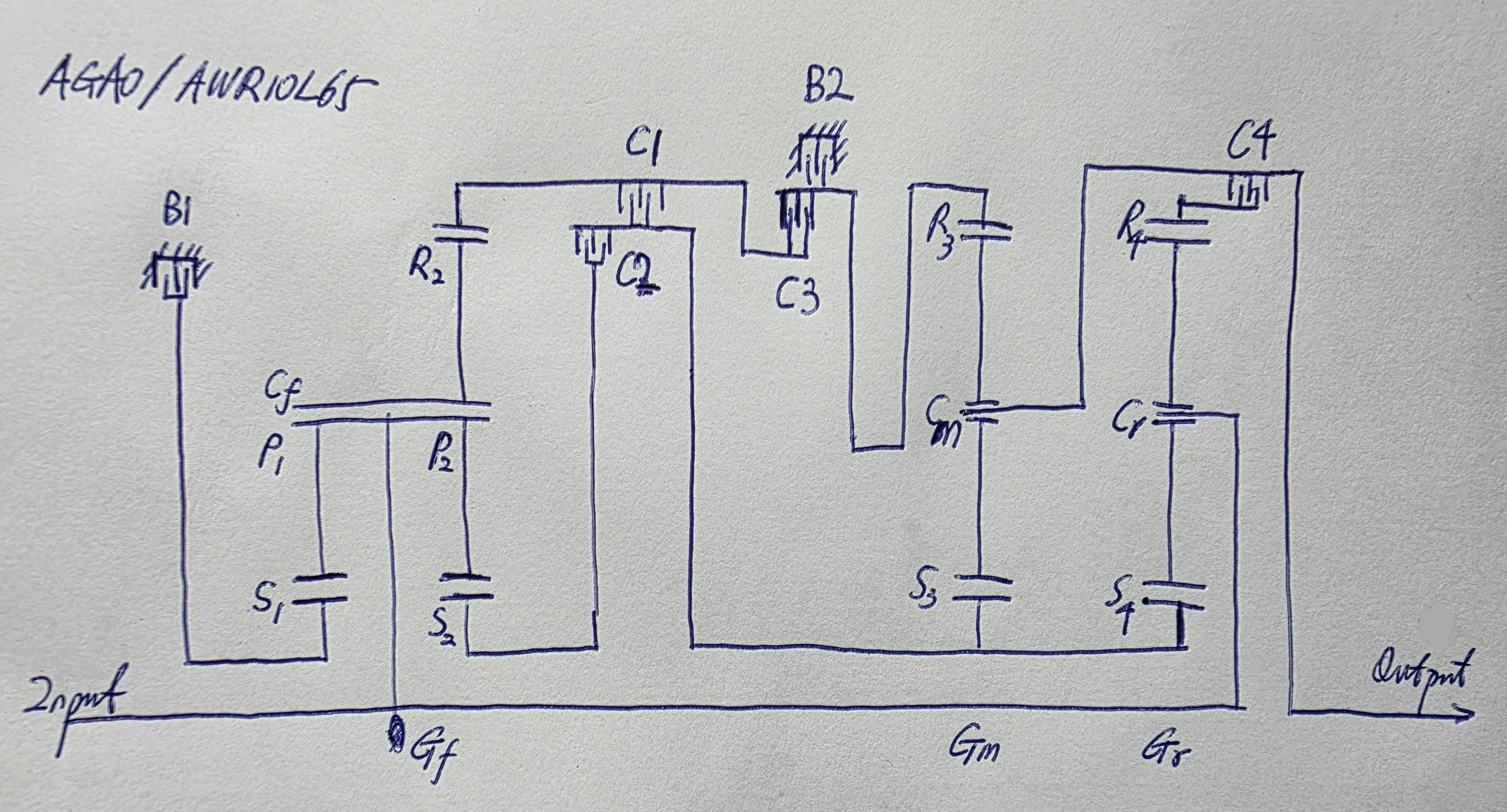
Now let us move onto the gear train. As shown, B1 and B2 are the brakes; C1 through C4 the clutches. From front to rear, there are three planet carriers (Cf, Cm, Cr), three ring gears (R2, R3, R4), and four sun gears (S1–S4). I have also marked out the three gearsets as Gf, Gm, and Gr. Two points are worth noting:
- Disengaging B1 converts the Ravigneaux gearset into a simple gearset.
- Engaging C4 converts the two rear gearsets into a Simpson gearset.
Torque Paths
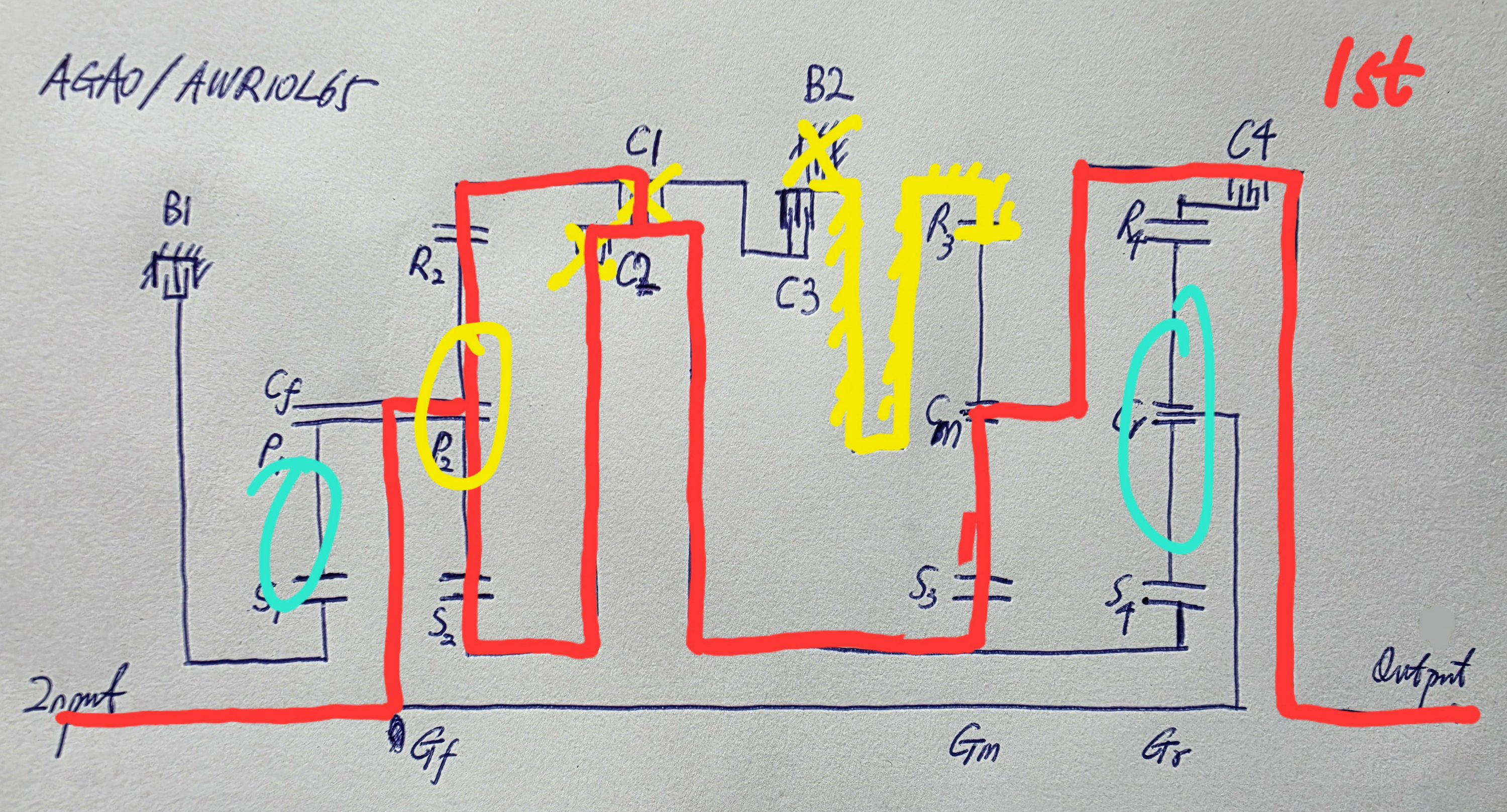
In 1st, torque goes through Cf > S2 > C2 > S3 > Cm, with R2 > C1 as a parallel path. Engaging C1 and C2 together locks the Ravigeanux gearset as a unit. Speed reduction happens in Gm.
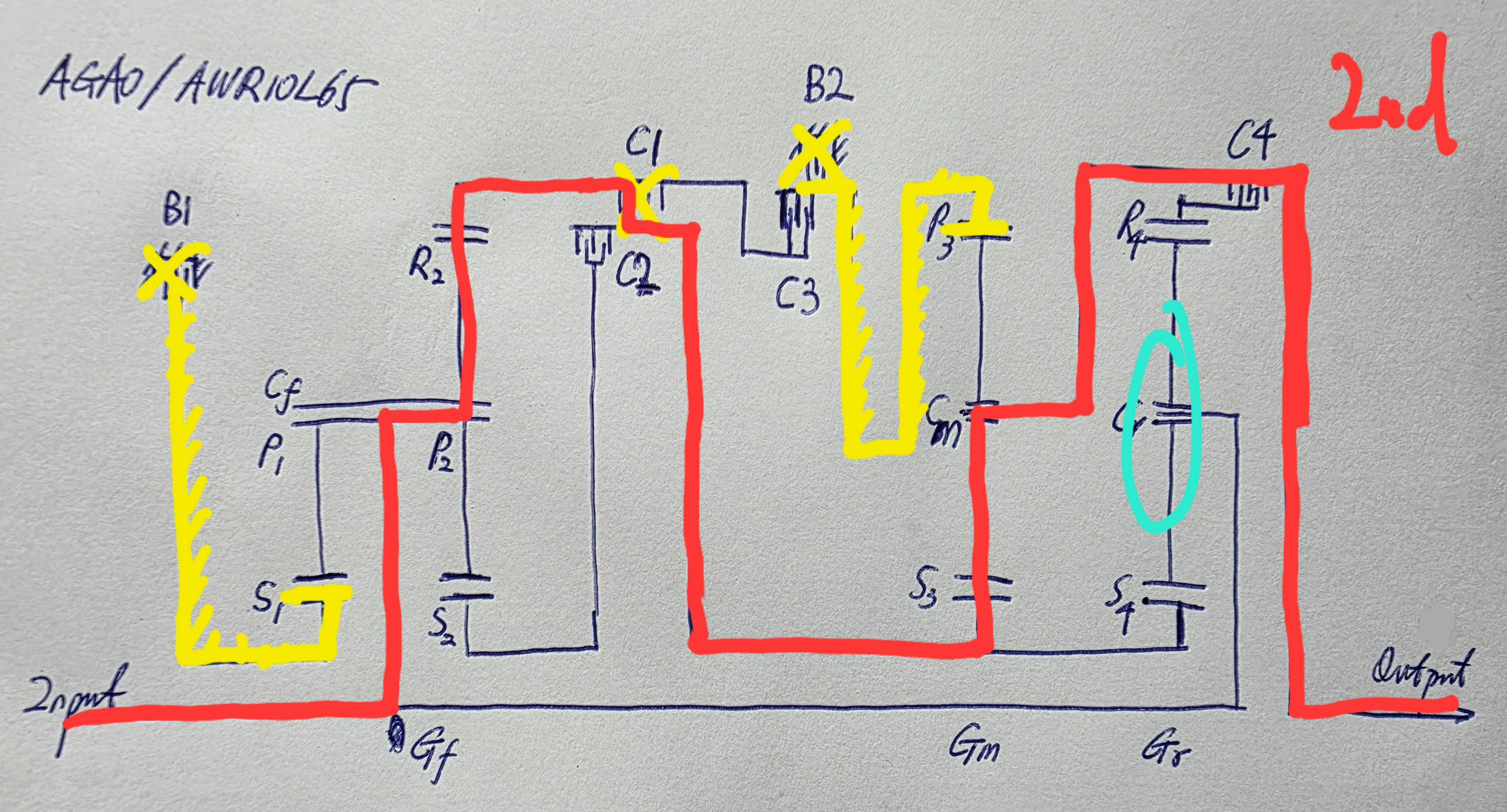
In 2nd, torque goes through Cf > R2 > C1 > S3 > Cm. Speed increases in Gf. Reduction happens in Gm.
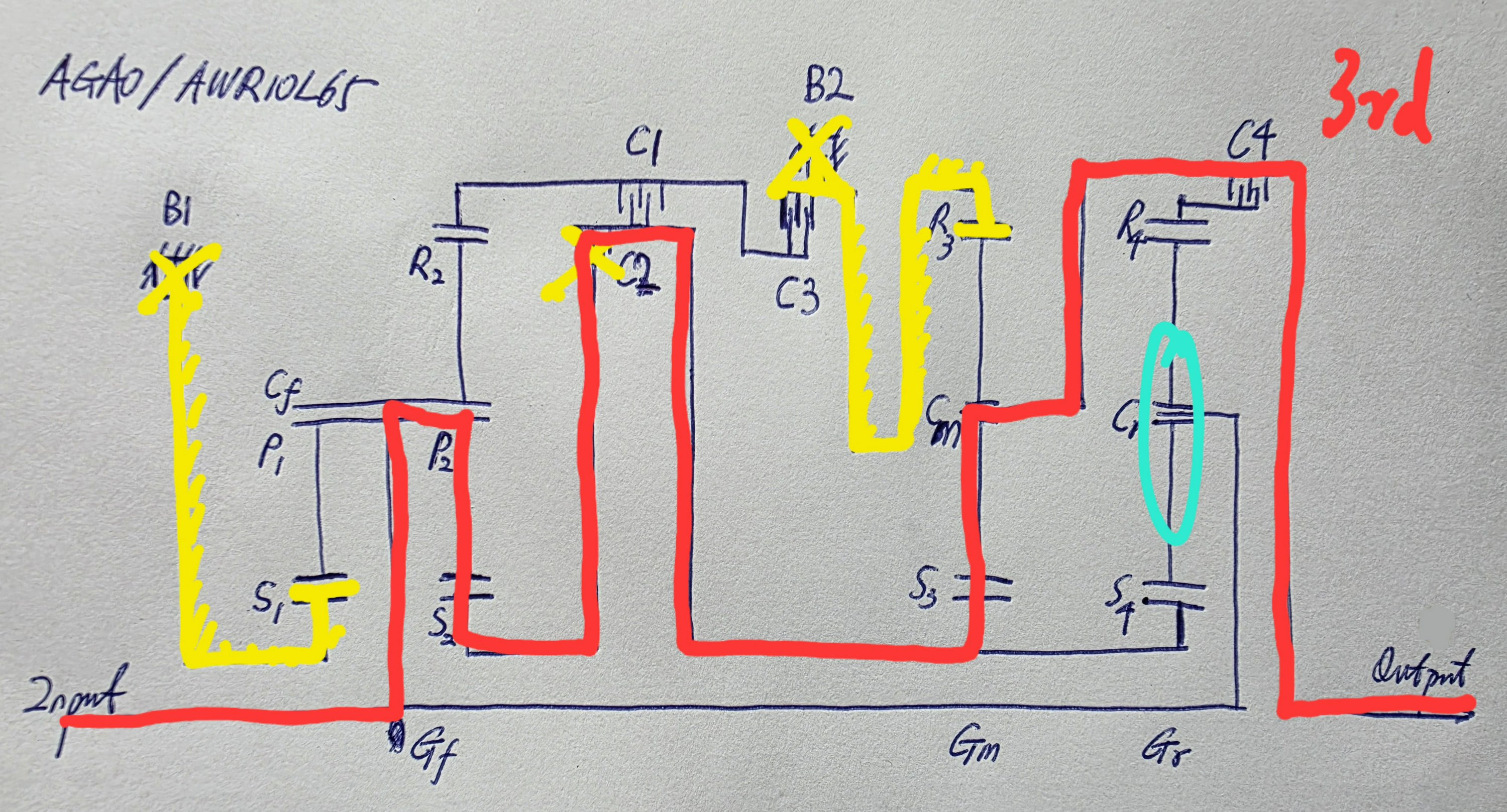
In 3rd, torque goes through Cf > S2 > C2 > S3 > Cm. This is a variation of the 2nd gear.
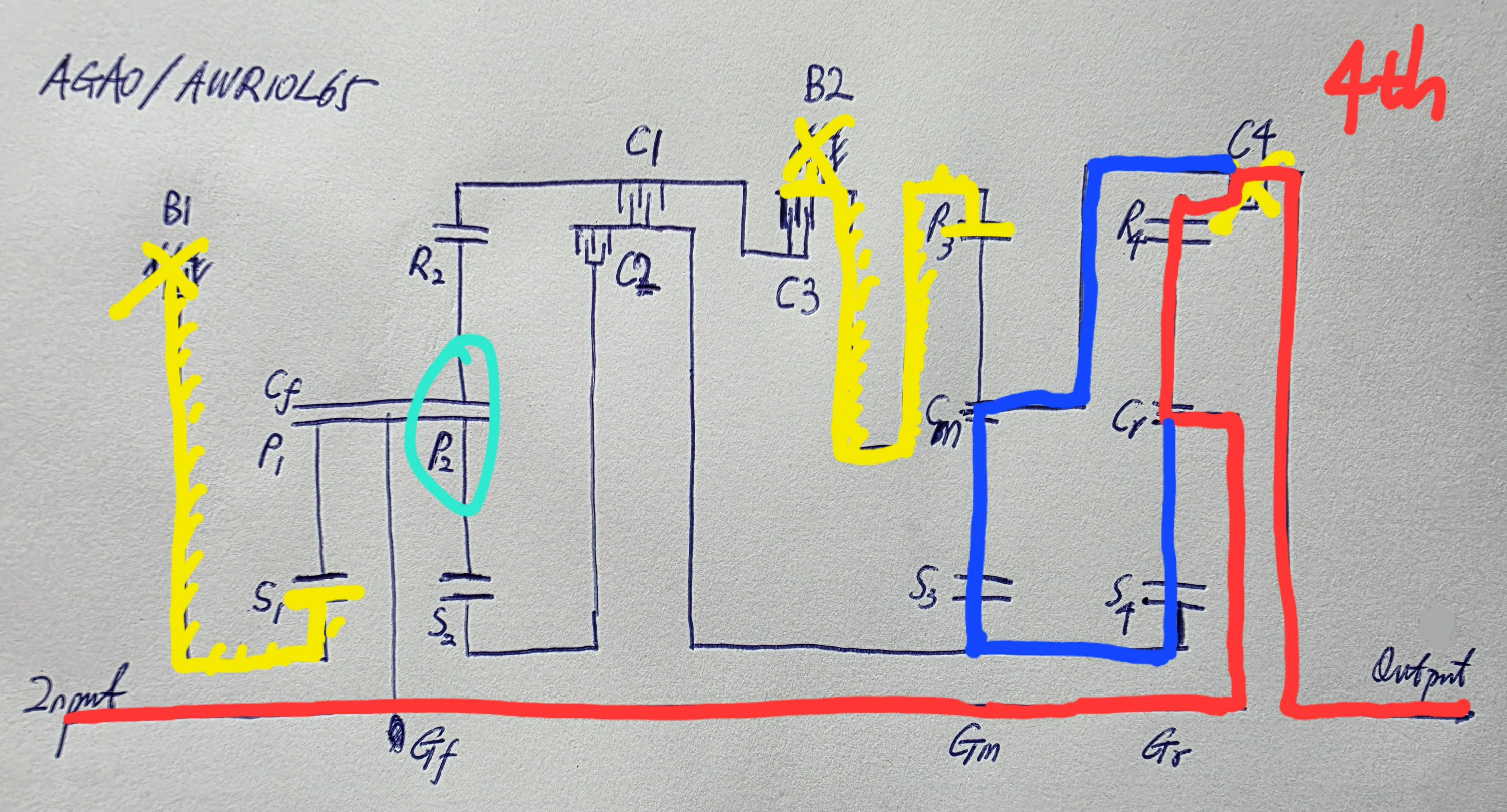
In 4th, torque goes through Cr > R4 > C4. Restraining the output is Cr > S4 > S3 > Cm. Note that Cm and R4 have the same speed. Speed reduction happens in Gr.
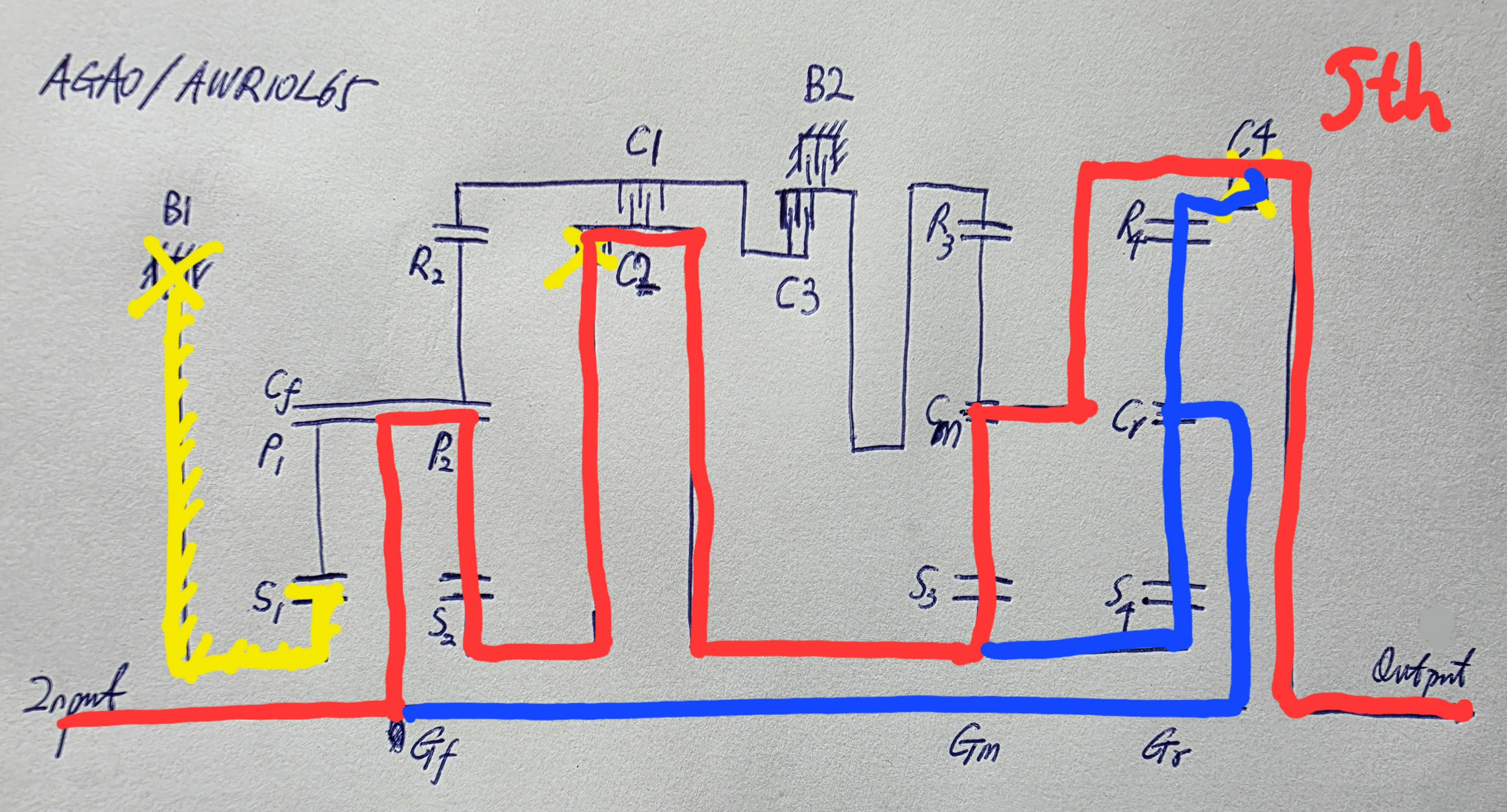
In 5th, torque goes through Cf > S2 > C2 > S3 > Cm. Restraining is Cr > R4 > C4 and S3 > S4 > Cr. Note that S3 and S4 are faster than Cr, so R4 rotates in the same direction but slower. It is balancing Cm, because R3 is not restrained. Speed increases in Gf but reduces in Gr.
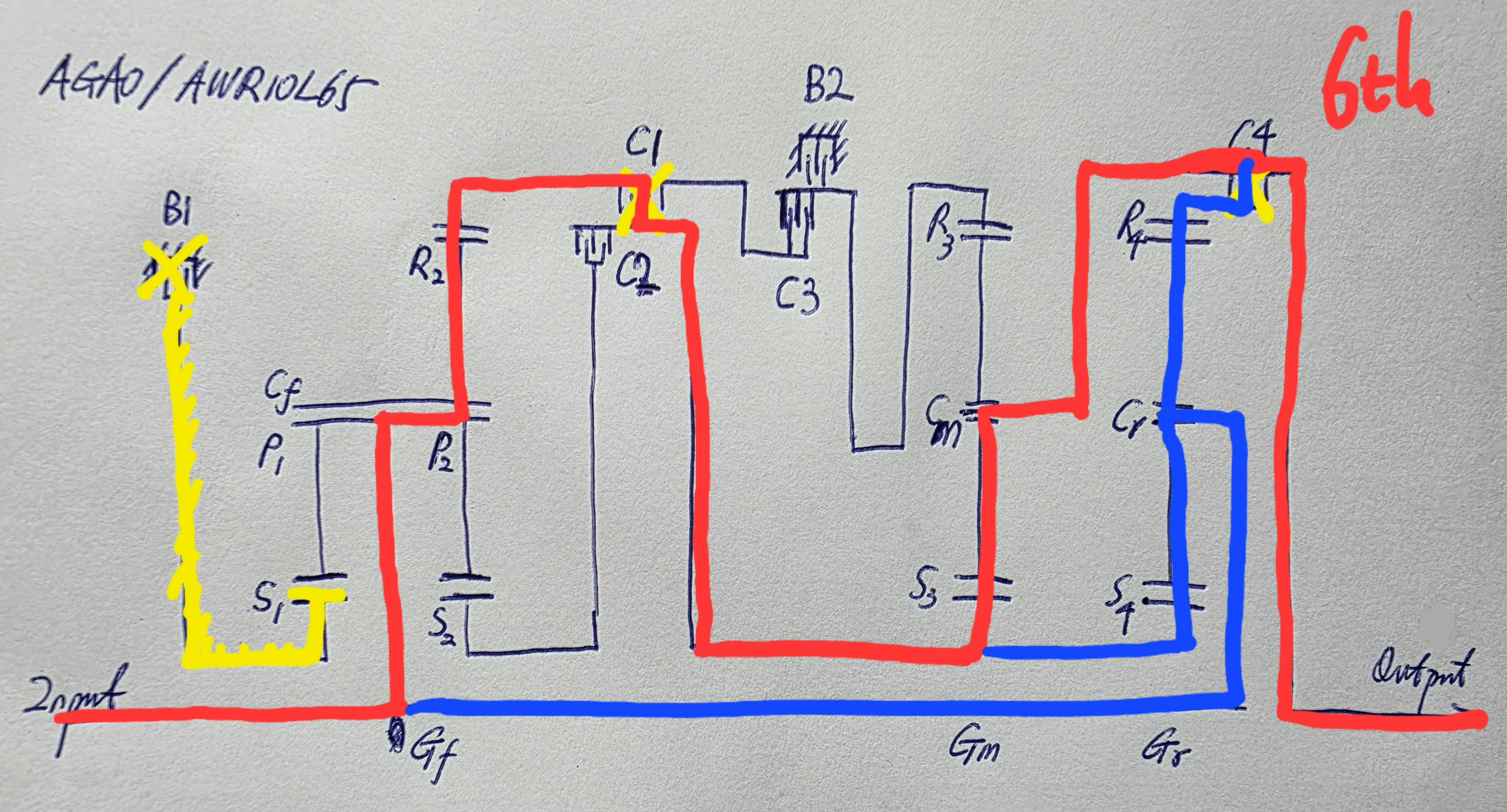
In 6th, torque goes through Cf > R2 > C1 > S3 > Cm. This is a variation of the 5th gear, like 2nd is a variation of 3rd. Because S3 and S4 are slower, the output at R4 is faster.
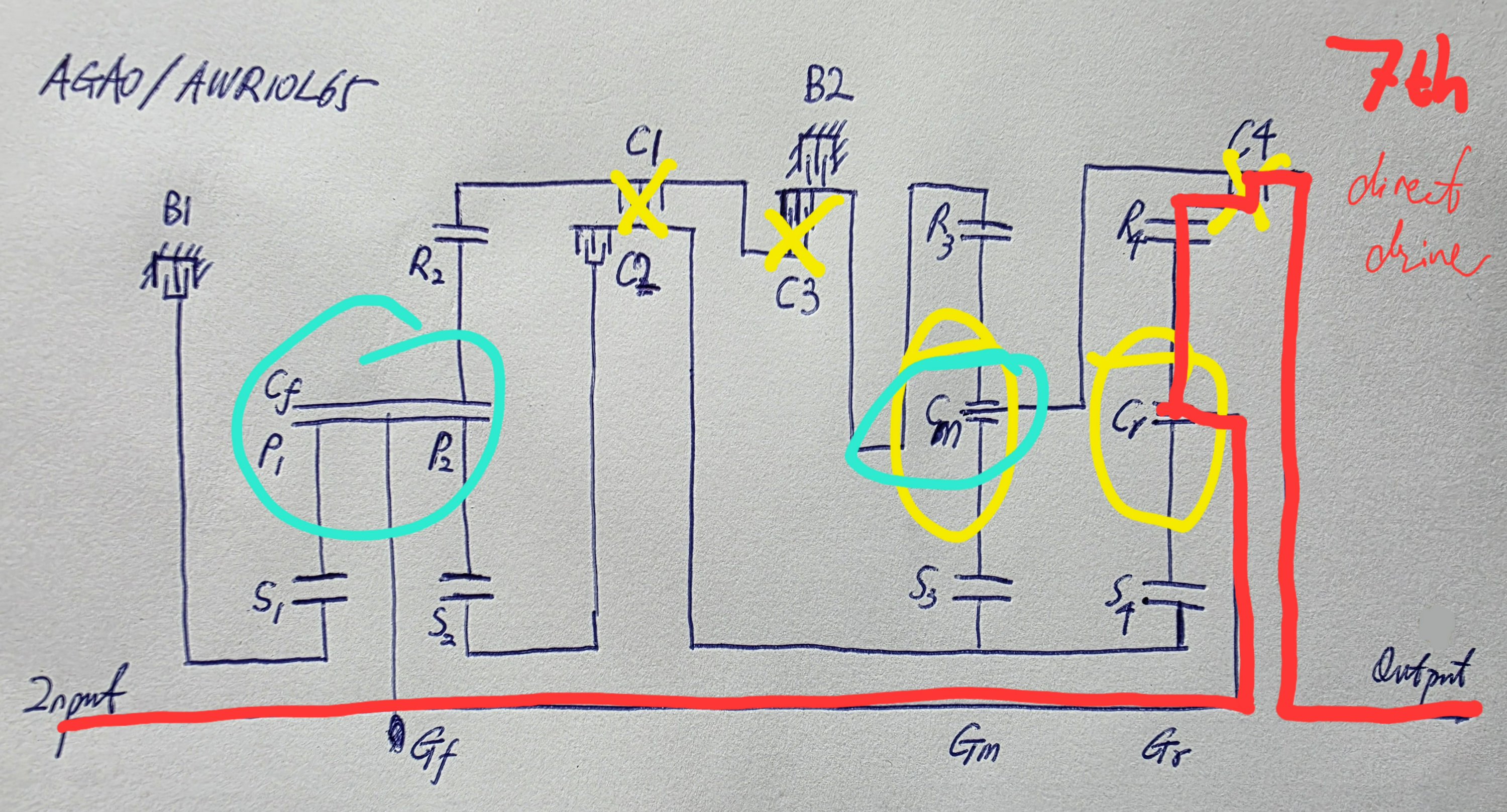
In 7th, torque goes through Cr > R4 > C4. Note that engaging C1, C3, and C4 locks the Simpson gearset as a unit. Therefore, this is direct drive.
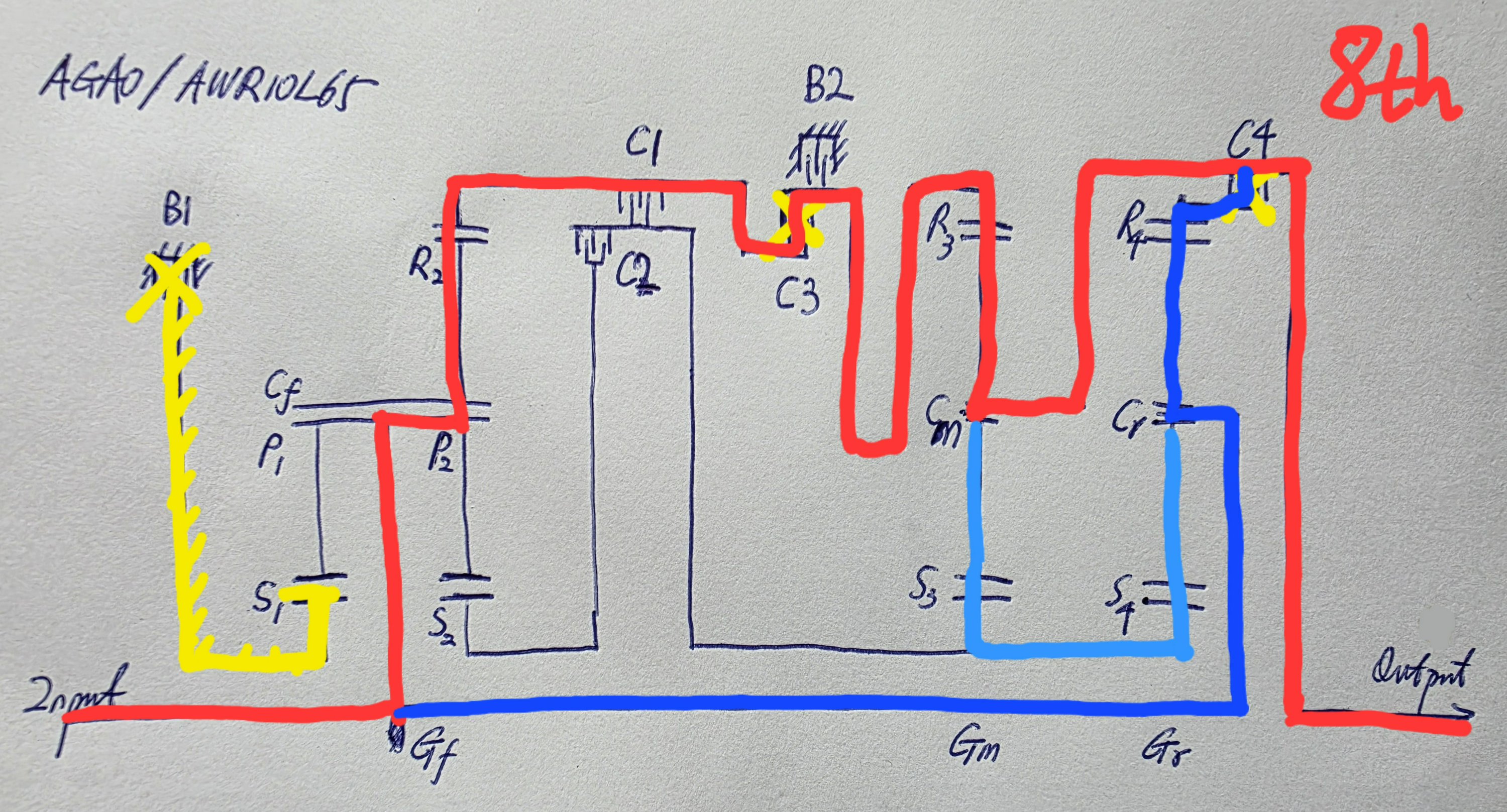
In 8th, torque goes through Cf > R2 > C3 > R3 > Cm. Restraining is Cr > R4 > C4. Speed increases in Gf but reduces in Gm.
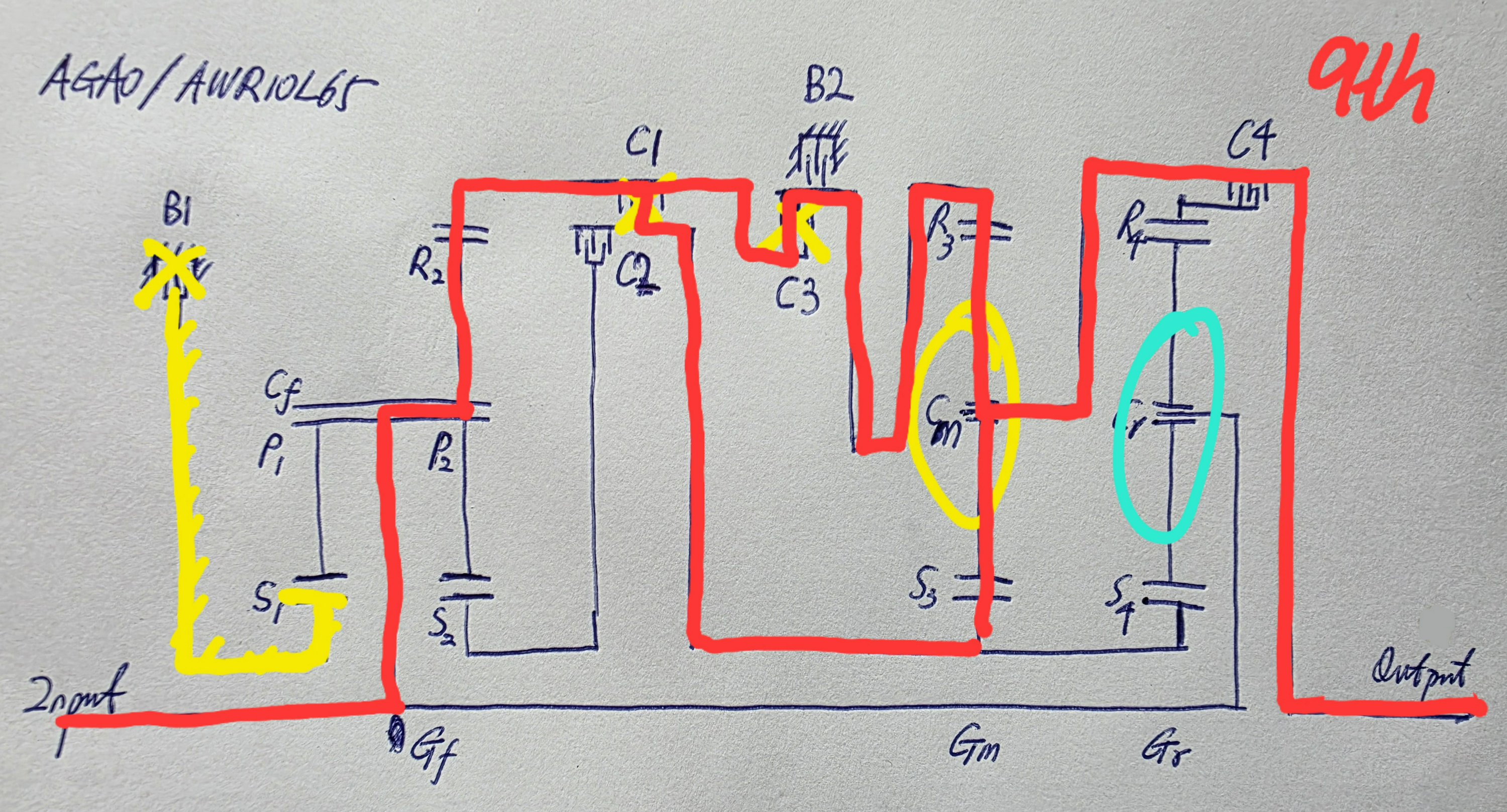
In 9th, torque goes through Cf > R2 > C1 > C3 > R3 > Cm, with C2 > S3 as a parallel path. Engaging C1 and C3 together locks Gm as a unit. Thus, the only speed increase happens in Gf.
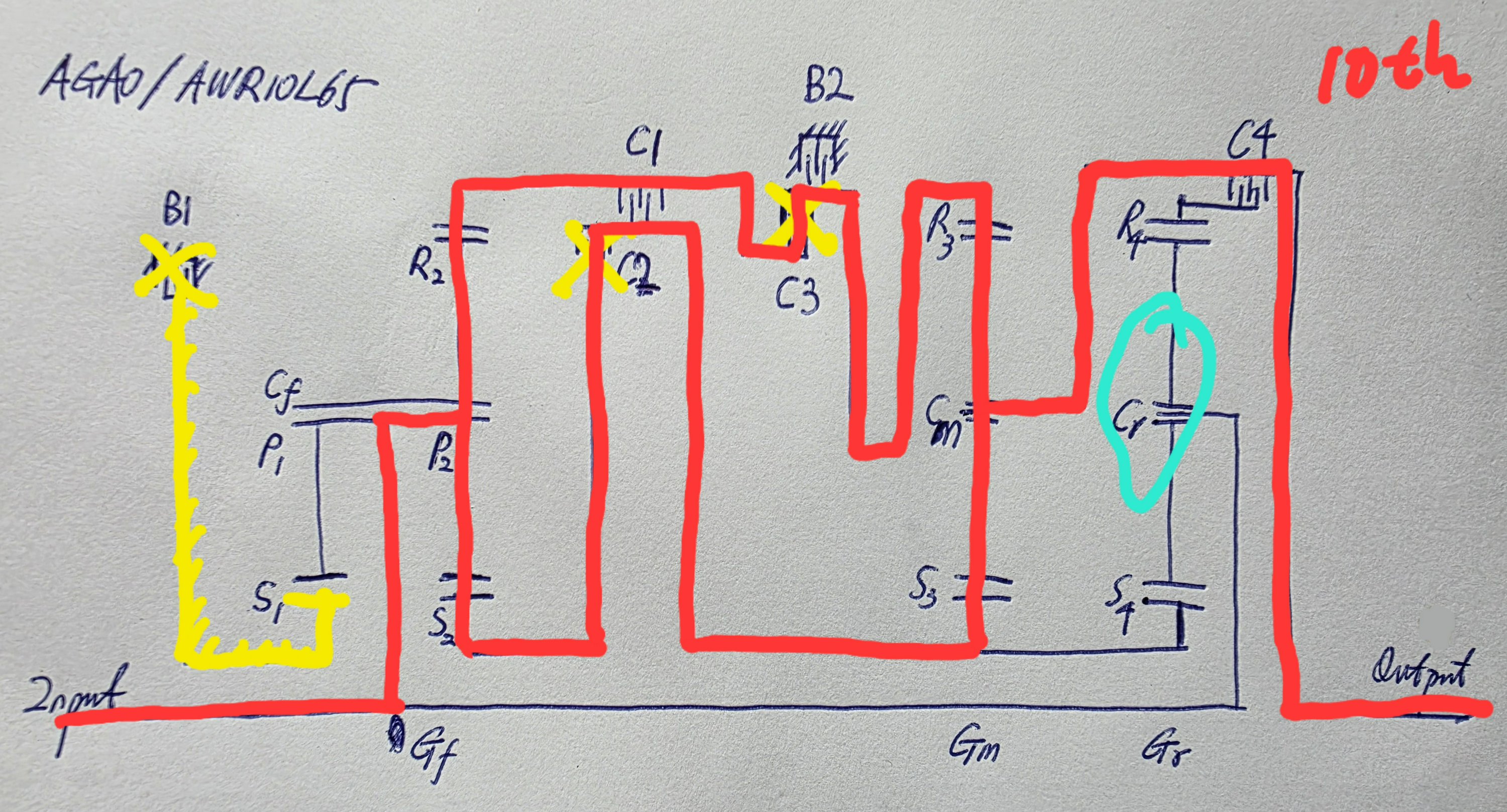
In 10th, torque goes through Cf > S2 > C2 > S3 > Cm, which is balanced by the parallel path of R2 > C3 > R3. That is, in one path speed increases in Gf and reduces in Gm; in the other, speed decreases in Gf and increases in Gm. The overall speed increases because S2 is much larger than S3.
Final Words
The AWR10L65 has a very elegant gear train and simple torque paths. It can provide a more direct driving experience than its predecessor and remain robust. However, it is held back by additional pursuits of efficiency, smoothness, and cost.