techXXX
Compact Speedster: Type 2 with 11k-RPM V12 and Manual Transmission—Mcc 14
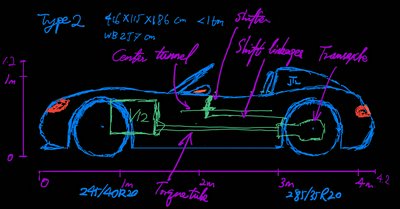
Type 2 carries over the drivetrain of the Type 1 and making the chassis lighter and more focused is the more fruitful direction in the body style of a compact speedster.
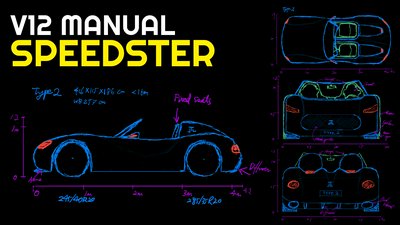
Today, I want to circle back to the compact spyder that I mentioned as Type 2 in the first episode. Upon reflection, I believe that a high-revving 1.5L V6 would be more suitable for a motorcycle. Rather, carrying over the drivetrain of the Type 1 and making the chassis lighter and more focused is the more fruitful direction. Further, such a focused weapon should be in the body style of a compact speedster rather than a conventional roadster.
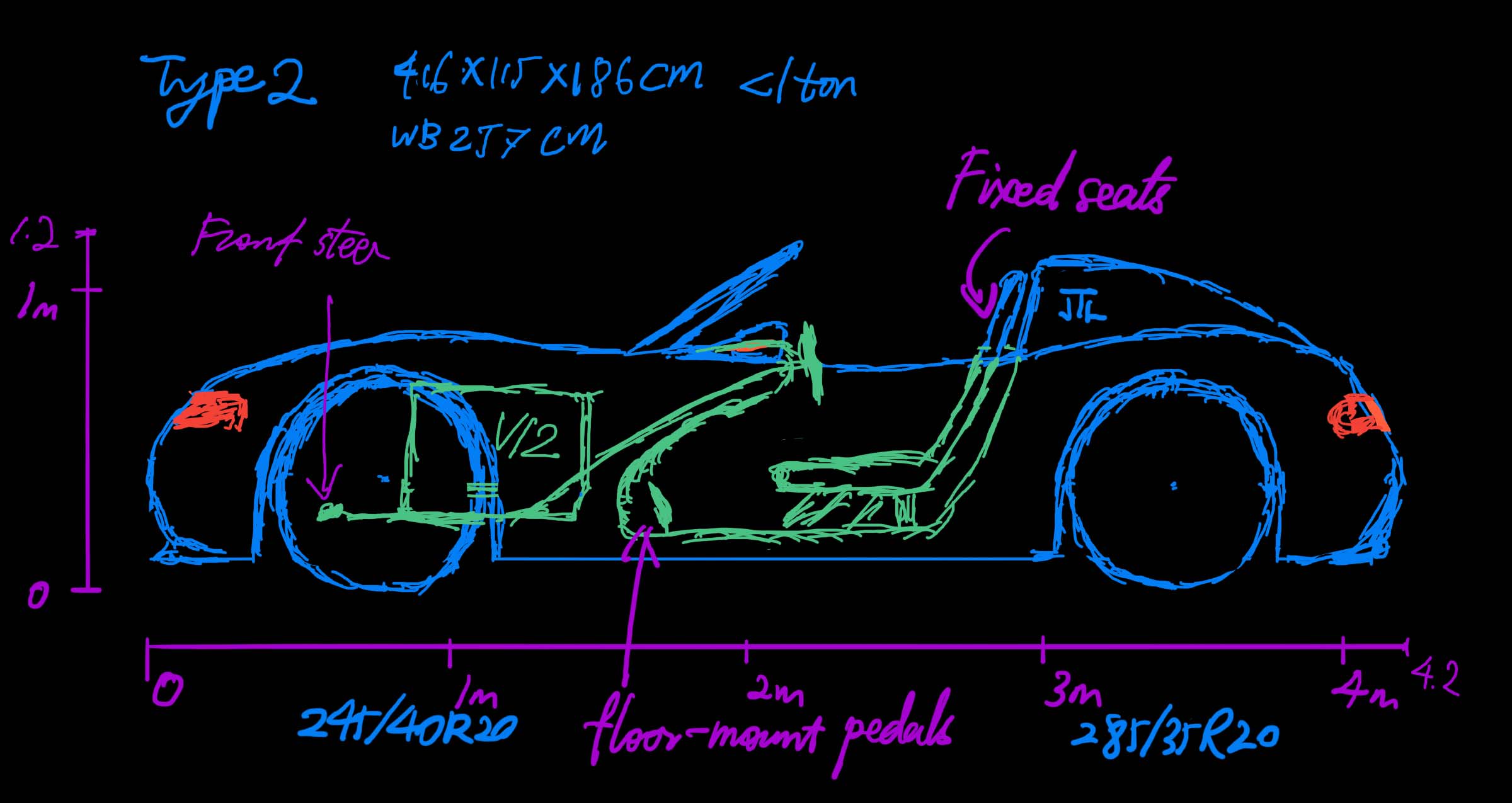
Key Specs
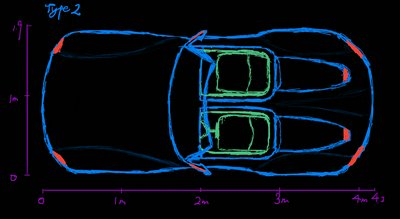
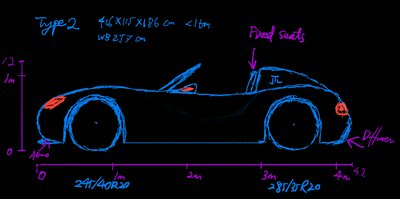
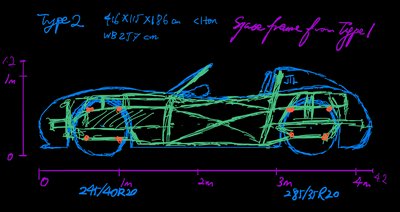
- Length: 416cm
- Width: 186cm
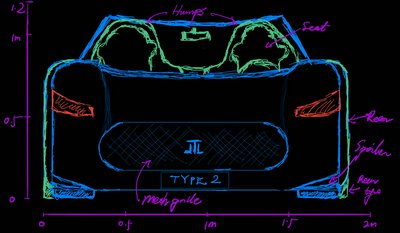
- Height: 115cm
- Wheelbase: 257cm
- Weight: Under 1 ton
- Engine: PC301, 3.0L V12
- Power: ~500hp @ 11,000RPM
- Transmission: 7-speed manual, rear transaxle with Torsen LSD
- Gear ratios: 4.00:1, 2.60:1, 1.79:1, 1.30:1, 1.08:1, 0.92:1, 0.75:1
- Drivetrain layout: FM-R
- Tires: 245/40R20 front, 285/35R20 rear, forged Al or Mg
- Suspension: Double wishbone front and rear
- Brakes: 6-piston fixed front, 4-piston fixed rear, carbon ceramic
Drivetrain: More Focused
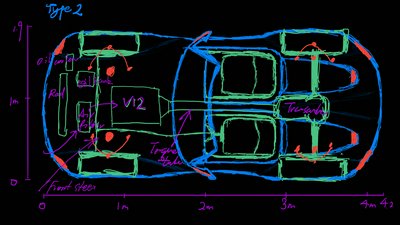
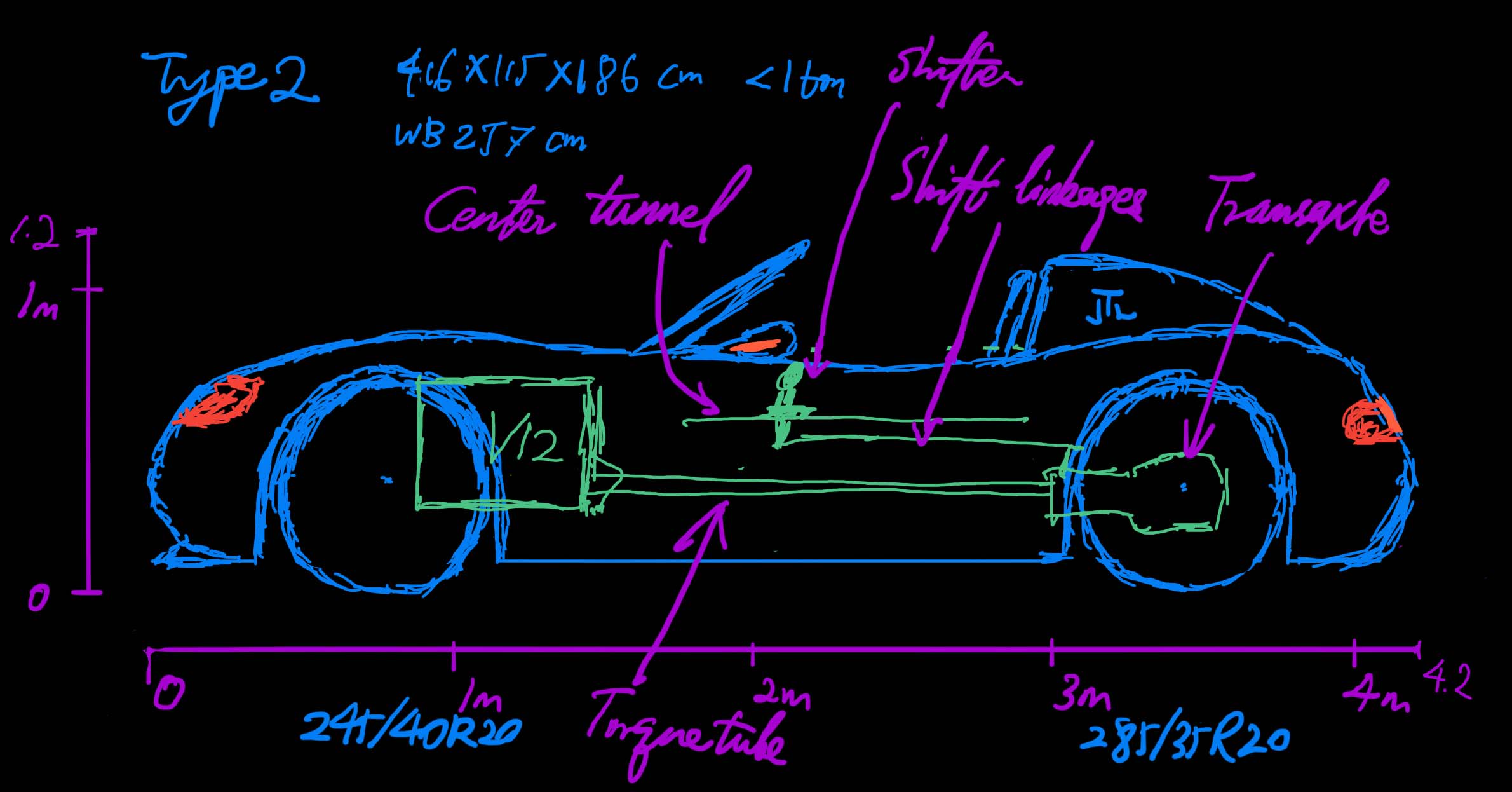
Based off Type 1, our compact speedster shares the exact same engine, though it can run a more aggressive tune because its lighter weight makes emissions compliance easier to achieve. The target is 500hp at 11,000RPM. Just to reiterate, the PC301 3.0L naturally-aspirated V12 boasts ultra-short intake runners, individual throttle bodies, high bore-to-stroke ratio, equal-length exhausts in a 6-2-1 setup, dry-sump oil system, and straight-cut timing gears.
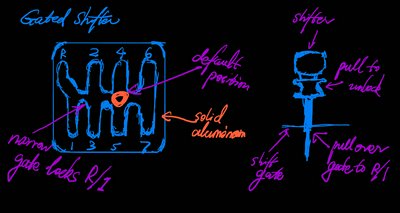
The same 7-speed manual transmission is used, but in this case as a rear transaxle with a Torsen limited slip differential. To transmit the power, we use a torque tube with aluminum housing combined with a steel shaft. This is considerably cheaper than a carbon fiber shaft but adequate for our setup. We can sell carbon fiber upgrade parts in the aftermarket. The shifter is connected to the transmission via levers, as they provide the most tactile, most direct shift feel.
Chassis: The Speedster Advantage
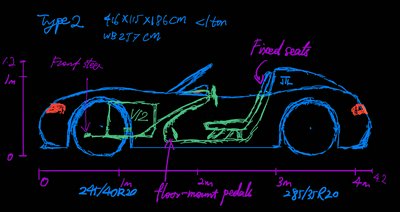
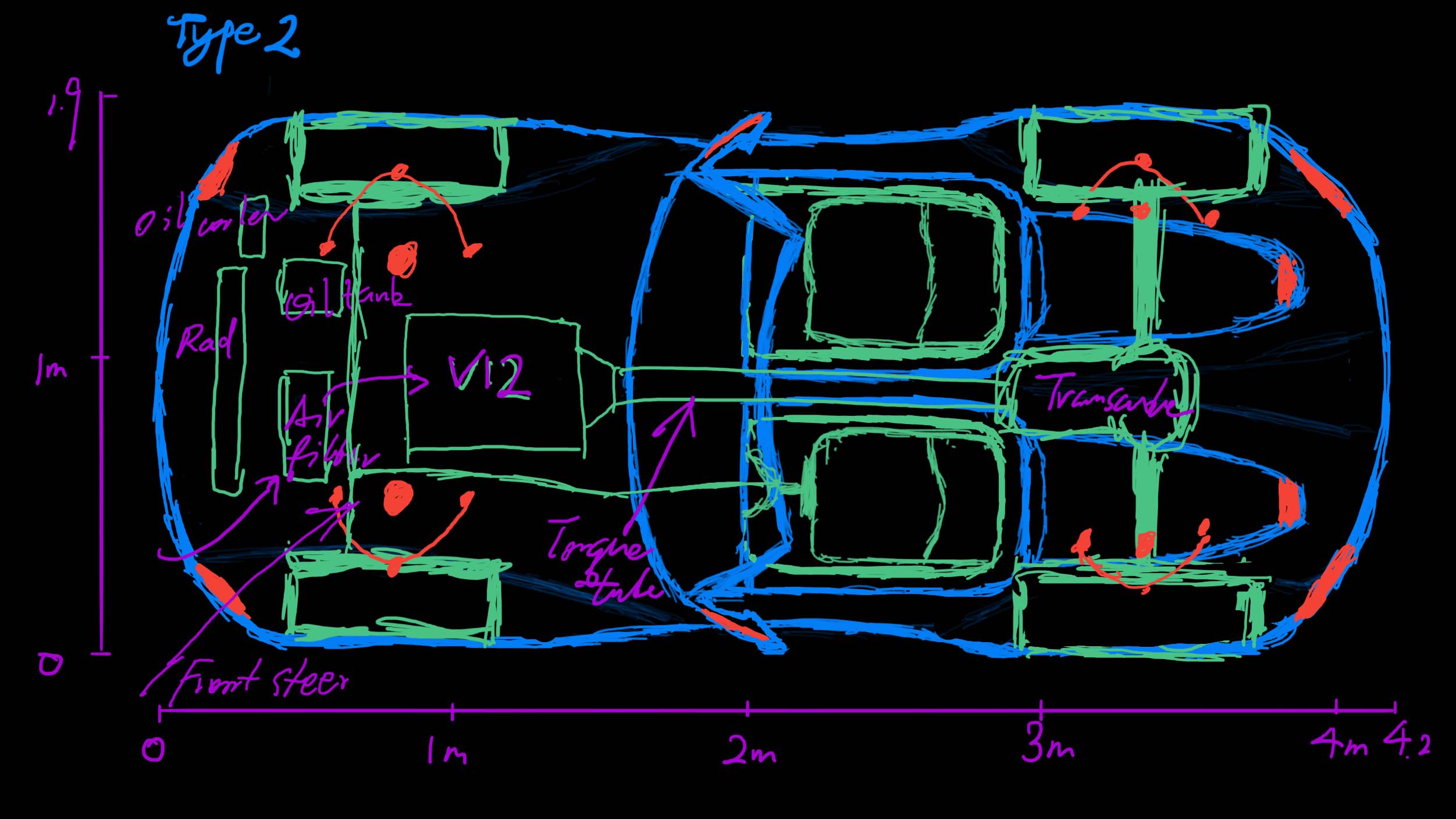
Unlike the GT, our compact speedster is more focused, and this focus is most apparent in the chassis. Without the need to accommodate comfort features, rear seats, or even a top, Type 2 is half a meter shorter in both total length and wheelbase. Moreover, the speedster body style makes it possible to integrate longitudinal structural elements where the doors would be in a normal car. The center tunnel is higher, and there is a high-mount structural element across the top between the driver and the passenger. Thus, we have a full space frame that is exceptionally rigid and considerably lighter than the usual unibody chassis.
Like the Type 1, Type 2 uses low-mount double wishbone suspensions at all four corners. However, we do not use inboard pushrod front setup here, because the flowing shape in the Type 2 can accommodate a vertical shock absorber. The added advantage is lower overall weight.
Exterior: Style with Function
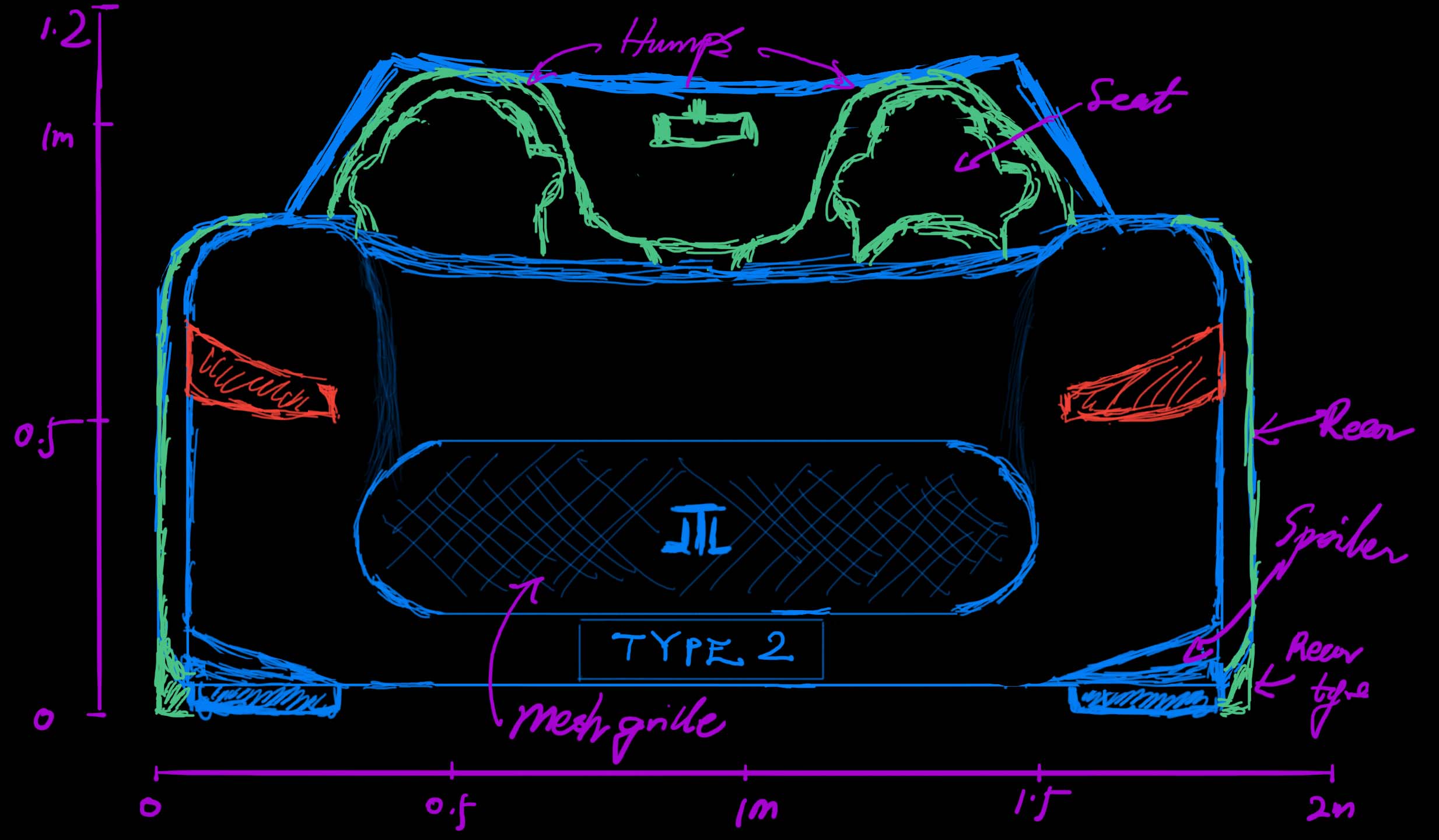
Pure speedsters do not come with real windshield. However, Type 2 has one, because it is meant for long driving sessions without a helmet. I believe this is the more authentic automotive experience, while open-air motoring with a helmet is best done on two wheels. Design cues for Type 2 can be found in icons such as the Jaguar XKSS, Ferrari 166 MM Barchetta, and Ferrari Monza SP.
As alluded to earlier, our compact speedster has no door. The driver and the passenger simply climb inside. Considering that the side is less than 80cm from the ground, it should not be a problem for adults physically fit to drive and to ride in such a thrilling and perhaps physically-demanding vehicle. There is also a structural element up top between the driver and the passenger. Its position allows us to use less material overall in the chassis, thereby reducing weight appreciably. The passenger section can be closed off by a cover.
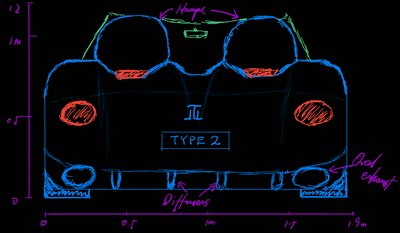
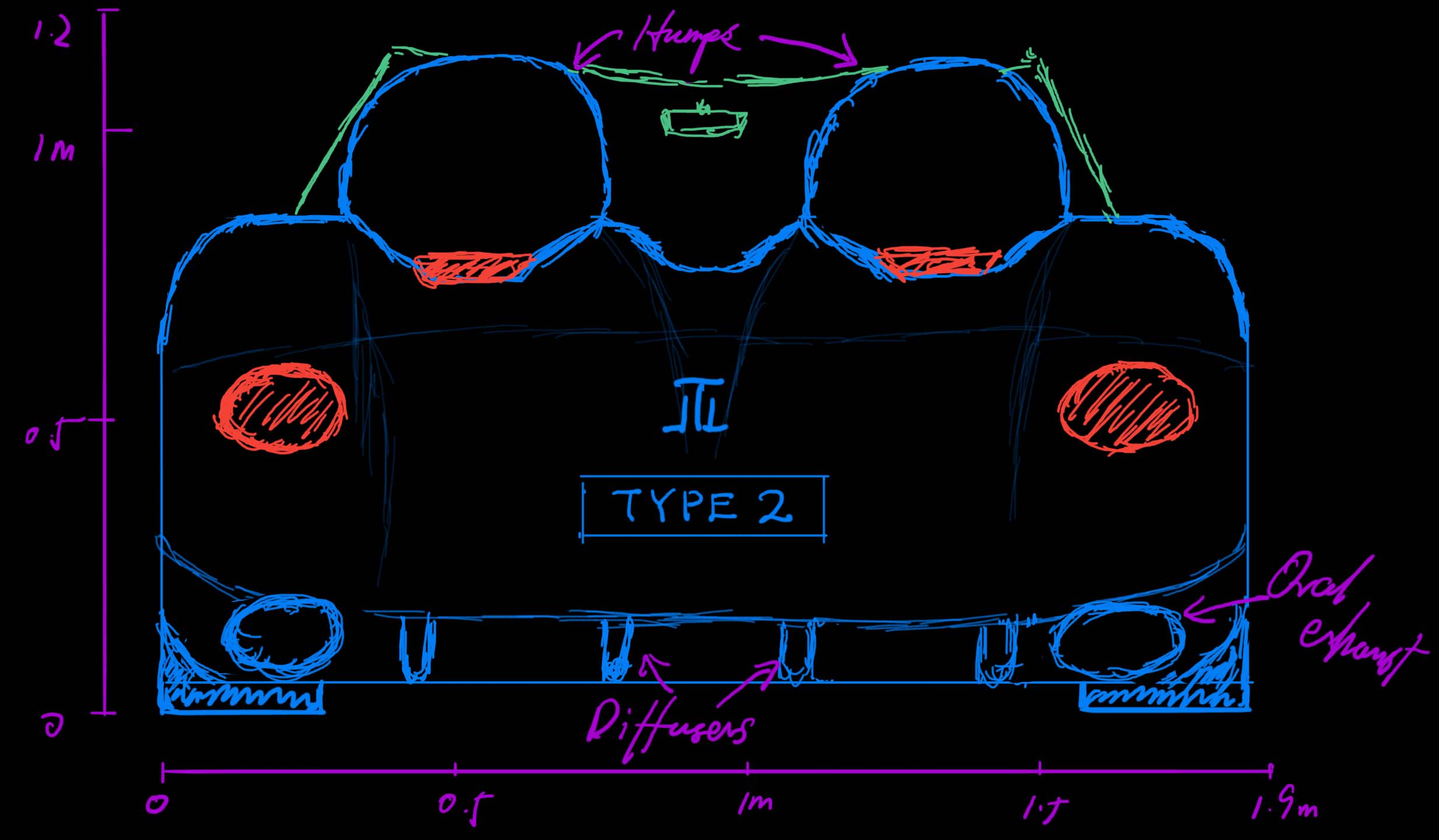
Like most modern speedsters, Type 2 comes with two headrest fairings or humps behind the two seats. They improve the car’s aerodynamics, provide head protection for the occupants, and are unmistakably stylish. These humps merge into the rounded tail section, which should also be the best option for minimizing aerodynamic drag, though it is purely a styling decision. To provide downforce, we use rear diffusers, also known as rear underbody spoilers.
Up front, we have a relatively long, though not excessive engine compartment. We still have a front-mid engine placement, but the engine is only just behind the front axle line, instead of behind the front wheels as in Type 1. This is to improve rigidity and reduce weight. The front fascia is simple, elegant, and functional, with some winglets or front spoilers at bottom.
Overall, the car’s profile line flows like a wave. This is beautiful, aerodynamic, and convenient for entering and exiting without a door. The front section is narrower than the rear by 10cm, while the middle is further tapered by another 10cm. This shaves off some weight, makes ingress and egress easier, and most importantly improves aerodynamics further.
Forged Magnesium Wheels and Carbon Ceramic Brakes
Our lightweight compact speedster has almost comically large wheels. As standard, they are forged aluminum. As upgrade, there is also a forged magnesium option. Generally speaking, forged magnesium wheels are more affordable than carbon fiber wheels but provide superior strength and comparable weight savings. These wheels are so sized to complete the car’s dramatic exterior styling. Needless to say, they are not optimized for top speed, but then again neither is a 3.0L naturally-aspirated V12.
For braking, we use 6-piston fixed calipers up front and 4-piston fixed calipers in the rear. Since Type 2 is more exclusive than Type 1, we can generously specify carbon ceramic brakes as standard. This further reduces unsprung weight. Note that it is mostly also a styling choice, because smaller brakes would work equally well on a car weighing less than 1t.
Key Features
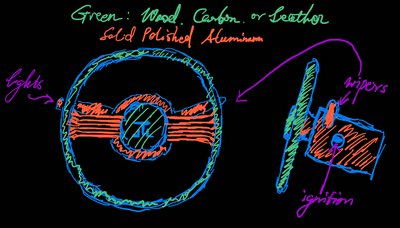
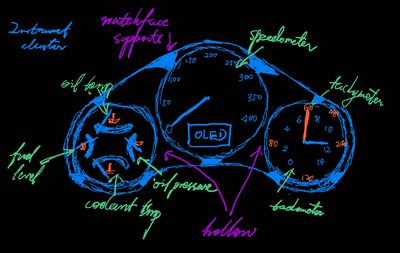
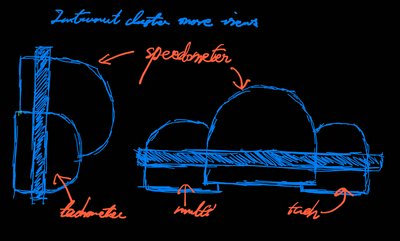
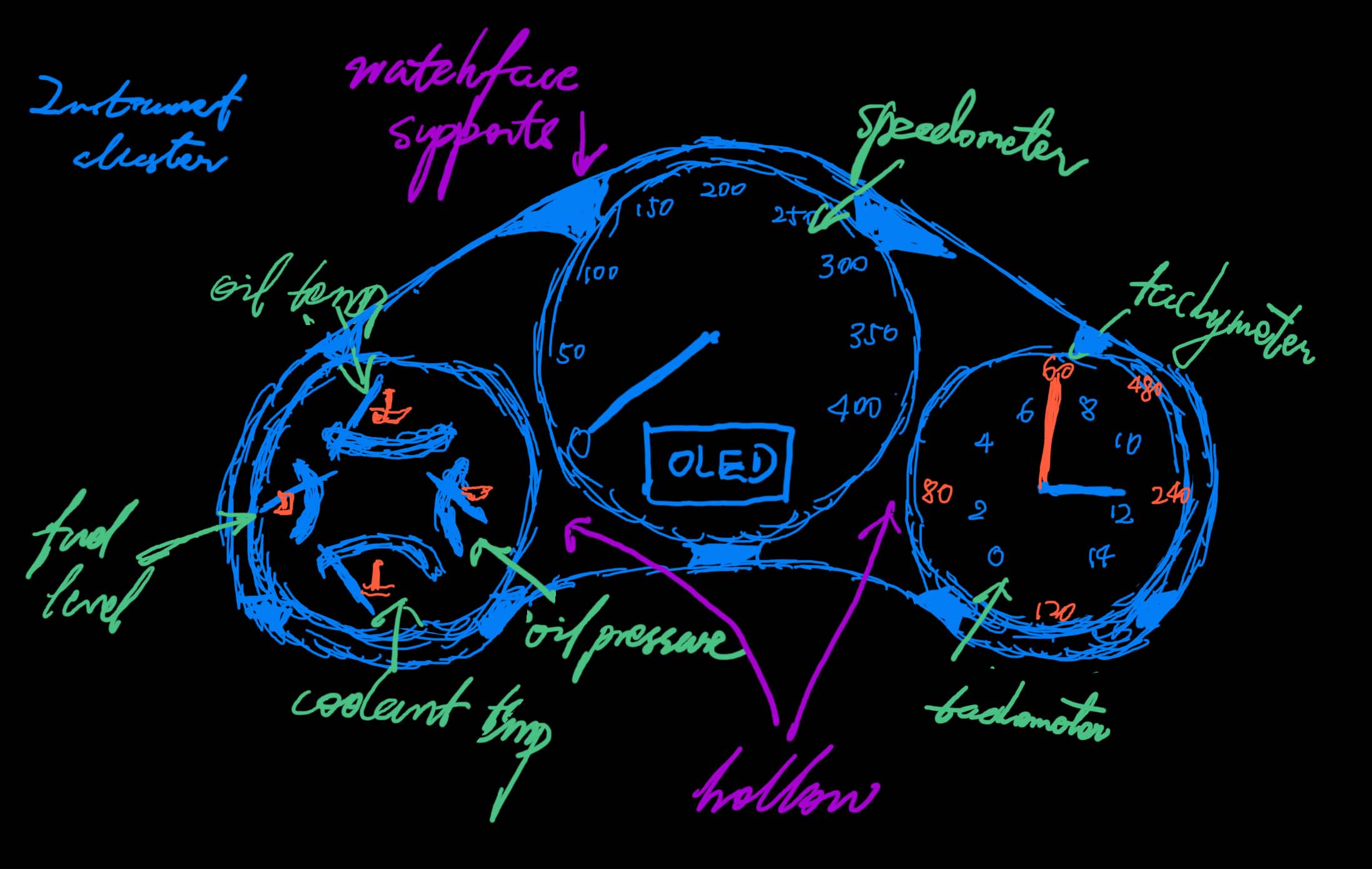
Since the driver’s compartment is always open in a speedster, we eliminate all AC functions. Indeed, with a high-mount structural element across the top, we also eliminate all instruments on the dashboard. There is only a solid aluminum open-gate shifter on the transmission tunnel. The same steering column and analogue instrument setup from Type 1 is carried over with three aluminum watch faces stacked behind a two-spoke steering wheel.
Unlike the GT, our speedster has fixed bucket seats. All three pedals are floor-mount and can be adjusted back and forth to suit the height of the driver.
The absolute headline feature of Type 2 is the combination of open-top motoring in a symphonious 11.5K-redline V12 with straight-cut timing gear whine and 7-speed manual transmission. It is an homage to the great speedsters of yesteryear.
Gallery: Mcc 14 Type 2
XXX