techMCC
V16 Mid-Engine Wedge Supercar, Type 6 (MCC 19)
Today, let us go over the design of our flagship mid-engine wedge sports car powered by the 6L 45-deg naturally-aspirated V16 engine that I presented previously. Its codename is Type 6.
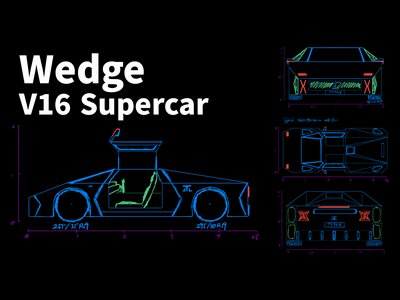
Today, let us go over the design of our flagship mid-engine wedge sports car powered by the 6L 45-deg naturally-aspirated V16 engine that I presented previously. Its codename is Type 6.
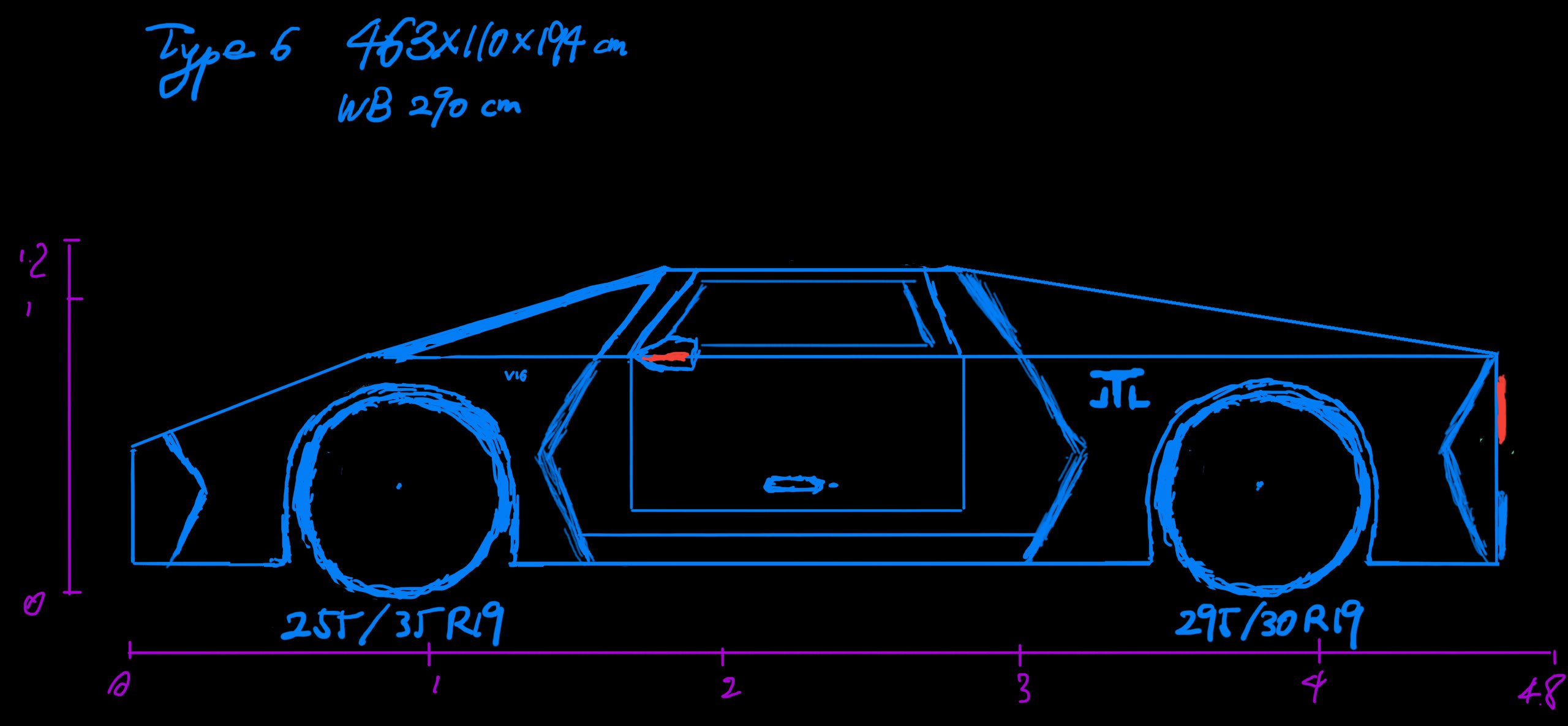
Key Specs
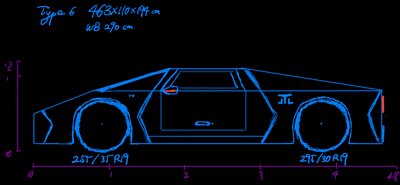
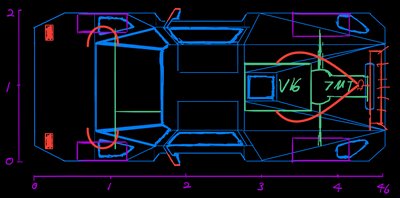
- Length: 463 cm
- Width: 194 cm
- Height: 110 cm
- Wheelbase: 290 cm
- Weight: ~ 1.2 ton
- Engine: PG601, 6.0L V16
- Power: ~ 650hp @ 8,400 rpm
- Transmission: 7-speed manual, rear transaxle with Torsen LSD
- Gear ratios: 4.00:1, 2.60:1, 1.79:1, 1.30:1, 1.08:1, 0.92:1, 0.75:1
- Drivetrain layout: M-R
- Tires: 255/35R19 front, 295/30R19 rear, forged magnesium
- Suspension: Double wishbone front and rear
- Brakes: 8-piston fixed front, 6-piston fixed rear, carbon ceramic
Wedge Design
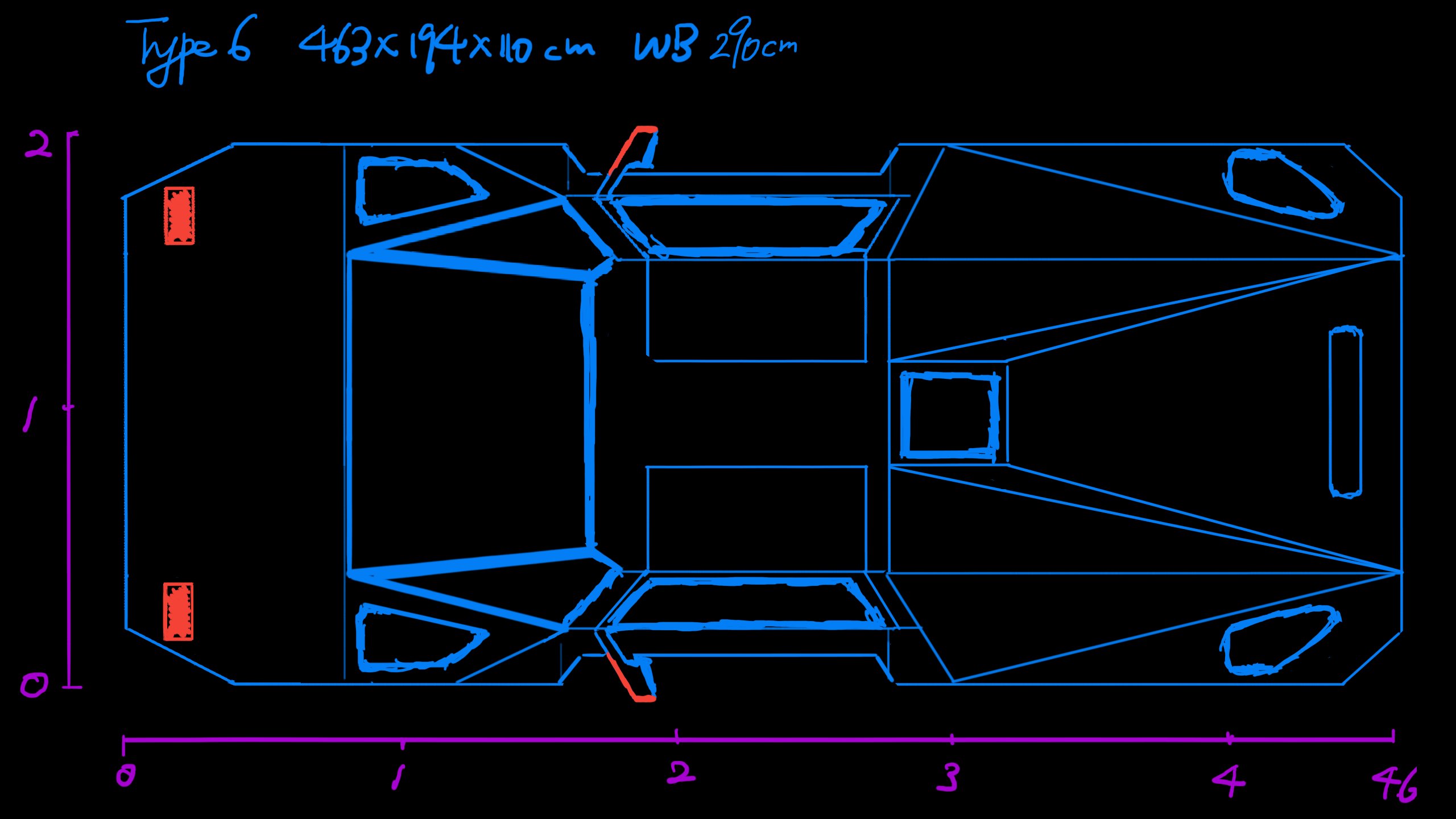
An homage to the great wedge cars by legendary designers like Marcello Gandini and Giorgetto Giugiaro, Type 6 adheres to flat panels and sharp lines in a wedge shape, while being slightly bulkier than classic vehicles to fit the larger modern engine better and to meet today’s strict safety standards. Its wheel arches and aero vents are the only areas that break the straight lines.
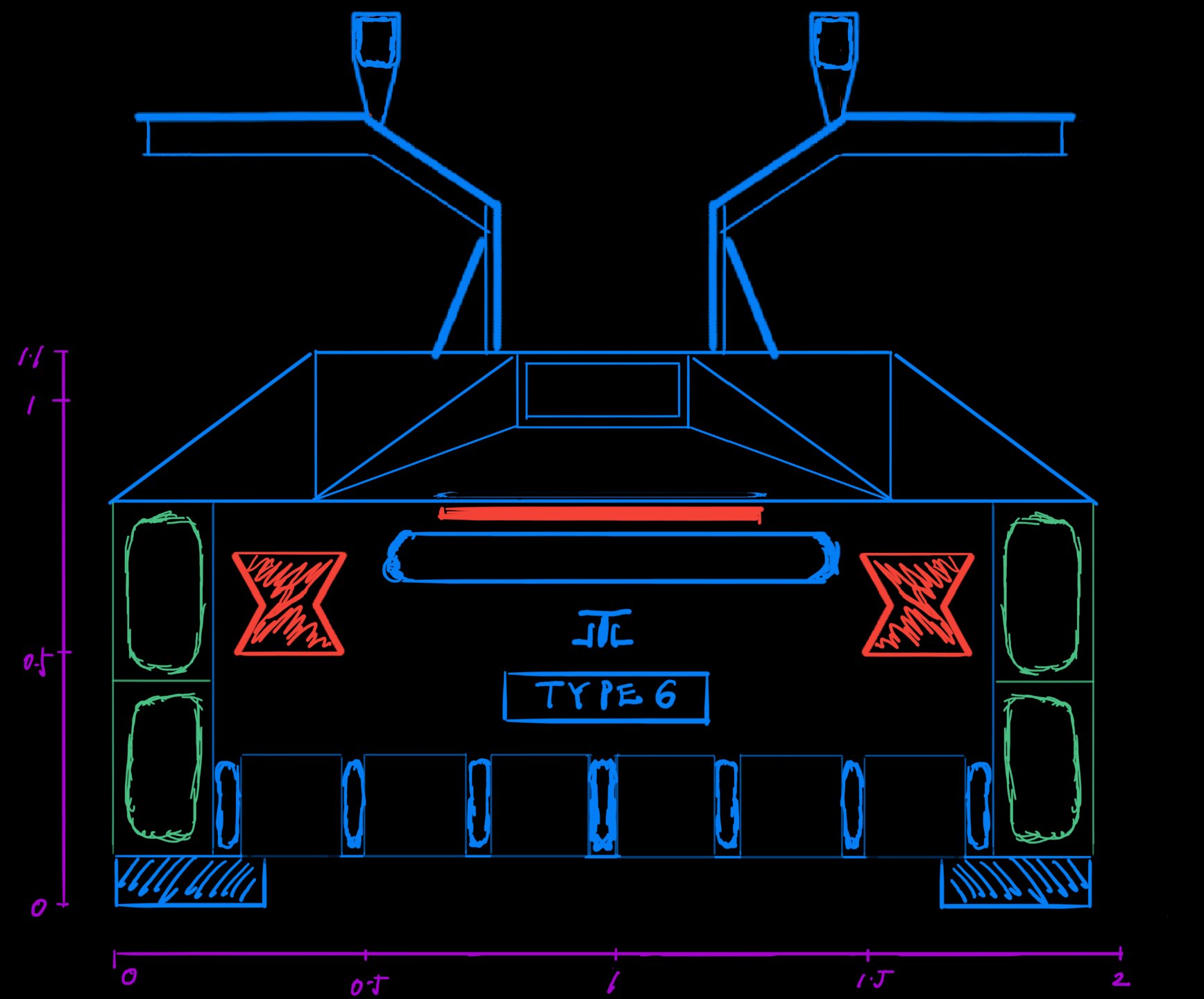
Aero Elements and Exhaust Tips
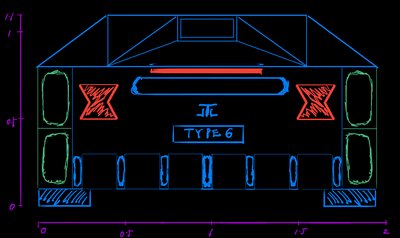
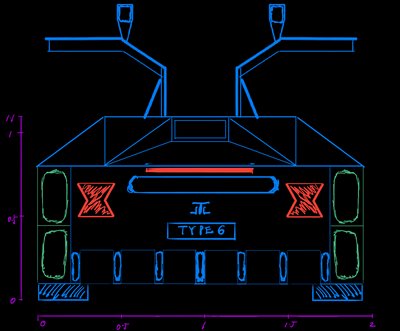
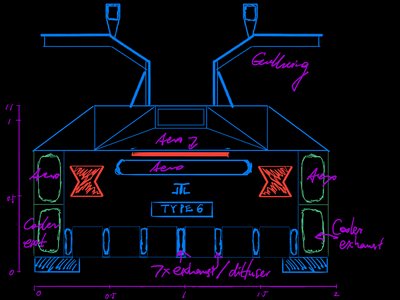
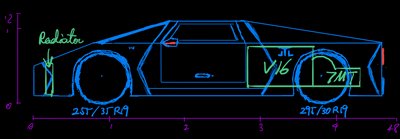
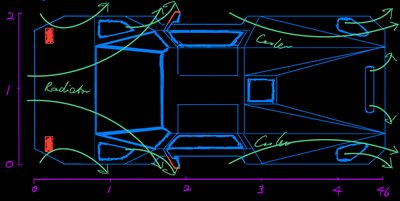
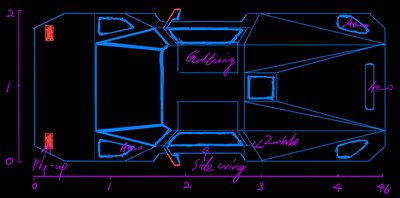
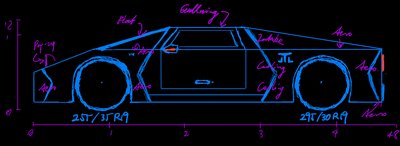
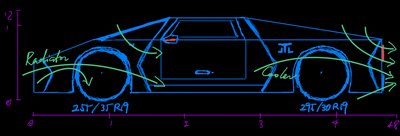
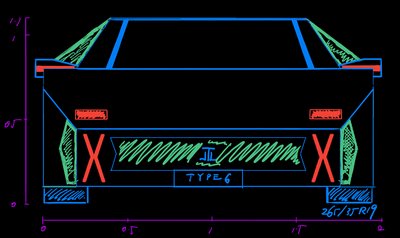
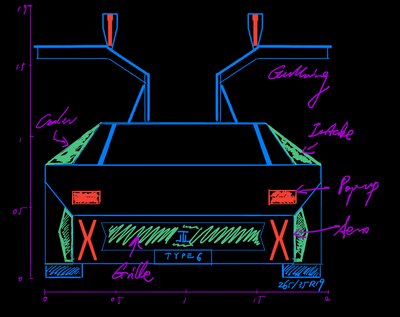
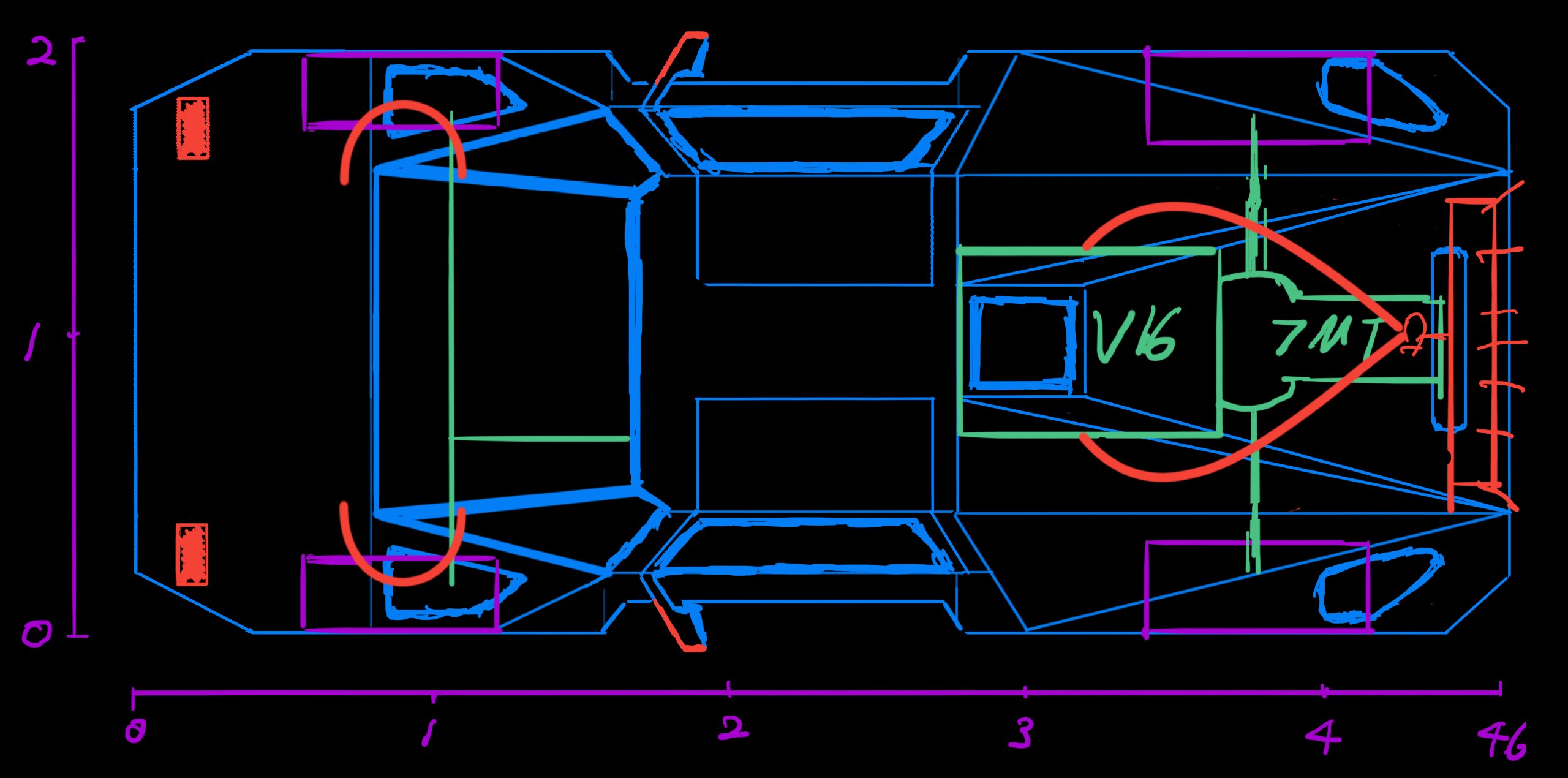
The sharp wedge shape is iconic but aerodynamically compromised. Type 6 addresses these issues with a large number of aerodynamic elements seamlessly integrated into the design. From the side, the four boomerang-shaped vents serve as aerodynamic intakes and exhausts, with the one just behind the door doubling as air intake on the left side and intake for the oil or transmission cooler on either side.
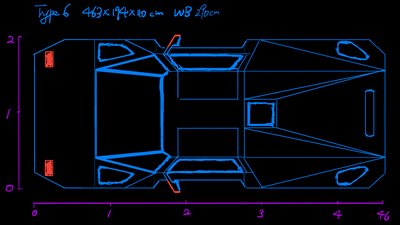
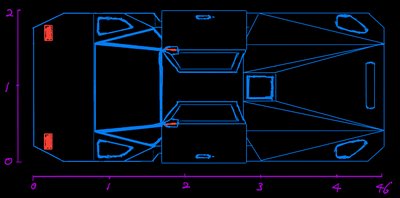
On the flat deck about 80cm from the ground, there are five additional aerodynamic intakes that provide downforce without disrupting Type 6’s clean lines. Please note that the exact placement and shape of these intakes must be simulated and tested. The drawings shown here are design concepts.
Finally, Type 6 has 7 underbody diffuser dams. Each dam has an exhaust tip embedded inside. They come out of a vertical-mount muffler.
Gullwing Doors
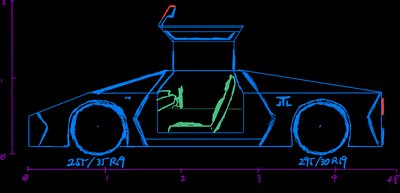
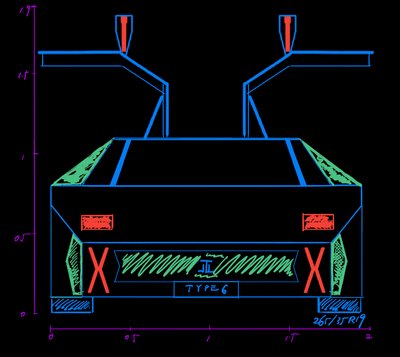
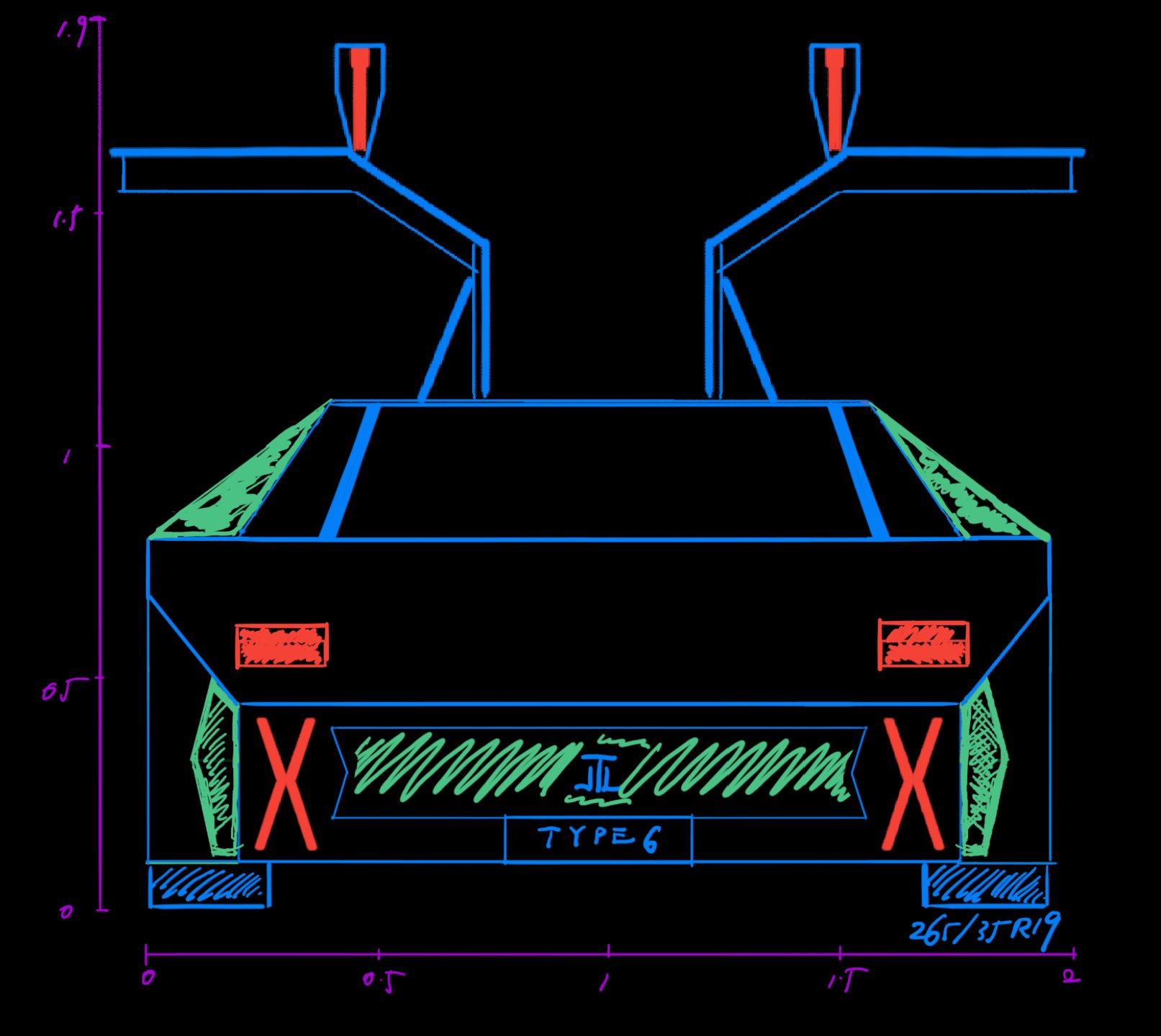
Type 6 is very low to the ground, and its boomerang aero elements in the front and rear sections need something symmetric in the middle to balance. Hence, we choose gullwing doors that makes ingress and egress easier while adding a touch of symmetry that echoes the boomerang air intakes.
Due to the fold in the doors at the beltline, the windows on them cannot roll down. Instead, we design them to be the fold-down type.
Pop-Up Headlights
We want to keep a low yet flat front hood line. This leaves little room for more conventional low and high beams. A neat solution popular among classic wedge cars is the pop-up headlight. What is different here is the way Type 6’s headlights are hinged: While classic cars used rear-hinged assemblies that cover the lights entirely when retracted, we use front-hinged lights. The advantage comes in the form of pedestrian safety. It is how we can still use pop-up headlights today.
V16 with 7MT Transaxle
The star of the Type 6 show is without doubt our PG601 6L naturally-aspirated V16 engine, which is mated to a 7-speed manual transaxle. Details of both have been thoroughly discussed previously, and I am not repeating myself again here.
Aluminum or Carbon Monocoque
Ideally and for the best performance, Type 6 should use a full carbon fiber monocoque. The technology is mature and coming down in price. Still, it remains an exotic choice, and companies without experience working with it must overcome a steep learning curve. An aluminum spaceframe chassis can provide good weight savings while being more economical. Since I am only presenting a concept, we can leave both options on the table.
Forged Magnesium Wheels
While discussing our Type 2 speedster, I mentioned forged magnesium wheels. As our flagship model, Type 6 definitely needs forged magnesium wheels.
Focused Interior
The interior of Type 6 should be functional and focused. Soft surfaces should be covered by Alcantara or similar matte fabrics that eliminate glare. Hard surfaces can be either plastic or matte carbon fiber. I emphasize non-glossy surfaces because Type 6’s wedge design includes flat windows throughout. Matte surfaces avoid reflections and glare.
Gallery: Type 6 Mid-Engine Sports Car
MCC