techXXX
Designing a Serviceable, Reliable, and Durable Modern High-Performance V8 Engine
Modern forced-induction V engines sacrifice serviceability, reliability, and durability for fuel efficiency. Today, I take a different approach and design a high-performance turbocharged V8 that is serviceable and reliable.
Modern engines are becoming horrendously complex due to stringent emission requirements and strong market demand for power and efficiency. Serviceability, reliability, and durability are systematically compromised. In my humble opinion, no modern forced-induction V engine is worth the trouble after the warranty period. In this article, I take a different approach and attempt to design a high-performance turbocharged V8 engine. Please note that we are talking about general design ideas, not engineering details.
Design Principles
This engine prioritizes serviceability, reliability, and durability. It must meet modern emission standards, but we sacrifice fuel efficiency. Therefore, this engine should be mechanically as simple as we can get away with. It should be easy to service, especially by DIYers. Where possible, we rely on modern sensors and fast-responding strategies for precise control of the combustion, not mazes of add-on emission equipments.
Engine Layout
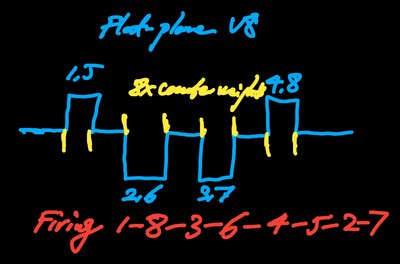
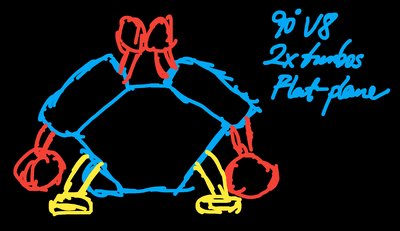
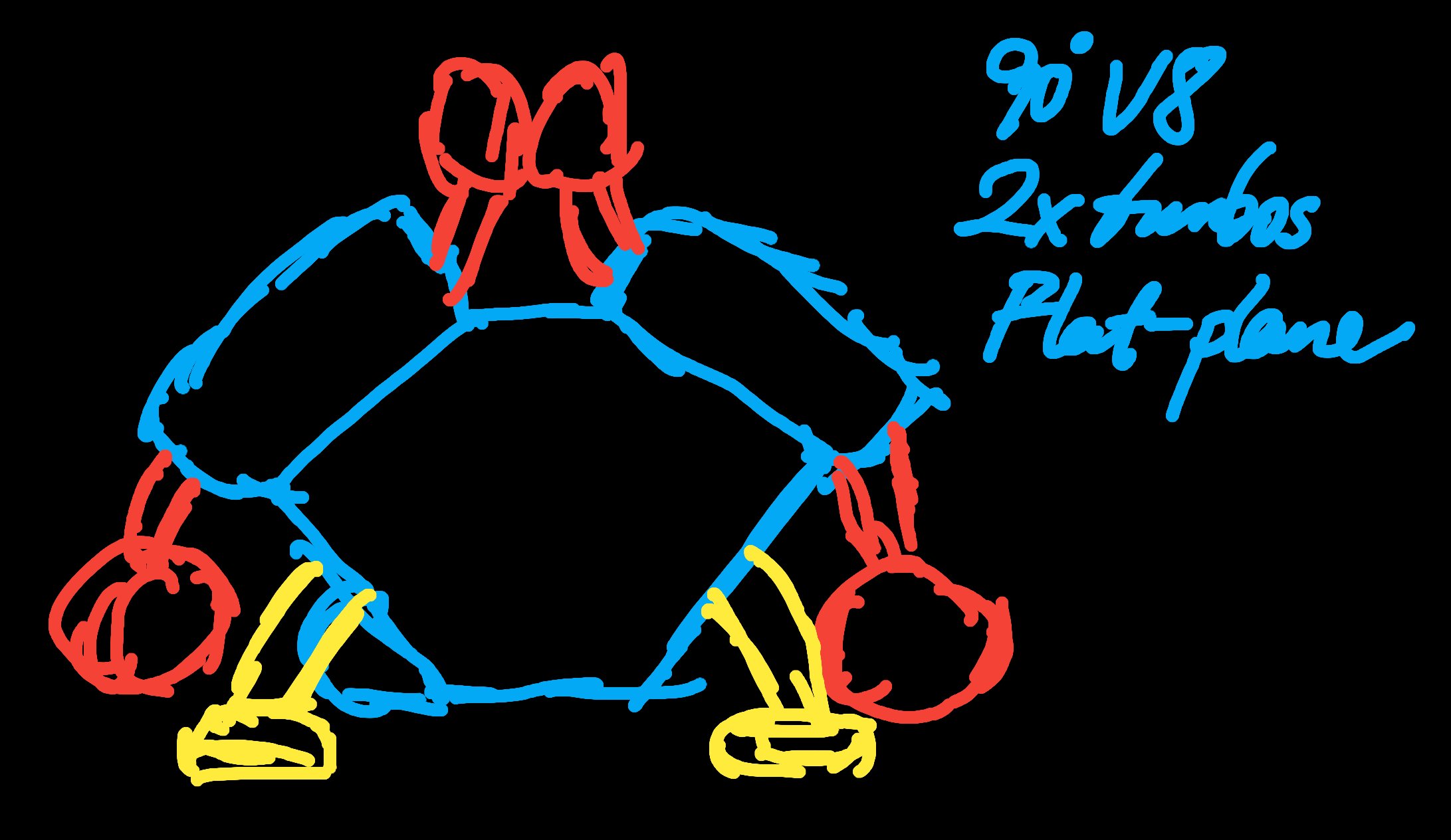
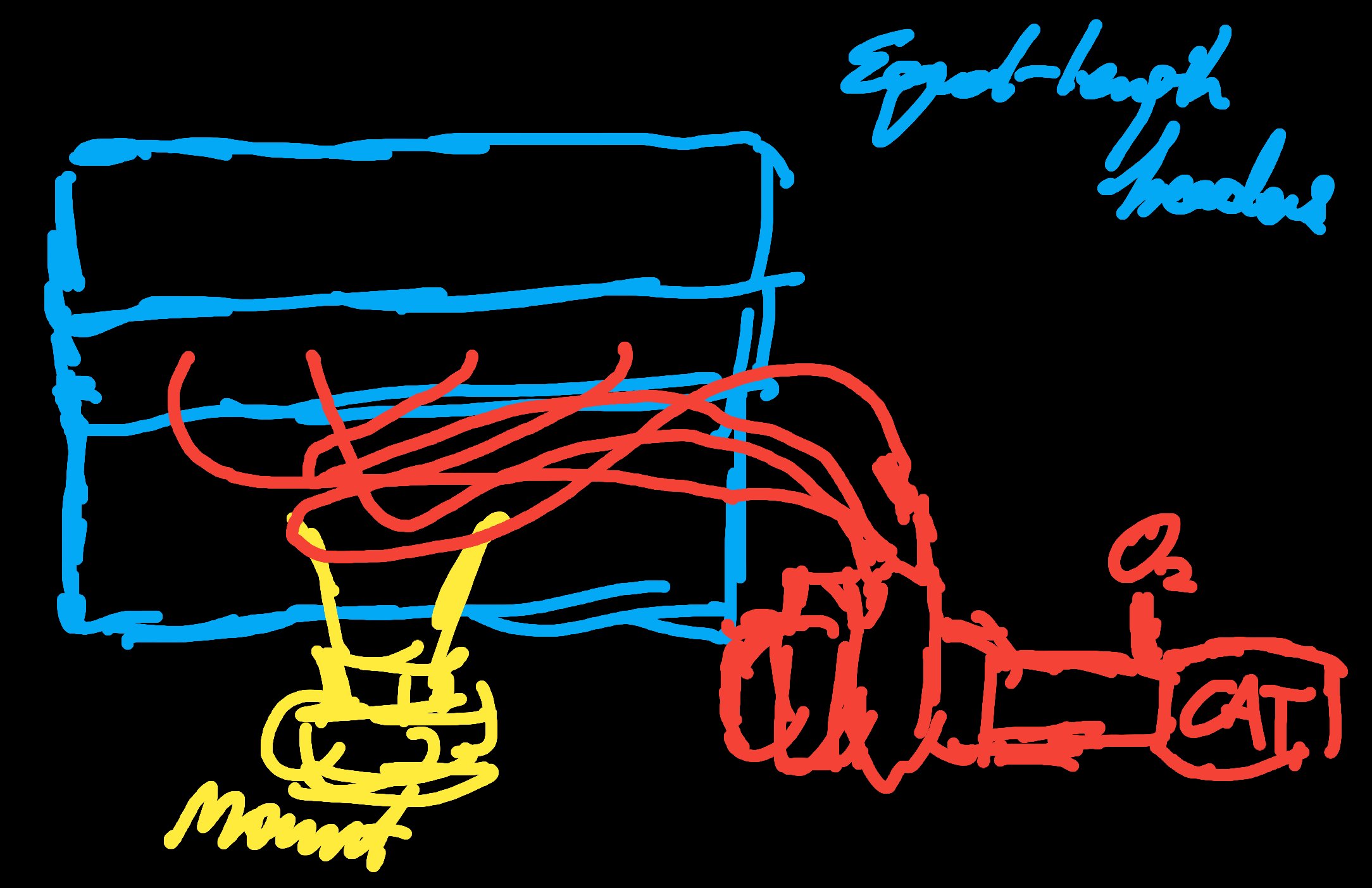
We want a 90-degree V8 with a flat-plane crankshaft and two outboard turbochargers. That is, our V8 is not a ‘hot-V’ design. The argument by many manufacturers that hot-V engines are more efficient because the turbocharger can be placed closer to the cylinder head is misleading, because that is only true when their V8 engines have cross-plane design, or when there V6 has a single turbocharger. Cross-plane V8s fire two cylinders in the same bank next to each other, so it is important to feed each turbo with exhaust gases from both banks to get even exhaust pulses. This is not a problem with flat-plane V8s. Nevertheless, we do not place the turbos too close to the cylinder head, since we prioritize performance and reliability.
Turbos, Intercoolers, and Exhausts
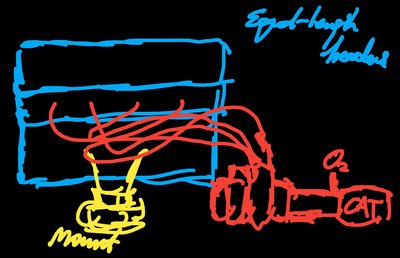
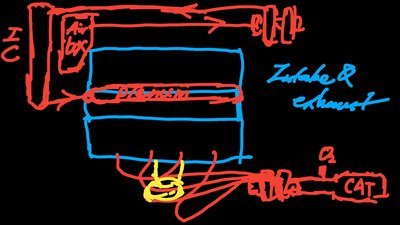
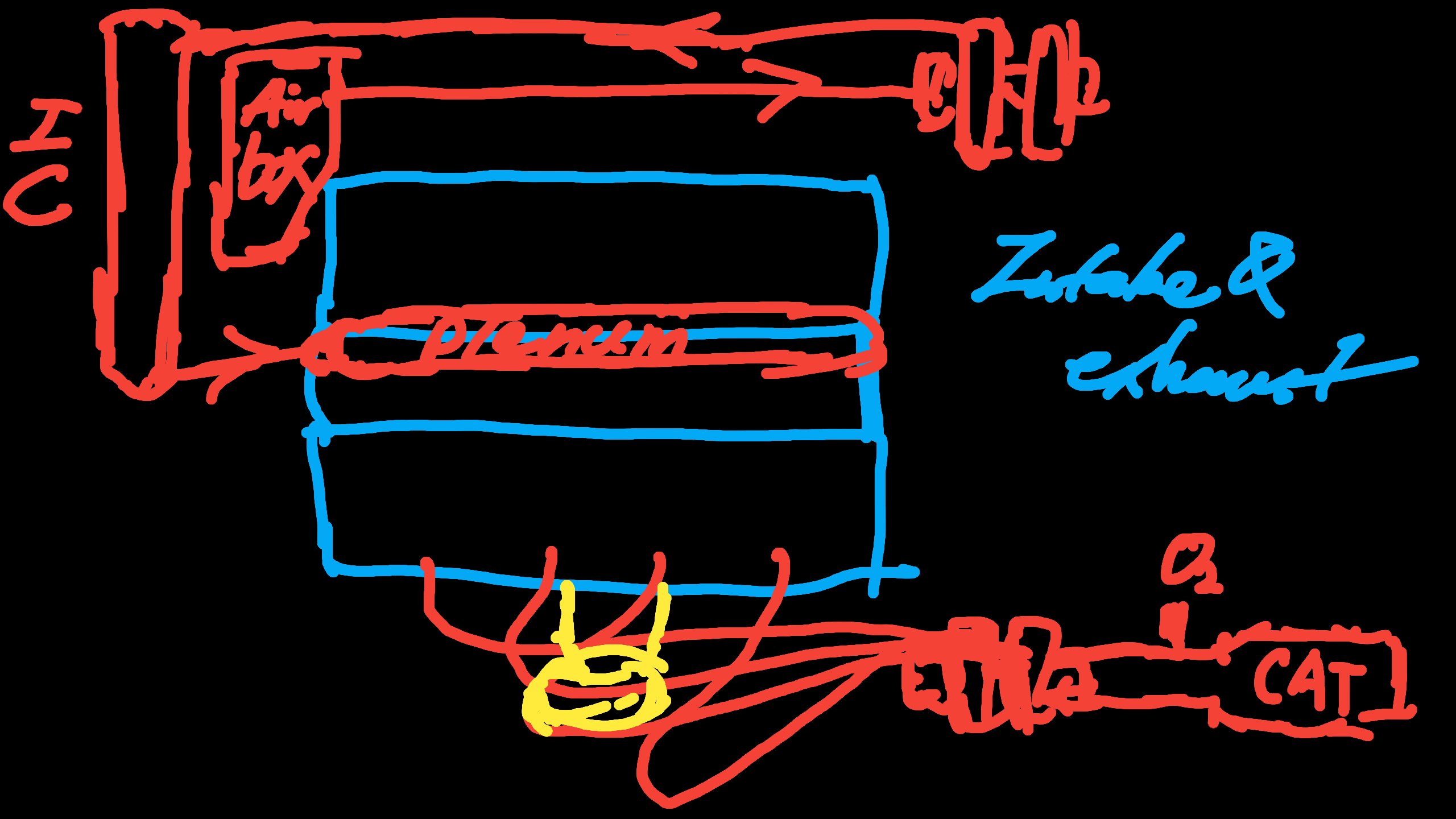
In the interest of power ceiling and reliability, our V8 will have 4-into-1 equal-length headers with outboard, single-scroll turbochargers that is placed reasonably far away from the engine block. We will use two air-to-air intercoolers. The turbos should pair with electronic wastegates. This brings seven advantages:
- With equal-length headers, all cylinders will have the same exhaust gas temperature (EGT) and air-fuel ratio (AFR). This means that the center cylinders are less likely than modern engines to run lean. The knock tendency is greatly reduced, and the tunability of the engine is higher.
- With equal-length headers, even turbocharged, there is a distinct advantage in sound. One can argue that it is better to have an EV if the engine has no character. This setup will produce a smoother, more exotic exhaust note that cannot be replicated by modern ‘twin-scroll designs’.
- Commonly, twin-scroll turbochargers are paired with integrated exhaust manifolds, as can be found in modern V8s. They are more complex, more fragile, and have lower ceilings. They are needed because of the unevenness in exhaust pulses in the manifold. Equal-length headers resolve this problem.
- With headers, the turbos can be placed farther away from the engine block. This eliminates head-related problems that many outboard turbo V8s suffer. The system is overall more reliable, durable, and serviceable.
- With ‘big turbos’, this engine will be unboosted in the low RPM range. While many modern drivers consider this a disadvantage, it helps us achieve better emissions in official test cycles while delivering a more engaging driving experience when boost comes on.
- Air-to-air intercoolers are simpler and potentially more effective in long high-load operations. Most manufacturers prefer water-to-air charge air coolers, which can be more efficient in short bursts and have better transient reponses. However, we choose the simplicity of air-to-air. After all, having an additional heat exchange lowers the thermodynamic limit.
- Electronic wastegates allow for faster, more precise boost control and help eliminate the vacuum system, reducing the number of failure modes.
Timing System
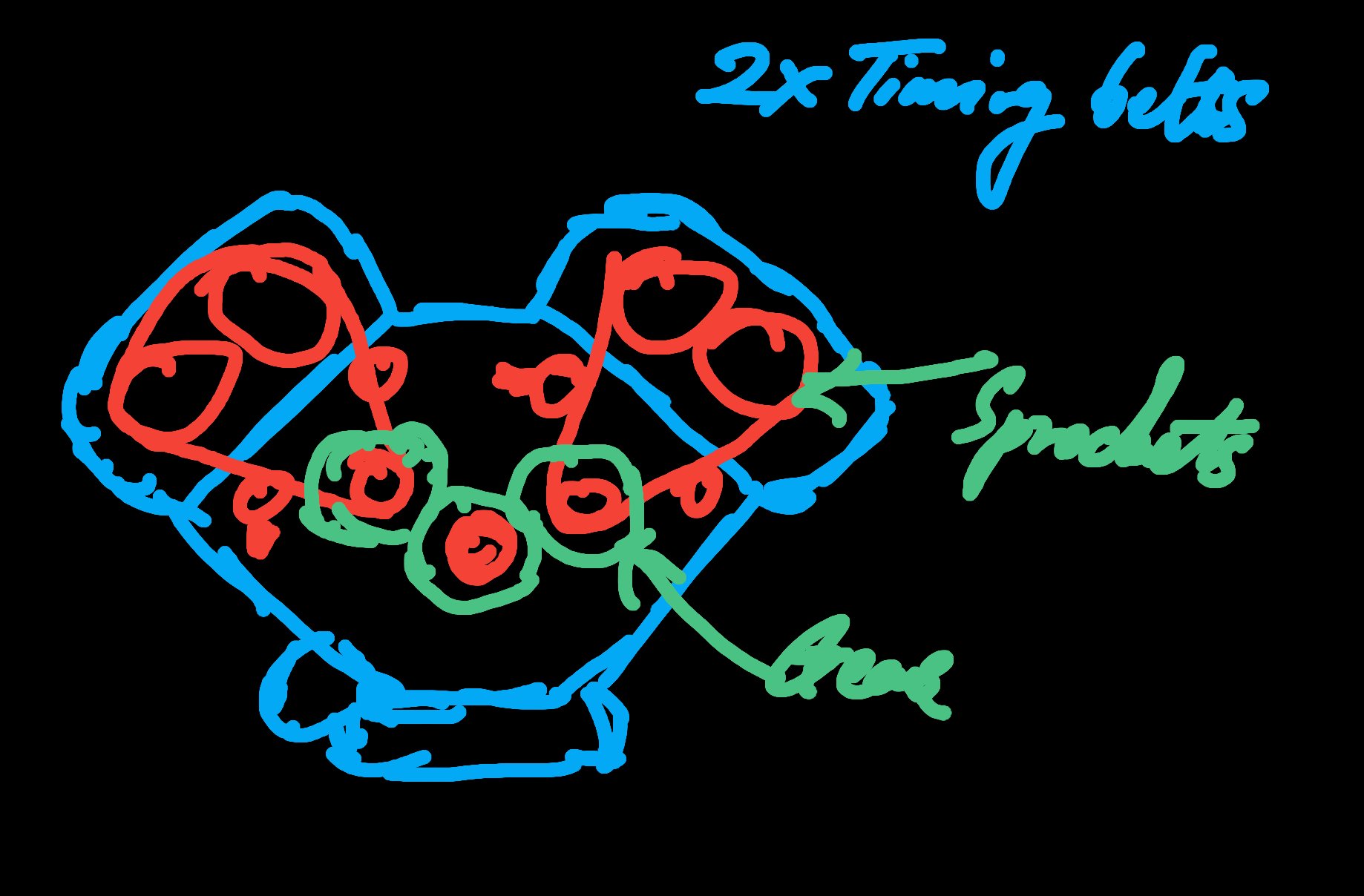
In the interest of power and serviceability, our V8 will have a split belt-driven timing setup with dual variable valve timing (VVT). This has three advantages:
- Using two timing belts, much like older Ferraris, placed at the front of the engine, the engine is incrediably serviceable. The twin-belt setup is important, because the harmonic balancer does not need to be removed for this service, and the V8 can rev higher with the simpler timing setup. Timing belts are also smoother and more efficient. Compared to certain German designs, they even have longer service intervals, and the camshaft sprockets do not wear.
- Belts are not lubricated. This simplifies the oiling circuit. Crucially, the cooling circuit can easily direct flow from front-mounted water pump to the engine block, without passing through a lubricated section, which can have disastrous failure modes.
- Dual VVT is necessary to achieve emissions compliance. We can implement internal EGR and avoid catalyst light-off strategies using heated cats or SAI. It also helps us combine driveability with top-end power. The engine is simply much more tunable.
Port Fuel Injection
Gasoline direct injection (GDI) adds multiple failure modes but no meaningful benefits if fuel efficiency is unimportant. Indeed, PFI has considerably lower real-world particulate emissions, making it easier to meet Euro 7 requirements. We do not even need a particulate filter. PFI has also much higher power ceiling, allowing us to make big powers. People would normally point to two advantages of GDI, but they are not definitive:
- By spraying fuel directly into the cylinders, GDI has a charge cooling effect that aids knock control at high boost. This is handled by running a considerably richer mixture with PFI and not a hard limit.
- GDI allows for finer transient per-cylinder control. This is again solved by running a richer mixture with PFI.
Engine Materials
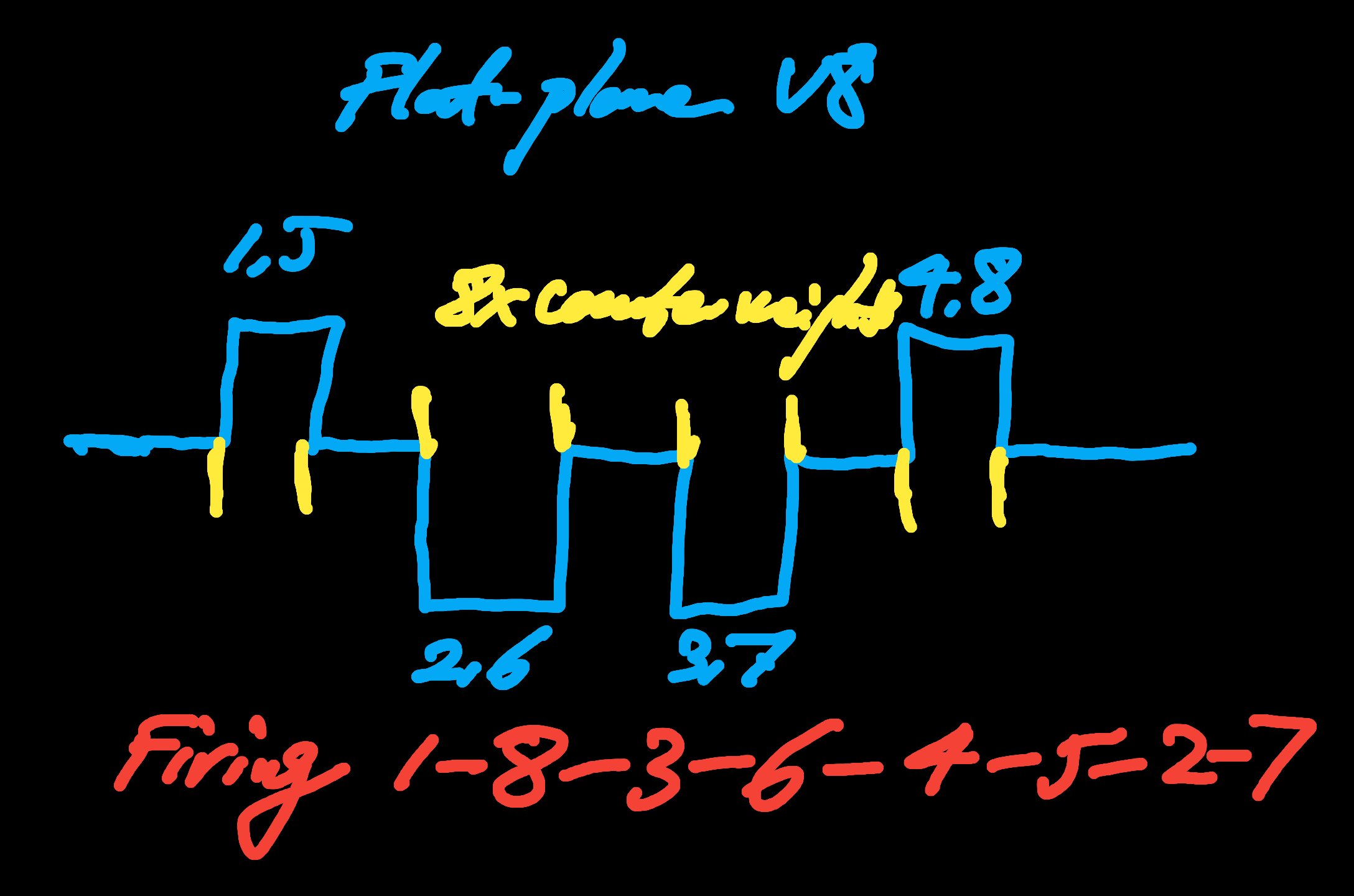
In the interest of power and durability, we use a cast iron block with aluminum cylinder heads and fully forged rotating assembly. The crankshaft is fully counterweighted with 8 counterweights. Two points are worth noting:
- Cast iron block is heavier, perhaps by 30–40kg in our displacement. However, it is considerably stronger at high boost levels. Thermal differences can be ignored, since even with an aluminum block we would need robust sleeves to make power. Cast iron blocks are considerably more durable and rebuildable, too.
- While many high-revving engines prefer 6 counterweights over 8, we choose fully-counterweighted design to lower bearing loads and reduce crank torsional stress. This works better with high boost and high specific outputs.
Dry Sump System
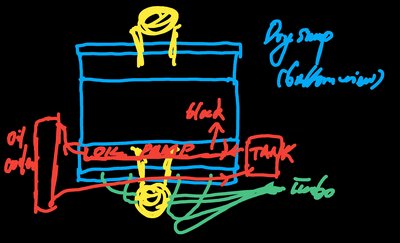
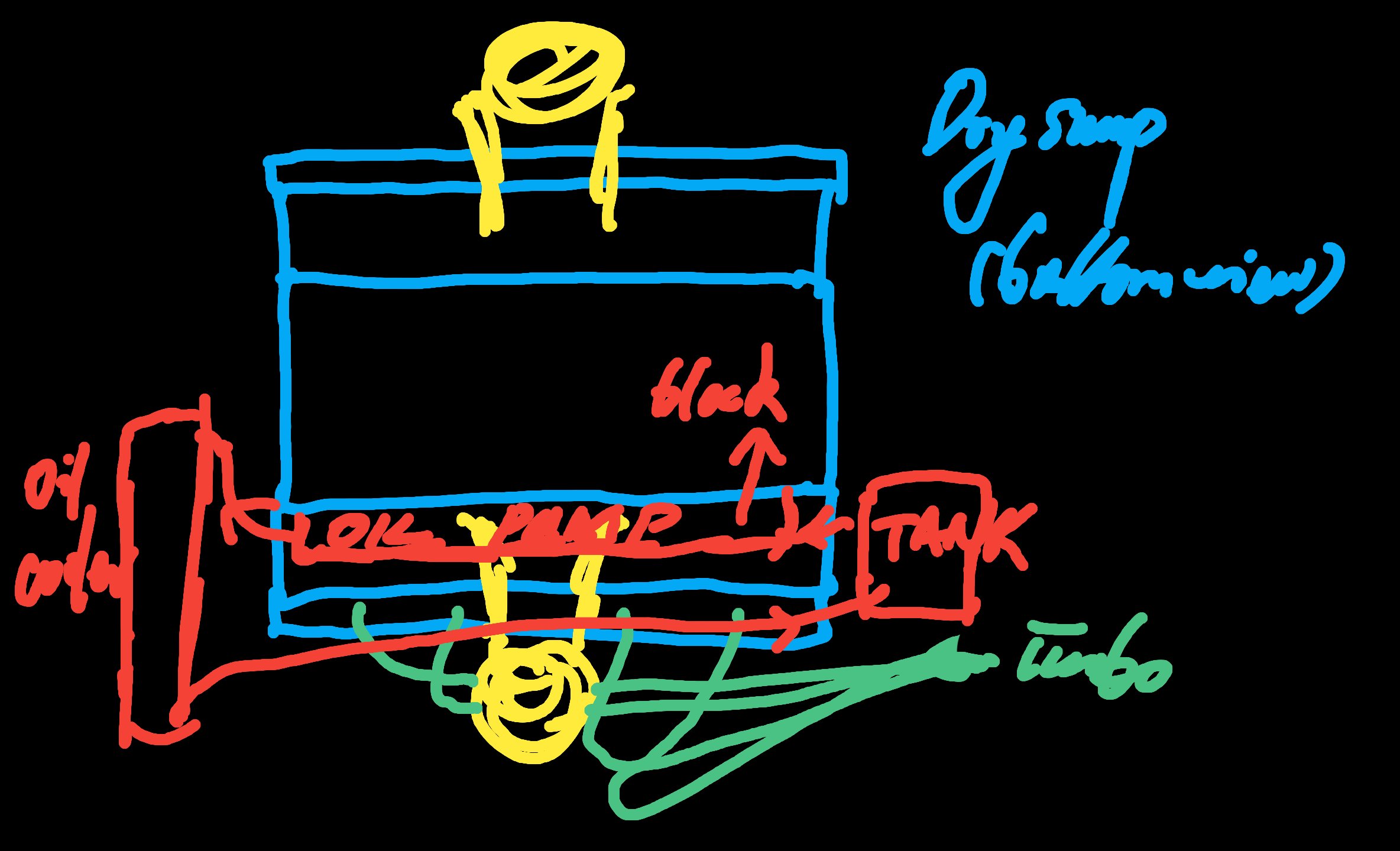
We use a classic gear-driven dry sump system with three scavenging stages, including one in the valley. The pump should be in an aluminum housing attached to the side of the engine block, not internal to it.
Intake Plenums
For serviceability and tunability, we use two separate intake plenums made of aluminum, one for each bank. This makes the engine essentially two inline-4s sharing a common block. It has two advantages worth noting:
- Interference between banks is eliminated, which can help top-end power delivery. It also makes tuning and on-the-fly adjustments easier, because each turbo is only connected to the same cylinder bank that drives it.
- Two smaller plenums are easier to remove, and their total size is smaller. With a true-dual setup, it is also easier to diagnose any vacuum- or boost-related faults.
Engine Accessories
We use a simple mechanically-driven water pump with high-flow characteristics. It is mounted at the tip of the valley, directly onto the engine block. Since we have two separate timing belts, those belts can be covered separatedly and do not interfere with the water pump.
Appropriate catalytic converters will be chosen for each region depending on emission requirements. They will be bolted directly behind the turbochargers, with the core 30cm behind, and in front of the mid-section of the exhaust system, where an X-pipe and two resonators will be standard. The rear section should be vehicle-specific.
For simplicity, this engine does not use a vacuum pump and has no vacuum-operated equipment. That is, it does not have SAI or pneumatic wastegate and cannot support vacuum-boosted braking or vacuum-controlled exhaust valves.
Further Specifications
Other miscellaneous specifications include the following.
- Bore x stroke: 90 x 78mm (displacement 3970cc)
- Compression ratio: 9:1
- Rod ratio: 1.6:1 (124.8mm rod length, target 190mm deck height)
- Turbocharger: 58mm compressor inducer (e.g. Garrett G30-770) + electronic wastegate
- Power target: 1000hp @ 7000–7500rpm
- Torque target: 1150Nm @ 4000–6500rpm
Overall, by sacrificing only fuel economy, we can have a high-performance boosted V8 that is still serviceable, reliable, and durable. It should have the best characters that one would expect of an exotic V8 engine while being simple and affordable. It can be ideal for sports cars, gran tourers, sports sedans, and even SUVs.
Gallery: My Good V8
XXX