Latest in Article
Editorials on the economy, technology, and lifestyle by Dr Jiulin Teng

Today, I enumerate all main contributing factors and explain as concisely as possible how each affects the exhaust note; I also discuss how some factors may be modified.
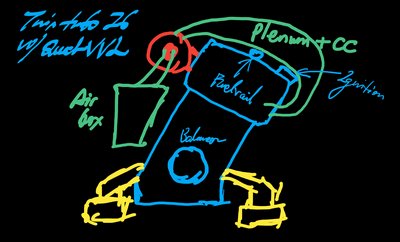
My previous article laid out the design of a highly serviceable, reliable, and durable high-performance V8 engine. Today, I want to do the opposite and attempt to design an inline-6 engine that is as unreliable as we can justify as a manufacturer.
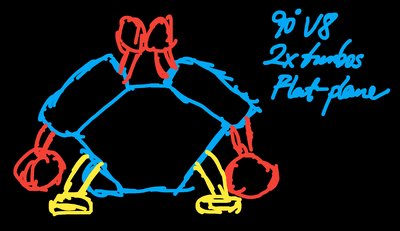
Modern forced-induction V engines sacrifice serviceability, reliability, and durability for fuel efficiency. Today, I take a different approach and design a high-performance turbocharged V8 that is serviceable and reliable.
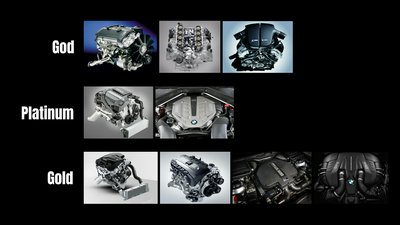
BMW has an exceptional rate of rod and main bearing failures and seized engines. I have identified six reasons that explain this phenomenon. I am also ranking the most likely victims of bearing carnage into three tiers.
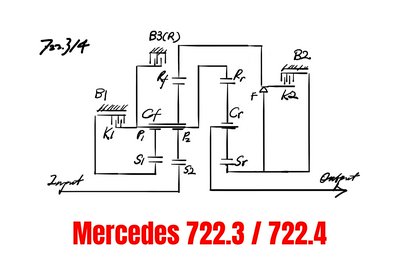
Mercedes 722.3 is a hydraulically-controlled 4-speed automatic transmission. Today, let us check out not only how its gear train works but also how its hydraulic control functions.
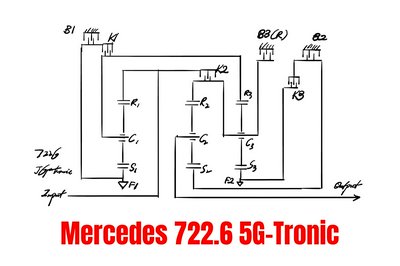
The 722.6 5G-Tronic was arguably the most commercially successful automatic transmission ever produced by Mercedes. Today, let us see how its gear train works and analyze its design.

Transmission adaptation, usually in terms of fill time and pressure, can let us know the condition of an automatic transmission. This article discusses how to interpret the values.
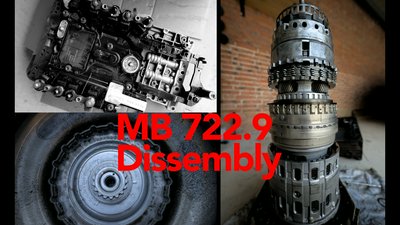
Recently, I dissembled the 7G-Tronic transmission that I had replaced in my 2005 S500 last year. The failure point was the TCC. In this article, let us confirm the severity of the damage and check out how the 722.9 transmission works.
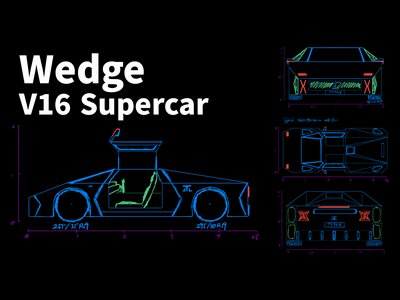
Today, let us go over the design of our flagship mid-engine wedge sports car powered by the 6L 45-deg naturally-aspirated V16 engine that I presented previously. Its codename is Type 6.
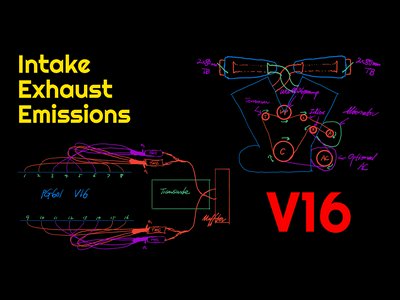
Today, let us round out the design of our PG601 45° V16 engine with top-end elements, accessories, and emission control. I believe that in the next decade, we will see more V16 engines, some achingly similar to PG601.
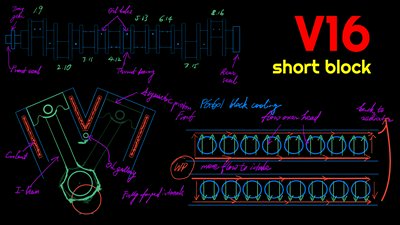
Today, let us delve into the short block of the 6L 45-degree V16 engine that I introduced previously and go over the reasoning behind its design choices, particularly with the philosophy of PG601 in mind.
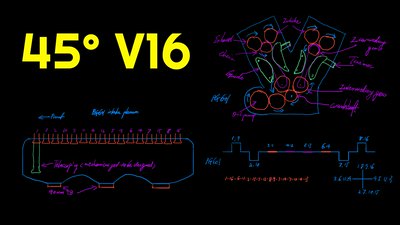
I present a 6.0L naturally-aspirated V16 engine intended for flagship vehicles. It prioritizes character, drivability, and reliability rather than peak power.